Buying Guides
Wine & Spirits Label & Box Compliance
Wine and spirits packaging must clear TTB label rules and protect glass in transit. Explore COLA approval, mandatory statements, and rigid boxes for brands.
Wine and spirits sit at the intersection of the strictest label law in consumer goods and the most fragile primary container on the shelf. A glass bottle that survives a cellar for decades can still be destroyed by a single corner drop in a parcel network, and a label that omits one mandatory statement can be refused at the border regardless of how beautiful the bottle looks. Importers and private-label brands that treat labeling and transit protection as separate problems usually learn the hard way that they are the same problem: both determine whether the product arrives saleable.
A few standing numbers keep the specification honest. Our team has shipped 1,000+ custom case programs to date. We supply buyers in 80+ countries with export documentation prepared in-house.
The United States alone routes most wine and distilled spirits labels through the Alcohol and Tobacco Tax and Trade Bureau, known as the TTB, which issues a Certificate of Label Approval, or COLA, before the product can be sold. The European Union, the United Kingdom, and most other markets have their own mandatories around origin, alcohol strength, and health warnings. Underneath all of that sits the physical box that keeps the glass intact from the filler to the final mile. This article lays out the label framework, the box engineering, and the production path that gets a compliant, unbroken case to market.
TTB Label Approval and the COLA Framework
In the United States, the TTB requires a COLA for most wine and spirits labels before sale, and the application forces you to get the mandatory statements right the first time. The brand label must carry the brand name, the class and type of the product, the alcohol content stated as percent by volume, the net content, and the name and address of the importer or bottler. For wine there are additional rules around vintage, appellation of origin, and varietal claims that must be substantiated, while spirits face standards of identity that dictate what a whiskey, gin, or vodka may be called.
The COLA process is where most first-time importers stall, because a missing sulfite declaration on wine or an unapproved health claim on spirits triggers a rejection that costs weeks. The practical move is to build the mandatory block first and design the brand art around it, rather than squeezing compliance into a finished design. Country of origin must be stated clearly, and for imported wine the importer's details replace the domestic bottler. A responsible designer treats the COLA as the spec that the carton and the shipper label must echo, because customs officers check the box against the approved label.
Once the COLA is issued, any later change to the mandatory statements means a new application, so the label should be locked before carton printing begins. This is why digital proofs turned around in about five working days at no charge are valuable here: you can validate the mandatory block, the brand art, and the carton dieline together and avoid a reprint triggered by a late label edit. The TTB framework rewards discipline, and the box is part of that discipline.
Mandatory Statements Across Markets
Outside the United States the mandatory set shifts but the logic is constant. The European Union requires an ingredients list for most alcoholic drinks above 1.2 percent ABV, a nutrition declaration that can be delivered via a QR code or on-pack, the lot number, and the responsible operator. The EU also mandates responsible-drinking messages and, for wine, rules around protected designations of origin that must not be implied falsely. The United Kingdom retained similar requirements post-Brexit and enforces its own front-of-label and duty statements through HMRC and trading standards.
It helps to put the operating figures on the table. We support 50+ private-label brands as their packaging partner. Folding cartons are specified in 300-500 g board.
Australia and New Zealand use the standard drinks and pregnancy-warning label framework, while Canada enforces bilingual labeling and specific health warnings through its food and consumer product rules. Every one of these markets expects the alcohol content, the net volume, and the responsible-party details to appear in a legible, permanent form on the container or a firmly attached label. The carton and shipper should carry a matching product identity and country-of-origin so that a mixed container is not delayed by an unlabeled case.
For brands selling across several jurisdictions, the efficient approach is a base label with a fixed compliance block and a swappable market module, supported by export documentation that BoxesChina supplies to buyers in 80 plus countries. That modularity prevents a full reprint for one market and keeps the brand look consistent everywhere else. Compliance is not a tax on creativity; it is the floor the design must stand on.
Health Warnings and Responsible-Drinking Messages
Health warnings are the statements brands most often under-print, and they are the ones regulators check first. In the United States, wine and spirits labels must carry the government warning about drinking during pregnancy and operating machinery, and spirits labels must also carry the Surgeon General's warning where applicable. The text is prescribed, not advisory, and it must appear in a specified format and minimum size, which constrains the label layout more than any brand element.
The EU and UK responsible-drinking messages, Australia's pregnancy warning, and Canada's specific cautions each have their own wording and placement rules. The common mistake is treating the warning as a footnote; regulators treat it as a primary statement. The carton can reinforce the message for age-gating and responsible consumption, but the mandatory text belongs on the container label where the law puts it. Designing the label with the warning block sized and placed correctly from the start avoids the costly late resize that distorts the whole layout.
Sulfite declarations deserve a separate mention for wine: any wine containing ten or more parts per million of sulfites must state that it contains sulfites. This is a frequent COLA rejection point and a real allergen concern for some consumers. The declaration is small but mandatory, and it should sit within the compliance block that the carton and shipper reference, not buried where a reviewer misses it.
These are the constants we hold on every order. Minimum order quantity begins at 100 pcs. Mass production runs in 10-20 working days after proof sign-off.
Glass Protection and Rigid Box Engineering
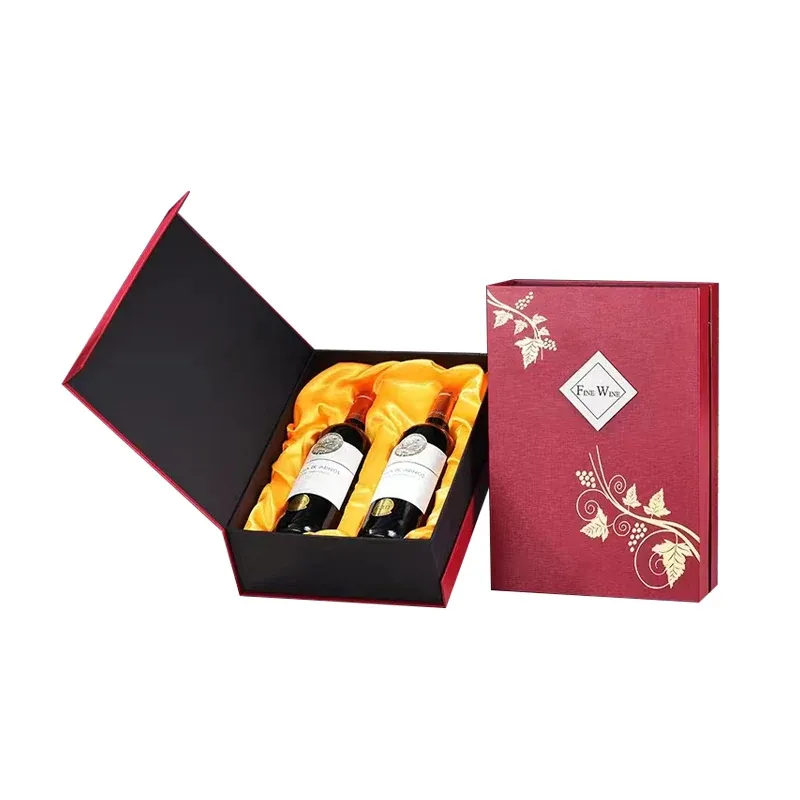
Glass is the default for wine and spirits because it is inert and premium, but it is also the most breakage-prone primary in the category. The secondary package therefore carries more than branding duty; it is the structural defense against the corner drops, stack crush, and vibration that shatter bottles. Rigid boxes built from 157 g face paper over 1200 g greyboard are the presentation standard for single premium bottles and gift sets, giving a luxurious unboxing while holding the bottle immobile.
For multi-bottle formats, a folding carton in the 300 to 500 g board grade with molded pulp, corrugated, or vacuum-formed dividers keeps each bottle separated and cushioned. The divider is the unsung hero: without it, bottles clink and the necks become stress points that snap under stack load. The master shipper should group the retail cartons with the total weight at or below 22 kg and a sensible bottle count per case, because overweight wine cases are a handling and liability problem at every node from the container to the van.
Quality at scale matters because a single broken bottle can seep through a shipper and ruin a case of otherwise perfect stock. Incoming and outgoing lots are checked against AQL sampling plans so the structural performance is verified, not assumed, and orders carry a 60-day quality guarantee on workmanship. BoxesChina runs about 100 staff on one site handling sampling, printing, and QC, which keeps the loop from proof to verified production tight enough to catch a divider shortfall before a full run.
Shipping, Documentation, and the Master Case
Wine and spirits move under alcohol-specific rules that the packaging must support. The shipper and carton should carry the product identity, alcohol content, and country of origin so customs can reconcile the physical case with the COLA and the entry paperwork. Age-gating and fragile handling marks belong on the outer case, and a clear bottle-count and lot code lets a distributor rotate stock and run a traceability pull if needed.
One practical note on how the carton is actually built. Standard terms are 30/70, deposit on order and balance before shipment. A no-charge digital proof turns around in about 5 days.
Export documentation is where many small brands falter, because the bottle may be perfect and the label compliant yet the shipment still held for a missing certificate. BoxesChina supplies buyers in 80 plus countries through export documentation that supports alcoholic goods at the border, and the carton system is designed to echo the approved label so the case and the COLA agree. Payment terms are commonly 30 percent deposit and 70 percent before shipment, which aligns cash flow with the proof-and-produce cadence most importers prefer.
For brands scaling a seasonal or limited release, the production path is forgiving: minimum order quantity starts at 100 pieces per SKU, digital proofs turn around in about five working days at no charge, and mass production typically runs 10 to 20 working days after proof sign-off. Large runs use offset litho printing for consistent brand color so a ten-thousand-case run matches the approved sample. Annual packaging output is backed by roughly US$10M in production capacity, which matters when a holiday program has to land on a fixed date.
Sustainable and Premium Presentation Choices
Wine and spirits buyers increasingly expect a premium feel without a wasteful footprint, and the carton is where that balance is struck. FSC-ready chain-of-custody readiness for paperboard programs lets a brand signal responsible fibre sourcing, and a rigid box can be designed for reuse as a gift or storage piece rather than discard. Soft-touch coatings, foil, and embossing read as luxury without the plastic overwrap that many markets now penalize or tax.
The presentation layer should never compromise the protection layer. A beautiful magnetic-closure box that lets the bottle roll is a failure, so the insert and the closure must be engineered together. More than 50 private-label brands use our lines for their packaging, which means the premium cues are well understood and can be specified against a budget rather than guessed. The plant covers roughly 5,000 m2 of production and warehouse space, giving room to stage seasonal runs without crowding the line.
Partnering With BoxesChina on wine spirits packaging
For importers and brands weighing wine and spirits packaging, the question is which partner can hold the label compliance and the glass protection in one hand. BoxesChina runs a manufacturing base built in Dongguan in 1998, with FSC-ready chain-of-custody readiness for paperboard and a track record of 1,000 plus custom case programs shipped to date. That background is directly relevant to alcohol, where the COLA, the warning block, and the rigid box must all agree.
The plant covers roughly 5,000 m2 and about 100 staff run sampling, printing, and QC on one site, keeping the proof-to-production loop short. MOQ starts at 100 pieces per SKU, digital proofs turn around in about five working days at no charge, and mass production typically runs 10 to 20 working days after sign-off. For wine and spirits, that means the mandatory label block, the rigid box, and the divider can be prototyped and validated before a container is committed, rather than discovered after it is at sea.
Payment terms are commonly 30 percent deposit and 70 percent before shipment, with a 60-day quality guarantee on workmanship. We supply buyers in 80 plus countries through export documentation that supports alcoholic goods at the border, and large runs use offset litho printing for consistent brand color across the program. Incoming and outgoing lots are checked against AQL sampling plans so the second thousand cases match the first, and annual output is backed by roughly US$10M in production capacity to absorb seasonal peaks.
FAQ
Do I need a COLA for wine and spirits in the US?
Most wine and distilled spirits labels require a TTB Certificate of Label Approval before sale in the United States, covering brand name, class and type, alcohol content, net content, and responsible-party details. Wine also needs sulfite and often vintage or appellation statements, and any change to mandatories requires a new application.
What health warnings are mandatory on alcohol labels?
The US requires the government warning about pregnancy and machinery, and spirits carry the Surgeon General's warning where applicable. The EU and UK expect responsible-drinking messages, Australia requires a pregnancy warning, and Canada enforces bilingual cautions, each with its own wording and minimum size.
How should I protect glass bottles in transit?
Use a rigid box with 157 g face paper over 1200 g greyboard for singles, or a 300 to 500 g folding carton with dividers for multi-bottle packs. Keep the master shipper at or below 22 kg, separate each bottle with molded or corrugated dividers, and verify against AQL sampling to catch breakage risks early.
Can one label work across multiple markets?
A base label with a fixed compliance block and a swappable market module avoids full reprints for one jurisdiction, supported by export documentation for 80 plus countries. The mandatory statements still differ by market, so the modular block must carry the correct warning, language, and origin for each destination.
What board grade fits a spirits gift box?
Rigid boxes using 157 g face paper over 1200 g greyboard are the presentation standard for single premium bottles and gift sets, while 300 to 500 g folding cartons suit multi-bottle retail packs. The grade is chosen for protection and perceived value, then prototyped before full production approval.
How fast can I get samples and production?
Digital proofs turn around in about five working days at no charge so you can lock the label block and dieline together. Mass production typically runs 10 to 20 working days after proof sign-off, which lets a seasonal wine or spirits program scale once the small run proves the market.
Should the carton echo the approved label?
Yes, the carton and shipper should carry the product identity, alcohol content, and country of origin so customs can reconcile the case with the COLA and entry paperwork. Age-gating and fragile marks belong on the outer case, and a lot code supports traceability and stock rotation.
What is the minimum order for custom alcohol packaging?
Minimum order quantity starts at 100 pieces per SKU, so a new wine or spirits SKU can launch in a small test run. Mass production runs 10 to 20 working days after sign-off, and large runs use offset litho for consistent brand color, letting the program scale without a second source.
Conclusion
Wine and spirits packaging succeeds when the label clears the regulator and the box clears the route, because a compliant label on a broken bottle is still a failed shipment. Lock the mandatory statements first, engineer the rigid box and dividers against glass breakage, and validate both on a small run before committing volume. If you want a Dongguan-based partner built in 1998 with FSC-ready paperboard readiness and export documentation for 80 plus countries, Request a Wholesale Quote and we will align your COLA, your carton, and your shipper to the market you sell into.