Buying Guides
Ocean vs Air Freight for Packaging From China: How to Choose
Ocean vs air freight for packaging from China is a choice of physical conditions, not one figure. Learn the four axes, the mode-specific packing spec, and what to write into the purchase order.
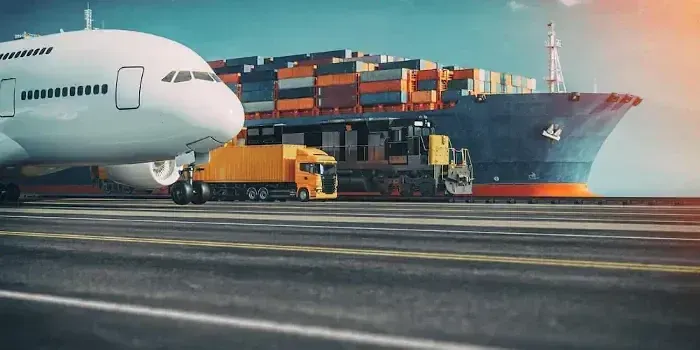
Ocean and air are not two prices for the same service — they are two different operating systems with different lead-time variability, different exposure to moisture and handling, and different consequences for how you design the box. Choose on four axes: when the goods are needed, how much volume they occupy relative to their weight, what the packaging must survive, and how much schedule variability your plan can absorb. Any figures attached to either route vary with specification, quantity, route, and the rules in force at the time, and must be confirmed in writing by the supplier.
A buyer we'll call Dev chose air for a launch because it was faster on paper. He did not account for the fact that his rigid gift boxes were mostly air themselves: bulky, light, and charged on volumetric measurement. He also did not add the packaging protection a long ocean transit would have required, so the same boxes arrived by air with corner rubs from the extra handling at both ends. The route was not wrong. The decision was made on one axis. This guide covers the axes that actually decide, what each route does to your packaging spec, and what to put in writing.
Key Takeaways
Decide on four axes, not one: required date, volume-to-weight behaviour, packaging survival, and tolerance for schedule variability.
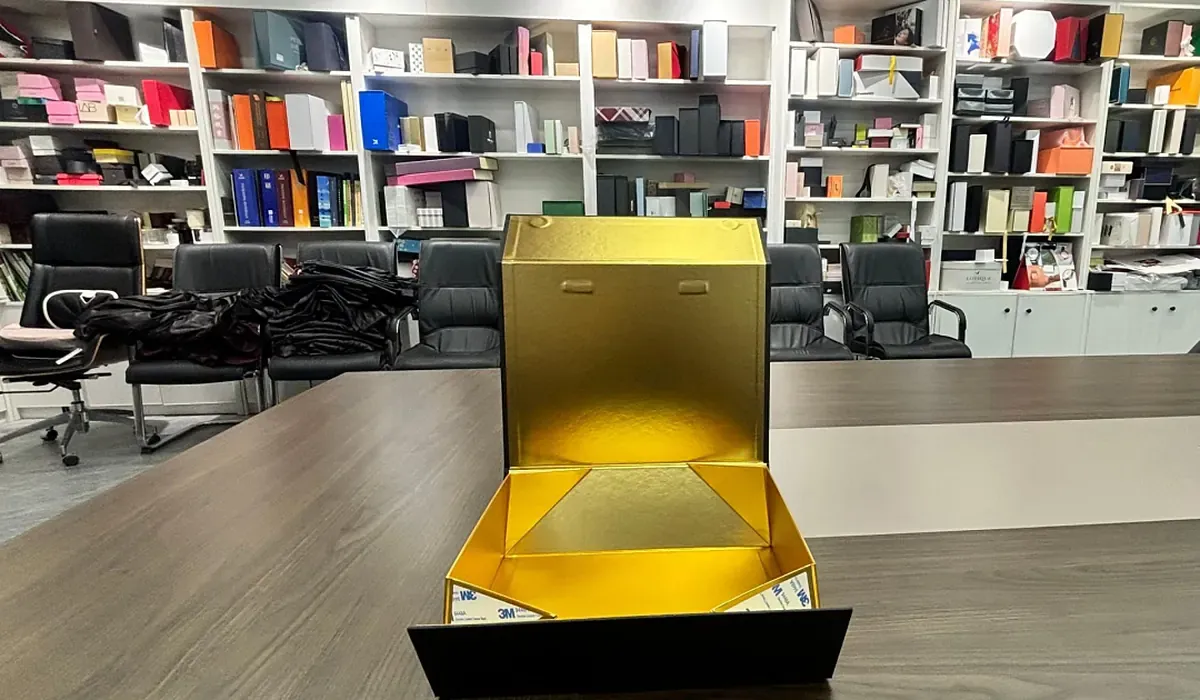
Custom packaging is often bulky relative to its weight — an assembled rigid box ships mostly empty space, which changes the comparison.
The route changes the packaging spec: long ocean transit raises moisture and stacking exposure; air adds handling events at both ends.
Write the chosen mode, the handover event, and the packing standard into the purchase order as a versioned line.
Get the current rules and any figures confirmed in writing by your own logistics or quality team and the supplier; this article gives no rates or amounts.
The four axes that actually decide
A single "faster or cheaper" question hides four separate questions. Answer them in order and the choice usually makes itself.
Axis | What to ask | Why it matters for packaging |
|---|---|---|
Required date | When must the goods pass your receiving check, not just leave the factory? | A fixed launch date has little slack; a replenishment order may have more |
Volume vs weight | How much space does the shipment occupy relative to what it weighs? | Assembled rigid boxes are mostly air, so space drives the comparison |
Packaging survival | What must the box endure in transit — moisture, stacking, handling? | The route changes which protection you need to specify |
Variability tolerance | How much schedule movement can your plan absorb? | Both modes vary; the shape of the variability differs |
The second row is the one packaging buyers consistently underestimate. A flat-packed folding carton and an assembled two-piece rigid box with the same unit count occupy very different amounts of space. Change the structure and you change the transport answer — which is why this decision belongs early, alongside the dieline, not after the boxes are built.
Want the four axes as a decision sheet? [Ask our Dongguan team for the mode-selection brief →] — it links the route choice to the packing spec, with ~5-day free samples and transparent quoting with no hidden fees.
What each route does to the box
Think of the route as a set of physical conditions your packaging has to survive.
Ocean: time, moisture, and stacking
A longer transit means a longer exposure window. Cartons sit in a stack, sometimes in a container with a changing temperature and humidity profile. That creates three spec consequences:
Moisture. Wrap stock and greyboard are hygroscopic. Ask about the barrier, the carton liner, and any desiccant plan, and confirm the current values in writing with your own laboratory or quality team before production.
Stacking compression. Cartons at the bottom of a stack carry the load. Carton grade, orientation, and inner dividers are spec lines, not afterthoughts.
Longer cure and handling windows. Films and adhesives behave differently over a longer period. State when the surface check happens before cartoning.
None of these mean ocean is risky. They mean the packing standard has to be written for the route you chose.
Air: handling events and dimensional reality
Air removes a long exposure window but adds handling: collection, screening, build-up, breakdown, and delivery. Each handoff is a place a corner can be rubbed or a carton crushed.
More handling events. Corner protection and a robust outer carton matter more than a long moisture plan.
Volumetric measurement. Light, bulky goods are assessed on the space they occupy. An assembled rigid box is the classic case, and the trade-off between an assembled shell and a flat-packed alternative is what decides it.
Tighter packing discipline. Carton dimensions and counts need to be exact because the shipment is built up to a defined unit.
Short, fixed receiving windows. A missed connection has a different consequence than a delayed sailing.
The practical implication: if you are shipping assembled rigid boxes, the structure decision and the mode decision are the same decision. Flat-packing, knock-down construction, or nesting the shells changes the space the shipment occupies before you ever discuss a route.
The variability question
Both modes vary, but differently. Ocean variability tends to be about schedule and queue position at ports; air variability tends to be about space availability and connections. Ask your logistics partner which kind of movement your plan can absorb, and get the answer in writing. Then add an escalation trigger: if a dispatch date moves, written notice within an agreed window with a revised plan. The trigger only works if the lead time it references is the one actually quoted for this order, not one carried over from an earlier run.
Match the packing spec to the mode
Once the mode is chosen, convert it into spec lines. A route choice that stays in an email does not protect the box.
Spec line | Ocean emphasis | Air emphasis |
|---|---|---|
Outer carton grade | Stacking and long-duration load | Impact and handling resistance |
Moisture barrier | Liner, wrap protection, desiccant plan | Light protection against condensation |
Corner and edge protection | Sustained compression | Repeated handling contact |
Internal orientation | Void fill to stop shifting over time | Tight fit to stop movement at each handoff |
Carton dimensions and counts | Pallet and container utilisation | Build-up unit accuracy |
Surface check before cartoning | Longer cure window | Standard cure window |
Write these as a versioned packing standard attached to the purchase order. Confirm the current technical values in writing with your own laboratory or quality team. If the route changes later, the packing standard is a new version, not a verbal note — the conditions the box must survive have changed.
Have a mode change mid-project? [Send us the current packing spec →] — we will mark which lines need a new version, with low-MOQ custom from 100 pcs and transparent quoting with no hidden fees.
Mini story: the boxes that were mostly air
A buyer we'll call Sofia was shipping an assembled two-piece rigid box for a cosmetics launch. She compared modes on a single figure and picked air, then watched the shipment occupy far more space than she had expected. The boxes were light and bulky; the shell enclosed a lot of empty volume.
She did not switch routes. She changed the structure: the next run used a knock-down version that shipped flat and assembled at her packing bench, with the corner tabs and the presentation checked on a physical sample first. The space the shipment occupied changed, and so did the comparison. Sofia's lesson was not about freight. It was that a box design decision made six weeks earlier had already decided her transport options.
What to put in the purchase order
Keep the language structural. A route line should name things, not figures.
The chosen mode, stated as a named line with a version number.
The handover event — which point the supplier is accountable up to, and who owns each leg after it.
The packing standard version for that mode: carton grade, moisture plan, orientation, corner protection, and surface-check timing.
Carton dimensions and unit counts, as agreed with the logistics partner.
An escalation trigger if a dispatch date moves, with written notice and a revised plan.
A written statement of who supplies each document for the route, named party by party rather than assumed from the mode.
A line noting that any figures attached to the leg vary with specification, quantity, route, and the rules in force at the time, and require the supplier's written confirmation.
That last line matters because a mode decision made on a figure quoted earlier is not a plan. Rules and availability change; confirm the current version in writing with your own logistics or quality team before dispatch. This article gives no rates, amounts, or transit durations — those belong in a written confirmation from the parties who own the leg, not in a general guide.
Red flags in the mode conversation
A decision made on one axis — usually a single transit figure — with no mention of volume or packaging survival.
An assembled rigid box discussed without anyone raising dimensional measurement.
The same packing spec used for both modes. The conditions differ; the version should differ.
A handover event that is never named. Ask who is accountable up to and after it.
A figure quoted without the note that it varies with specification, quantity, route, and current rules and requires written confirmation.
No escalation trigger. A moved dispatch date discovered at receiving is too late.
A route change treated as a minor tweak. It changes the packing standard; give it a new version.
Mode Selection Checklist
State the date the goods must pass your receiving check, not just leave the factory.
Assess the shipment's volume relative to its weight; check whether an assembled structure is shipping mostly empty space.
Consider a flat-packed or knock-down structure before comparing routes.
Write a mode-specific packing standard: carton grade, moisture plan, orientation, corner protection, and surface-check timing.
Confirm the current technical values in writing with your own laboratory or quality team.
Name the handover event and who owns each leg, and put an escalation trigger in the purchase order.
Get the current rules and any figures confirmed in writing by your logistics partner and the supplier.
Treat a route change as a new packing-standard version, not a verbal note.
Mini story: two versions of one carton spec
A buyer we'll call Owen shipped the same folding carton on two routes in one season — one to a distribution centre for a launch, one to a warehouse for replenishment. He kept two versioned packing standards: one with a moisture liner and a longer surface-check window, one with heavier corner protection and tighter carton dimensions.
When a colleague asked why the cartons looked slightly different, Owen opened the purchase orders and pointed at the version lines. Both were correct. Neither was a mistake. The conditions the boxes had to survive differed, and the documents said so. That is what a mode decision looks like when it has been written down.
Conclusion
Ocean versus air for China-sourced packaging is not a price comparison. It is a choice between two sets of physical conditions and two shapes of schedule variability. Decide on four axes: the date the goods must pass your receiving check, how much space the shipment occupies relative to its weight, what the box must survive, and how much movement your plan can absorb.
Custom packaging often ships a lot of empty space, so settle the structure question — assembled, flat-packed, or knock-down — before you settle the route. Then convert the choice into a versioned packing standard and a named handover event in the purchase order. Confirm the current rules and any figures in writing with your own logistics or quality team and the supplier; they vary with specification, quantity, route, and the rules in force at the time. A route change is a new spec version, not a note in a chat thread.
Write the mode into the packing standard → Our Dongguan team has delivered 1,000+ custom packaging projects to buyers in 80+ countries since 1998, with low-MOQ custom from 100 pcs, ~5-day free samples, and transparent quoting with no hidden fees.
FAQ
Is air always better for a fixed launch date? Not automatically. Air has shorter transit but its own variability around space availability and connections, and it adds handling events at both ends. Decide on the date the goods must pass your receiving check and how much variability the plan can absorb.
Why does box structure affect the mode decision? Assembled rigid boxes are bulky relative to their weight, so the space they occupy drives the comparison. Flat-packed or knock-down structures change the shipment's dimensions before any route is discussed.
Does the packing spec change between ocean and air? Yes. Longer ocean transit raises moisture and stacking exposure; air adds handling events and tighter dimensional accuracy. Write a mode-specific, versioned packing standard — carton grade, moisture plan, orientation, corner protection, and surface-check timing.
What should the purchase order say about the route? The chosen mode as a named line with a version number, the handover event, the packing-standard version, carton dimensions and counts, an escalation trigger for a moved dispatch date, and a note that any figures require the supplier's written confirmation.
Do you give transit times or cost figures here? No. Any figures attached to a leg vary with specification, quantity, route, and the rules in force at the time, and must be confirmed in writing by the supplier and your own logistics or quality team. This article covers the decision structure only.