Buying Guides
Ultra Luxury Boxes: Materials, Craft and Quiet Detail
Ultra luxury boxes from our Dongguan factory since 1998: rigid grayboard, hand finishing for gifts, MOQ from 100 pcs and free digital samples in about 5 days.
Opening
Ultra luxury boxes earn their price in the first three seconds, before the product inside is even seen. A buyer lifts the lid, feels the weight of the board, hears the soft close of a magnetic flap, and decides, often without thinking, whether the brand deserves its price. That judgment is instant, physical, and almost impossible to undo with marketing alone.
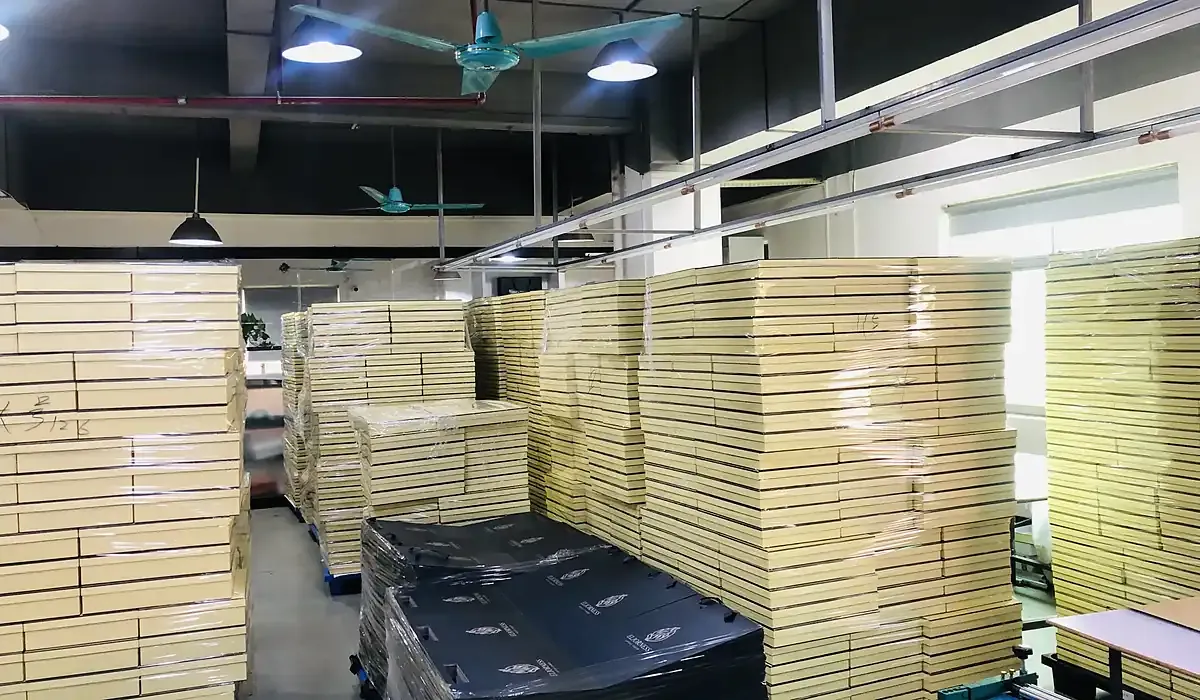
Our factory in Humen, Dongguan has made paper packaging since 1998, and luxury rigid boxes have been part of that work from the early years. The benches there still do by hand what machines cannot: wrapping grayboard in fine paper, setting magnets flush, and fitting inserts to the millimeter. About 100 staff work across a 5,000 m² floor, and the hand finishing team is the reason small luxury runs leave here looking like large ones.
A free digital sample in about 5 days lets a buyer hold the real box before ordering in bulk. The sample shows the true board weight, the real foil, and the exact close of the lid, which no photograph can convey. This guide walks through the materials, structures and finishes that separate a genuinely luxurious box from an expensive imitation.
What Sets Ultra Luxury Boxes Apart
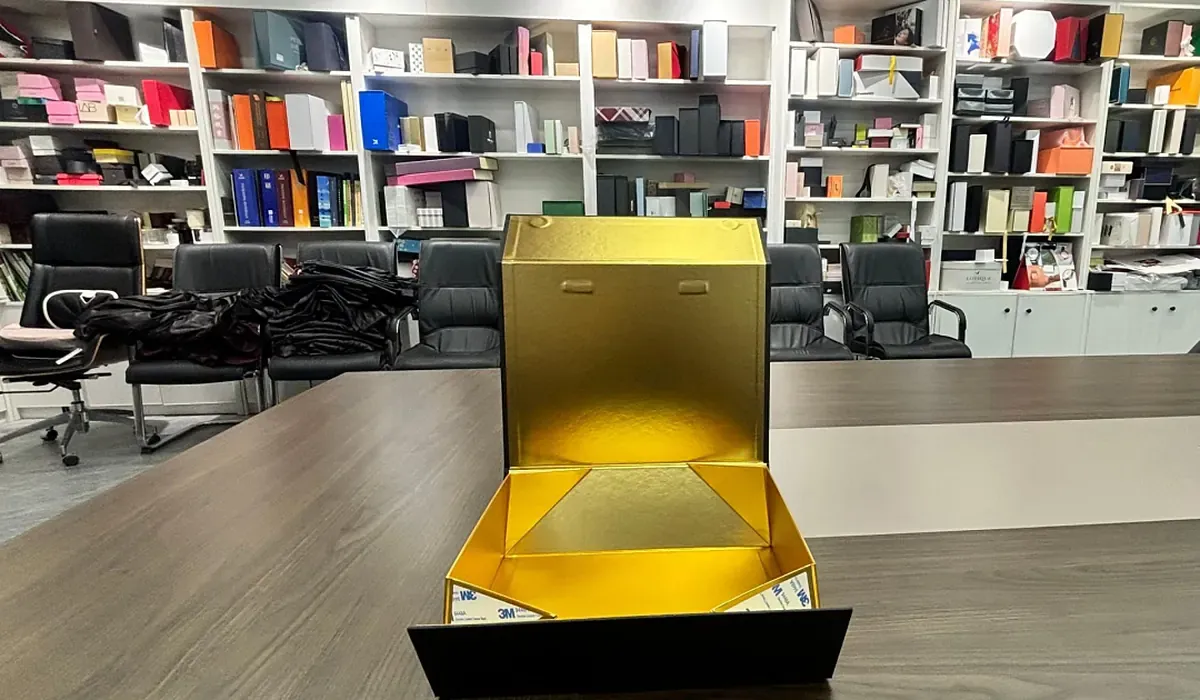
The difference between a luxury box and an ultra luxury box is not one feature but the absence of flaws. Every edge is wrapped cleanly, every corner is square, and the lid closes with the same soft resistance on the hundredth opening as on the first. Ultra luxury boxes are judged by touch as much as by sight: the buyer runs a thumb along the seam, feels the density of the board, and notices whether the print sits perfectly flat. Small runs make this standard harder, not easier, because hand finishing shows every shortcut. A box that passes this inspection earns a price the product alone could not carry.
The Weight of the Board
Weight is the first signal a buyer reads, and it comes from the board. A rigid box built on grayboard near 1200 g feels solid the moment it is lifted, while a lighter board feels hollow no matter how fine the print. Face paper adds the second layer: 157 g art paper takes foil and fine detail cleanly and wraps tightly around the board without bubbling. The combination matters more than either number alone, because a heavy board with a thin face looks cheap and a fine face on weak board dents in transit. Ask for the board weight in writing before sampling, since two boxes that look identical can differ by half in the hand.
Grayboard, Card and the Hand Feel
Not every luxury box needs the heaviest board. Folding cartons in the 300–500 g range suit lighter products and ship flat, which matters when freight is charged by volume. The hand feel still has to be right: a card that creases cleanly, holds its shape after opening, and springs back rather than staying bent. Grayboard suits rigid boxes that must stand on a shelf for months without sagging, while heavy card suits packs that travel inside a larger carton. The choice is a trade between presence and practicality, and the right answer depends on how the customer will meet the box.
Rigid Structures That Open with Ceremony
A rigid box opens in stages, and each stage is a chance to impress. A lid and base box lifts cleanly and reveals the product in one motion, while a shoulder box adds a pause as the inner tray rises into view. Book style boxes open like a cover, which suits flat products and presentation sets. The structure must match the product: a heavy item needs a deep base and a lid that cannot slide off, while a light item needs a snug fit that stops it shifting. Whatever the form, the hinge or shoulder should move smoothly a hundred times, because a luxury box is opened again and again.
Magnetic Closures and the Soft Shut
The magnetic close is the signature sound of a luxury box: a quiet click that tells the buyer the lid is seated. Getting it right takes care, because a magnet that is too strong fights the hand and a magnet that is too weak lets the lid drift open in the bag. Magnets must sit flush inside the board, never pressing through the face paper as a bump the thumb can find. Two small magnets beat one large one on wide lids, since they hold the corners evenly. Test the close on the sample with the product inside, because weight changes how the lid falls.
Inserts That Present, Not Just Protect
An insert in a luxury box is a stage, not a cushion. It should lift the product to display height, frame it against a clean background, and let fingers reach it without tipping the box. Paperboard trays with a velvet-like lining suit jewelry and watches, while molded pulp or foam cradles suit heavier items that need real grip. The insert must also survive the journey: a tray that shifts in transit lets the product rattle, and a rattle destroys the impression before the lid is fully open. Ask for the insert to be tested with your actual product, not with a sample of similar size.
Foil, Embossing and Restraint
Foil and embossing are the fastest way to signal luxury and the fastest way to spoil it. One foil element on the lid, a brand mark, a thin border, a single word, reads as confident, while foil on every panel reads as noise. Embossing works best on a plain ground, where the light catches the raised shape and the shadow does the talking. The two techniques can share a panel if they are kept apart: foil for the mark, embossing for the texture, with plain board between them. Registration is unforgiving at this level, so the proof must be checked on the real board, not on a screen.
For catalog-style panels with small text, offset printing keeps letterforms crisp at a price that scales with volume.
Matte Lamination and Soft Touch Surfaces
The surface a buyer touches most is the outside of the lid, and its finish sets the tone. Matte lamination gives a calm, even surface that photographs well and resists glare under shop lights. Soft touch lamination adds a smooth, almost silky feel that suits gift editions, though it shows scuffs more readily on dark colors. Gloss still has a place on bold designs, but it fingerprints fast and can look hard next to matte. Whatever the finish, it must wrap cleanly around the edges, because a lifting corner is the first flaw a buyer finds and the hardest to forgive.
Color Depth on Dark Grounds
Dark grounds, deep green, navy, oxblood, near black, are the classic luxury palette, and they punish sloppy printing. A dark ground needs full, even ink coverage, because any thin patch shows as a pale streak under shop lighting. Color must be checked against the approved proof under the same light the box will sit in, not only under daylight, since dark colors shift more than light ones. Gold foil on a dark ground is the traditional pairing, but silver and copper can feel more modern. Keep the palette to two or three colors: restraint is what makes a dark box look expensive.
Edges, Corners and the Details Buyers Touch
Luxury is decided at the edges, where the hand spends most of its time. Corners should be wrapped without wrinkles or exposed board, and the inside of the lid should be as clean as the outside. The seam where the face paper meets should sit on a hidden edge, never on the front panel. Ribbon slots, thumb notches and lid lifts all deserve the same attention: a notch cut too deep weakens the wall, while one cut too shallow forces the buyer to pry. These details cost little to get right and cost the whole impression when they are wrong, so check them on the sample before approving bulk.
Sizing for Jewelry, Watches and Small Treasures
Small products need boxes sized to the millimeter, because a box that is even slightly too large makes the product look lost. Start from the product drawing rather than from a standard box size, and allow room for the insert, the lid clearance and the thickness of the board itself. Height is the dimension buyers misjudge most: the lid must clear the tallest point of the product with room to spare, while the base must be deep enough that the product sits stable. For sets, plan the layout as a grid with breathing space between items, and keep one outer size across the range so the shelf line stays tidy.
When the Box Is Part of the Product
For some brands the box is not packaging at all but part of the purchase, kept on a shelf long after the product is used. Ultra luxury boxes earn that place by being useful a second time: a watch box that becomes a travel case, a jewelry box that stays on the dressing table, a gift box that holds keepsakes. Our cartons have reached 80+ countries, and 50+ brands have put their names on our boxes, from first launches to established houses. The boxes that get kept share one trait: they were designed as objects in their own right, not as wrappers around something else.
FSC-Ready Board and Honest Material Claims
Material claims on a luxury box must be honest, because the buyers of expensive products read the fine print. FSC-ready board is available for buyers who need chain of custody paperwork, and it should be described exactly as it is: board sourced from responsibly managed forests, ready for certification paperwork where the buyer requires it. Never let a supplier promise a certificate it does not hold, and ask to see the paperwork behind any claim before it goes on the box. Honest wording protects the brand twice: it keeps the claim true, and it keeps the customer who checks.
If a box fails in normal use within the guarantee period, the 60-day guarantee sets out how the issue is reviewed and corrected.
Sampling the Finish Before Committing
No photograph shows how a finish feels, which is why the sample stage matters more for luxury boxes than for any other pack. The sample should be the real box on the real board, with the real foil and the real close, because a sample in substitute materials answers none of the questions that matter. Check the weight in the hand, the sound of the lid, the feel of the lamination, and the registration of the print at the corners. If anything feels wrong, say so now: changing a finish after bulk approval costs far more than changing it at the sample stage.
Packing and Shipping Without a Scratch
A luxury box that arrives scratched is a luxury box wasted, so packing deserves the same care as printing. Each box should be wrapped or separated inside the master carton so printed faces never rub against each other, and corners need cushioning where drops land first. We pack 100 pcs per master carton as the standard, and each carton is capped at 22 kg so handlers can lift it safely and stacking stays honest. Mark cartons with orientation arrows, keep the outer carton plain to avoid drawing attention on long routes, and never fill a carton so tightly that inner boxes press against each other.
Cost Drivers Behind a Quiet Box
Ultra luxury boxes cost more than ordinary gift boxes, and the honest reason is hand work: wrapping, magnet setting, insert fitting and final inspection all take time that machines cannot replace. The levers a buyer controls are real, though. Sharing one box size across several products cuts tooling, choosing a standard board shortens the lead time, and ordering all finishes in one pass avoids a second setup. Our annual output is around US$10 million, which keeps unit pricing steady across the year rather than spiking with the season. The cheapest luxury box is rarely the right one: a box that disappoints costs the customer, not just the sale.
Quality Checks on Every Lot
Every lot is inspected to AQL before it leaves our floor, and luxury boxes get extra attention at the points buyers notice first. Each lid is opened and closed to confirm the fit stays smooth, each foil panel is checked under light for scratches and gaps, and print registration is checked at the corners where small boxes show drift first. Color is compared with the approved proof under standard lighting, and inserts are tested with real products rather than with nominal sizes. Across 1,000+ cases, the defects that reach customers are almost always the ones skipped at this stage, which is why inspection is never shortened to save a day.
MOQ, Sampling and Production
Ordering is straightforward. MOQ is from 100 pcs for every process, and the unit price drops as the quantity grows, so a first luxury order can stay small while the brand tests the market. Samples take about 5 days, with a free digital sample available so the buyer can check board, finish and fit on the real box before approving bulk. Production takes 10-20 working days after sample approval, with hand finished rigid sets and magnetic closures at the longer end of that range. Payment starts with a 30% deposit, and every order is verified to AQL inspection standards before dispatch, so the boxes that arrive match the sample that was approved.
Frequently Asked Questions
How thick should grayboard be for a rigid box that feels substantial?
For a rigid box that feels substantial in the hand, grayboard near the heavy end of the range is the usual choice, because dense board gives weight without thick walls. The face paper and lamination add the final feel, so judge the finished sample rather than the board alone. Lighter products can use a slimmer board if the structure is sound.
Does a magnetic closure weaken after repeated opening?
A well set magnetic closure keeps its pull through years of normal use, because the magnets are sealed inside the board and never rub against each other. What changes over time is the board around them, not the magnet itself, so a rigid box that stays dry holds its close. Test the sample by opening and closing it many times before approving bulk.
Which insert material keeps a watch still without marking the case?
A paperboard tray lined with a soft, smooth material holds a watch still without marking the case, because the lining cushions the metal while the tray grips the strap. Avoid hard foam against polished cases, since grit trapped in foam can scratch. Test the insert with your actual watch, and check the case under light after several removals.
Can foil stamping and embossing share the same lid panel?
Yes, foil and embossing can share a lid panel if they are kept apart, with foil for the brand mark and embossing for texture or a border. The two processes use different dies, so the panel needs enough plain board between them for clean registration. Ask for a proof on the real board, since the two effects interact under shop lighting.
What finish resists fingerprints on a dark matte box?
Matte lamination resists fingerprints better than gloss or soft touch on dark boxes, because its even surface does not show the oils a hand leaves behind. Soft touch feels richer but marks more readily on dark colors, so it suits light grounds better. If the box will be handled often, matte is the safer choice for a dark design.
How do you protect sharp foil edges during long distance shipping?
Foil edges are protected by wrapping each box separately or by placing dividers between units so printed faces never rub together. Corners get extra cushioning, and the master carton should not be packed so tightly that boxes press against each other. A plain outer carton and clear orientation marks complete the protection on long routes.
Is a rigid box worth the extra freight for a small product launch?
For a small launch at a premium price, a rigid box is usually worth the freight, because the box carries the first impression and the product alone cannot. The extra shipping cost is small against the retail price of a luxury item, and a box that arrives intact protects both the product and the brand. For lower priced items, a heavy folding carton may be the better trade.
Conclusion
An ultra luxury box earns its price in the details a buyer touches: the weight of the board, the soft close of the lid, the restraint of the foil, and the fit of the insert. Get those right and the box becomes part of the product, kept long after the purchase and remembered when the customer buys again. The way to start is with a sample on your own product, so the finish can be judged in the hand rather than on a screen. To begin, Request a Wholesale Quote and tell us the product, the size and the finish you have in mind.