Buying Guides
White Carton Boxes: Options for Clean, Bright Packaging
White carton boxes in bright coated board from our Dongguan factory since 1998: MOQ from 100 pcs, free digital samples in about 5 days, quick turnaround.
Opening
Walk any store aisle and the white packs catch the eye first. White carton boxes read as clean, modern and trustworthy before the buyer has read a single word, which is why cosmetics, electronics and premium food brands keep coming back. The same brightness that sells the product also exposes every flaw: a scuff, a fingerprint or a yellowed edge shows on white in a way it never would on kraft. Buying white well means choosing the right board, finish and print, then protecting the carton all the way to the shelf.
Our factory in Humen, Dongguan has made paper packaging since 1998, and white cartons are the largest single category on the floor. The team there knows which white boards stay bright, which finishes resist fingerprints, and how to keep a white carton clean through printing and packing. That care matters because white forgives nothing: a mark made at any stage stays visible to the end buyer.
This guide walks through board choices, print behavior, finishes, structures and shipping for white cartons, with the numbers a buyer needs to write a clear specification. A free digital sample in about 5 days lets you check the brightness, test the closure and see your artwork on the real board before committing to a full run.
Why White Still Wins on the Shelf
White wins on the shelf because it does two jobs at once: it makes the product look clean and the print look sharp. Color laid on a bright white ground reads true, without the shift that brown board forces on every ink. White also photographs well, which matters for brands that sell online as much as in stores. The risk is sameness: a plain white carton with weak print disappears among other white cartons. The answer is to use white deliberately, with one strong color, one clear message and a finish that rewards a closer look.
Coated White Board vs Uncoated White
Coated white board carries a smooth clay layer that seals the surface, so ink sits on top and prints with crisp detail and vivid color. Uncoated white board keeps a soft, fibrous feel and a matte look, which suits brands that want a natural touch without giving up brightness. Coated board resists scuffs and fingerprints better, while uncoated board folds more easily and cracks less along score lines. The choice follows the product: cosmetics and electronics usually want coated, while artisan food and stationery often prefer the quieter uncoated face.
For catalog-style panels with small text, offset printing keeps letterforms crisp at a price that scales with volume.
Board Weights for White Cartons
Board weight decides how a white carton feels in the hand and how it survives the shelf. A folding carton in the 300–500 g range suits most retail goods, folding cleanly and holding its crease without cracking. Face papers at 157 g take fine print and foil crisply, which matters when the front panel carries detailed artwork or small type. For rigid style builds and heavy contents, grayboard near 1200 g gives the stiffness that keeps corners square under load. Heavier board also hides the contents better, since a thin white wall can show a shadow of the contents.
Keeping White Bright Under Shop Lights
White board yellows under light, and shop lighting speeds the process. The cause is the pulp itself: lignin left in the fibers reacts to ultraviolet light and turns the surface cream, then yellow. Boards with low lignin content resist this shift far longer, which is why the board grade matters more than the initial brightness number. Storage helps too: keep white cartons in their sealed bundles, away from windows and fluorescent tubes, until packing day. If the carton will sit on a sunlit shelf for months, ask about a board grade rated for light stability before approving the run.
Print: Color That Pops on White
White board is the most forgiving surface for color, because the ground adds nothing and takes nothing away. Bright reds, deep blues and clean blacks all print true, and fine detail holds because the coated surface keeps ink from spreading. The danger is overprinting: a white carton crowded with color loses the clean feeling that made white attractive. Leave breathing space around the logo, let the white itself carry part of the design, and reserve heavy ink for the panels that need it. Always proof on the real board, since even white boards differ slightly in tone.
Finishes for a Clean White Surface
Finishes decide how a white carton ages in the buyer's hand. Matte lamination gives a calm, premium surface that resists fingerprints and photographs beautifully. Gloss lamination sharpens color and suits bold retail designs, though it shows every fingerprint and scuff. Soft touch lamination adds a velvety feel that suits gift and cosmetic cartons, but it marks more easily on dark printed areas. Spot UV can lift a logo or a pattern without turning the whole carton glossy. Whatever the finish, keep the inside faces plain so nothing transfers onto the product.
Closures and Structures in White
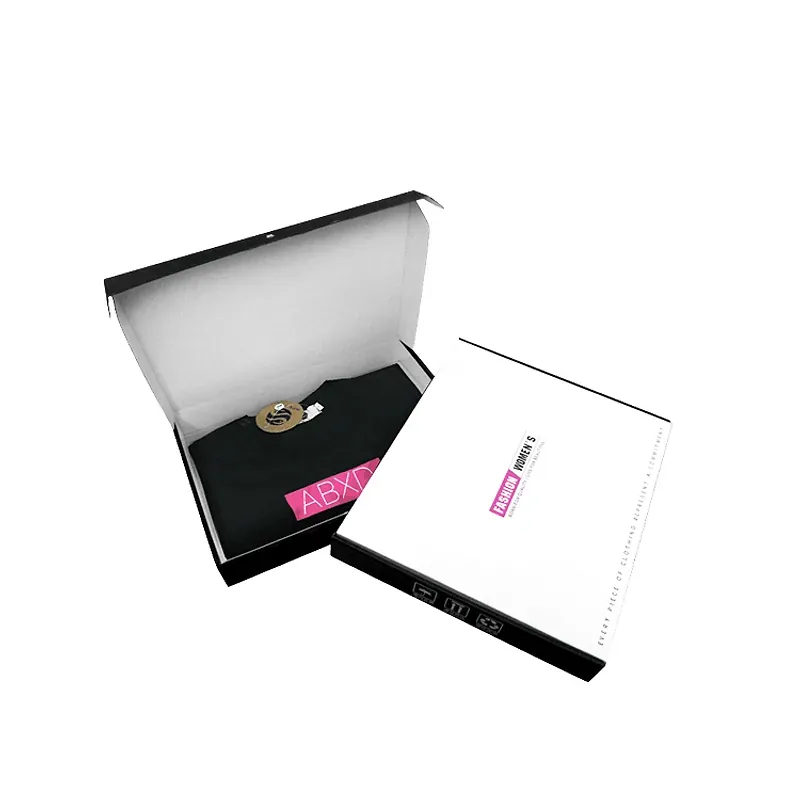
White cartons suit the full range of closures, and the choice follows the product. A straight tuck end is the economical default for light retail goods, easy to erect and easy to fill. A reverse tuck end keeps the front panel clean on a crowded shelf, since the top flap tucks toward the back. For premium goods, a rigid lid and base box in white board feels deliberate every time it opens, and a magnetic close adds ceremony. A sleeve over a white tray gives a drawer-like reveal that suits gift sets and multi-piece collections.
White Cartons for Cosmetics and Gifts
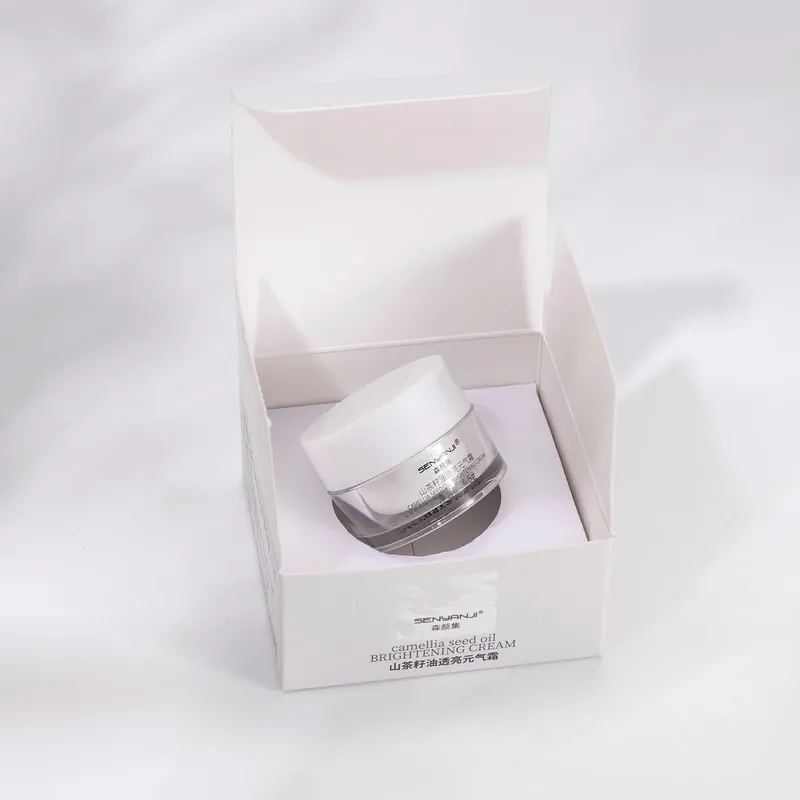
Cosmetics and gifts are the natural home of the white carton. A serum bottle, a candle or a jewelry piece all look more valuable against a clean white ground, and the carton becomes part of the present. White carton boxes in this role earn their place through detail: a crisp fold, a tight fitting lid, a foil mark that catches the light. Sizing matters more here than in any other category, because a gift carton that is too large makes the product look small. Test the fit with the real product, and keep the inner presentation simple so the product stays the focus.
White Cartons for Food and Personal Care
Food and personal care goods need white cartons that stay clean through handling and storage. Tea, supplements, soap and skincare all sit well in white, because the color signals hygiene and care. An inner liner or a grease resistant layer keeps oil and moisture from staining the board, which shows fast on white. Print should carry the information buyers need at a glance: ingredients, weight, usage and storage advice, set large enough to read at arm's length. For food goods, raise any material statements at the quotation stage so the board and liner choices can be confirmed per order.
Windows, Foil and Spot Color on White
White board takes decoration well, and small accents go further here than on any other ground. A window cut into the front panel shows the product while the white frame keeps the presentation clean, though the opening must stay clear of score lines so the panel keeps its strength. Foil stamping in gold or silver reads as luxury on white, but one foil element is enough: foil on every panel turns premium into noise. A single spot color, used consistently across the range, builds recognition faster than a rainbow of inks. Restraint is the whole strategy.
FSC-Ready White Board
Buyers who care about sourcing ask the same question of white board as of any other: where does the pulp come from. FSC-ready board is available for orders that need chain of custody paperwork, with the documentation following the order so the claim on the carton matches the material inside it. White board uses bleached pulp, and the bleaching process matters to some buyers, so ask about the method if your market has a preference. Raise the question at the quotation stage so the board choice is confirmed per order rather than assumed after sampling.
Sizing White Cartons Without Waste
Sizing starts from the product, not from a list of standard sizes. Measure the product at its widest and tallest points, then add the clearance it needs to slide in without catching and to sit without rattling. White carton boxes sized this way use less board, ship in smaller master cartons and look better on the shelf, because the carton fits the product instead of swimming around it. For a range of products, a shared outer size keeps the shelf line tidy and lets one shipping carton serve the whole range. White board shows waste too: an oversized carton looks empty, not generous.
Packing and Shipping White Cartons
White cartons need cleaner handling than any other color, because every mark shows. We pack 100 pcs per master carton as the standard, and each carton is capped at 22 kg so handlers can lift it safely and stacking stays honest. Bundles are banded rather than loose, which keeps edges clean and stops the cartons from rubbing against each other in transit. Mark the master cartons with orientation arrows, and keep the outer carton plain: branded outer cartons invite pilferage on long routes. Store master cartons off the floor in a dry warehouse, away from dust and direct light.
Cost Drivers in a White Carton Run
White board costs a little more than kraft, but the board is only part of the total. Tooling for a new die shape is the first cost, and sharing one die line across several print variants spreads it further. Print complexity is the second: a single color design on white can look superb, while full color with foil and spot UV adds passes. Our annual output is around US$10 million, which keeps unit pricing steady across the year. Ordering all finishes in one pass avoids a second setup charge, and a clean, simple design often costs less while selling better.
Every production run carries a 60-day guarantee, so a defect traced to materials or workmanship has a clear path to a remedy.
Our Factory Floor in Humen
The factory in Humen covers 5,000 m², with about 100 staff working across cutting, printing, finishing and packing. White cartons get the cleanest benches on the floor, because a speck of dust that vanishes on kraft shows plainly on white. Operators change gloves between dark ink work and white runs, and finished cartons are packed promptly into sealed bundles. Our cartons have reached 80+ countries, and more than 50+ brands have trusted us with their packaging. Across 1,000+ cases, the white orders that repeat are the ones where the buyer chose the board for the shelf life, not only for the first impression.
Quality Checks Before Dispatch
White cartons get an AQL inspection before they leave our floor, with checks that match the color. Brightness is checked against the approved proof under standard lighting, since white boards differ slightly in tone between lots. Edges are checked for brown show-through at the folds, where the cut exposes the inner board. Print registration is checked at the corners, where small cartons show drift first. The closure is opened and closed to confirm it reseats smoothly. The defects that reach customers are almost always the ones skipped here, which is why inspection is never shortened to save a day.
MOQ, Sampling and Production
Starting a white carton order takes little commitment. MOQ is from 100 pcs for every process, and the unit price drops as the quantity grows, so a first order can stay small while the brand tests the shelf. Samples take about 5 days, with a free digital sample available so the buyer can check brightness and print on the real board before approving bulk. Production takes 10-20 working days after sample approval, with rigid sets and multi-piece gift cartons at the longer end of that range. Payment starts with a 30% deposit, and every order is verified to AQL inspection standards before dispatch.
Frequently Asked Questions
Why does a bright white carton yellow faster under shop lighting?
White board yellows because lignin left in the fibers reacts to ultraviolet light, and shop lighting carries enough ultraviolet to speed the change. Boards with low lignin content resist yellowing far longer, which is why the board grade matters more than the initial brightness number. Store white cartons away from direct light and choose a light stable grade for long shelf display.
Which white board stays bright after months in a warehouse?
A low lignin coated board stays bright longest, because the coating seals the surface and the pulp carries little of the material that yellows. Keep the cartons in sealed bundles, away from windows and fluorescent tubes, and off the floor. Even the best board will shift if it sits in sunlight, so warehouse placement matters as much as the board grade.
Can white cartons carry dark, heavy ink without showing through inside?
Yes, dark heavy ink prints cleanly on white board when the board is heavy enough to block show-through. A mid weight board in the standard range stops most ink from ghosting to the inner face. For very dark designs, a heavier board or a printed inner face solves the problem completely, so share the artwork density when requesting a quotation.
What keeps white carton edges from showing brown board at the folds?
White board with a white core keeps edges clean, because the cut face matches the printed face. Boards with a gray or brown core show a dark line at every fold and cut edge. Ask for a white core board when the design leaves edges visible, and check the folded sample closely, since the edge color only appears after cutting and folding.
How do you choose between a glossy and a matte white finish?
Choose gloss when the design relies on bold color and shelf impact, since gloss sharpens ink and catches the light. Choose matte when the brand wants a calm, premium feel and the carton will be handled often, since matte hides fingerprints. For cosmetics and gifts, matte usually wins; for bold retail packs with strong graphics, gloss earns its place.
Does a white carton need a liner to hide the contents from view?
A white carton needs a liner only when the product shows through a thin wall or when the contents could stain the board. Heavier board hides most products on its own, and a printed inner face blocks the view completely. For food or oily goods, a liner serves a second purpose: it keeps grease and moisture from reaching the board and marking the print.
Why do fingerprints show more on white cartons than on kraft?
Fingerprints show more on white because the pale surface offers high contrast with the oils left by skin, while the brown, fibrous face of kraft hides them. Gloss finishes make the problem worse by reflecting light across the mark. A matte lamination reduces the contrast, and handling cartons with clean, dry hands during packing keeps the worst marks off the finished cartons.
Conclusion
White carton boxes earn their place when the board, the finish and the print work together toward one clean impression. The decisions that matter most are the board grade, the finish and the discipline of the final inspection. Get those three right and the carton will carry the brand as faithfully as it carries the product. To start with a sample on your own product, Request a Wholesale Quote and tell us the product size, the finish you prefer and the market it will sell in.