Buying Guides
Wedding Favor Boxes: Small Structures at Volume
Wedding favor boxes at volume: unit economics, variable-data personalisation, folding efficiency and batch deliveries, MOQ from 100 pcs, factory since 1998.

Opening
Wedding favor boxes are the smallest boxes most programmes buy and the easiest to get wrong at volume. The unit is trivial — a few grams of board, a handful of creases, perhaps a name and a date — but quantities run into thousands of units per programme, and every cent of avoidable cost is multiplied by that count. Three levers decide whether the project lands: the structure matched to the unit economics, the personalisation method matched to the order pattern, and the assembly plan matched to whoever folds the boxes.
The judgments below come from our factory in Humen, Dongguan, where we have produced small-format folding cartons and rigid favour cases since 1998, inside a portfolio of 1,000+ cases that spans stationery brands, venues and event businesses. Favour boxes look like a beginner product and behave like an industrial one: the tolerances, the print set-ups and the freight rules are identical to any other carton, and volume amplifies every decision that was left open at briefing.
Use the guide before you brief the factory. A brief that fixes structure, personalisation method and assembly plan returns a quotation within about 24 hours and a free digital sample in about 5 days; a brief that leaves them open returns questions, and the answers cost the weeks between engagement and date.
What Wedding Favor Boxes Cost: The Unit Economics
At this format, size stops driving cost and process steps take over. A favour carton occupies a small footprint on a large press sheet, so board consumption is minor; what the buyer pays for is the number of passes — print, die-cut, crease, then glue or fold — and each pass costs roughly the same whether the box is large or small. A candy favour carton in 300 to 500 g board with a single print pass is priced almost entirely in process. The same carton with a foil name, an interior print and a glued base triples those passes on a unit that sells for pocket change, which is why the pass count, not the size, is the number to negotiate.
Structure follows the same logic. The workhorse is a folding carton in 300 to 500 g board, shipped flat, folded by hand at the venue or the workshop and priced to disappear into the wedding budget. The premium is a small rigid case in 1200 g greyboard wrapped in 157 g art paper — the build that stays on the table as a keepsake for sugared almonds or small gifts, where the box is meant to survive the event. Between the two sits the side-seam-glued carton with a crash-lock base, which trades one small extra process pass for a box that springs open in a single motion.
Freight arithmetic rewards the small format, with one check. Master cartons are capped at 22 kg, and the packing baseline of 100 pcs per master carton applies to rigid builds; flat-packed favour cartons fill the same carton several times over, so per-unit freight falls to a fraction. The check is the rigid case: a 1200 g build with a wrap and a fill approaches the 22 kg ceiling faster than any folding carton, and the carton fit belongs in the specification, not in a discovery at packing.
The price ladder at quotation is worth understanding before comparing quotes. Board moves the price least at this scale — the unit consumes little of it — while each additional pass moves it most: a second print colour, a foil block, an interior print and a glued base each add a set-up and a handling step. A quote that looks cheaper on paper sometimes hides fewer creases or a thinner board at the corners, so the comparison is made line by line against the specification, not on the total. The discipline that works is to fix the pass list first — the processes the box genuinely needs — and then let the factory price identical specifications against each other.
Across 50+ brands the pattern repeats. Resellers serving many weddings per season standardise on one or two folding structures and put the variety in the print; venues buying for a single property take the rigid case for the top-table package only. The channel decides the structure more reliably than the artwork does, and the decision costs nothing when it is made before the sample.
Personalisation: Names, Dates and Variable Data
A favour box carries two kinds of print, and they price differently. Fixed design — a monogram pattern, a border, a motif — is a conventional print job, efficient at volume. Variable data — the couple's names, the wedding date, the venue — changes the file with every order, and that is the defining difficulty of the category: the stationery trade runs many small personalised orders rather than few large fixed ones. Digital print answers the variable side without plate costs; conventional processes answer the fixed side at a lower unit rate. The match between order pattern and print process is a quotation decision, made with the quantity per design stated plainly.
The workflow punishes late artwork more than anything else. Final names, spelling, date format and capitalisation are locked before sampling, because the sample is the proof: type set at the wrong size on the digital sample will be wrong at the same size on every box in the order. Technical questions about file formats and type sizes are answered within 12 hours, so the lock-in happens on a schedule instead of drifting.
Legibility is the second constraint on personalisation. Couple names are often set in scripts and serif faces that read beautifully on an invitation and poorly on a box the size of a palm; the sample shows how the type behaves at production size, on the production board, under shop light rather than screen glow. Contrast matters as much as the face: a light foil on a pale wrap disappears, and fine white type on kraft board loses its hairlines in print. The rule is simple — the artwork is approved on the printed sample, never on a screen, and very fine type is tested rather than assumed.
One decision deserves a rule: keep the variable text inside a defined safe area of the artwork, so a longer name does not collide with the border or the closure. A box printed with names set edge to edge is one long surname away from a reprint. The factory checks the safe area on the free digital sample, which arrives in about 5 days — the cheapest place this problem will ever appear.
Assembly Labour and Folding Efficiency
Somebody folds every box, and at favour volume that somebody is rarely the factory. Venues, planners and families fold cartons on a table in the week of the event, so minutes per box are a real cost line, and they are invisible in the unit price. The crease quality decides the folding speed: a crisp, well-scored crease folds in one motion and stays square; a blunt crease fights the folder, shows white lines at the corners and doubles the time. Creasing quality is a factory variable, and it is worth a question at quotation rather than a discovery on the folding table.
Structure is the other half of folding efficiency. A crash-lock base springs open when the two sides are squeezed; a fully hand-folded base needs four separate folds and a firm thumb; a side-seam-glued carton arrives as a single fold-and-tuck. Each convenience is one small extra process pass at the factory, and at volume the trade is usually worth it: a few cents per box against a minute of labour per box, multiplied by every unit in the programme.
Closures carry the same labour arithmetic. A belly band closes a box with one wrap and reads as styling; a sticker seal closes it with one press and can be applied by the venue at speed; a ribbon tie doubles the assembly time and belongs on programmes where the reveal justifies it. The honest comparison is made with the person who will actually close the boxes — the planner, the venue staff, the family — and the closure is chosen for their hands, not for the catalogue photograph. Sample packs include the closure applied, so the timing test at sampling measures the whole operation rather than the folding alone.
Where the build is rigid, assembly stays with the factory. Small rigid cases in 1200 g greyboard are wrapped and assembled on our 5,000 m² floor by about 100 staff running wrap and assembly as consecutive cells, so the boxes arrive built and the client folds nothing. The sampling check for either route is the same: ask an untrained person to fold or open ten boxes and time it, then inspect the corners for gaps and white lines. What they struggle with on the tenth box, the wedding guests will struggle with on every one.
Volume Planning: Batches, Deliveries and the Calendar
MOQ starts from 100 pcs per size and design, which keeps a multi-design trial realistic: a planner comparing two structures at 100 pcs each is testing 200 units, not committing to thousands. Complex builds — rigid cases with magnets or drawers — run 300-500 pcs because placement dies and hand assembly dominate cost at low volume. Exact quantities per design are confirmed on the quotation, which arrives within about 24 hours of a complete specification.
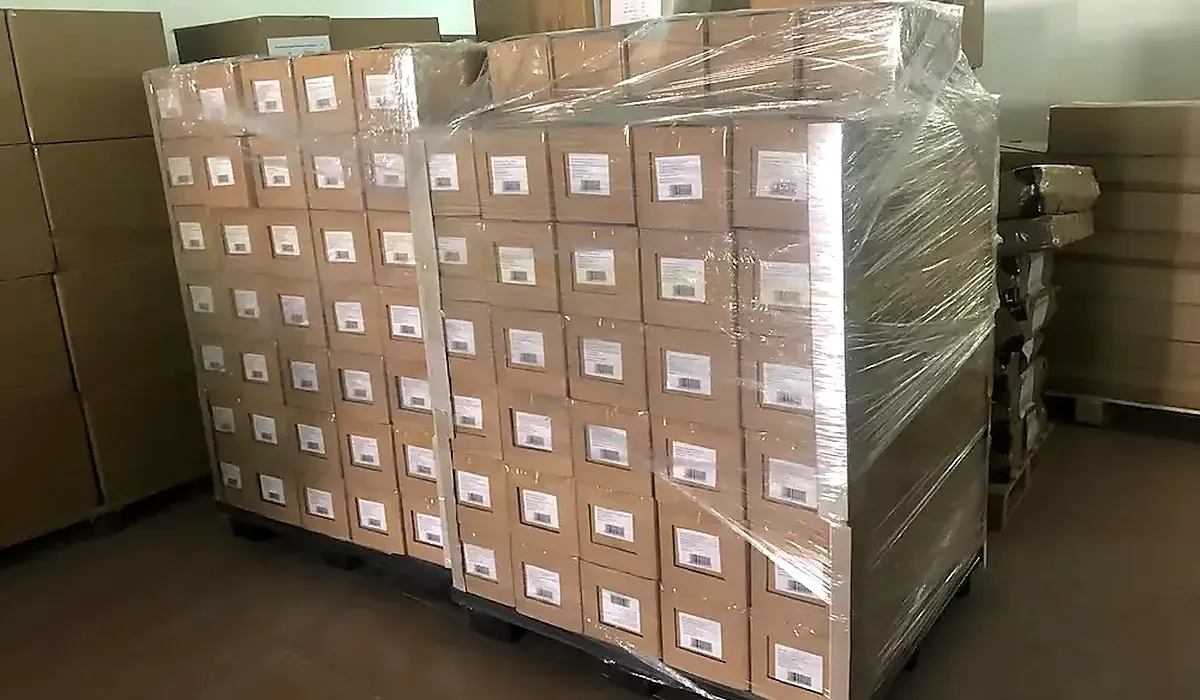
Deliveries can follow the wedding calendar instead of the production calendar. A common pattern produces the full volume in one 10 to 20 working days run after approval and releases it in batches — stationery showings first, favours closer to the date — so the client stores flat cartons rather than built boxes. Payment is 30 percent deposit and the balance before shipment, and AQL inspection runs before packing so every batch is sampled against the approved master.
Sustainability and scale sit in the same closing paragraph of the brief. The factory is FSC-ready and can supply certified board on request — flag it at quotation so certified stock is allocated before production scheduling. Output runs at about US$10 million a year and ships to 80+ countries, which places even a small favour order inside a normal production flow rather than at its margins.
Resellers and venues that run a wedding season rather than a single wedding plan the volume differently. Their designs repeat across events with the variable data changing, so the specification stays standing while the print files rotate, and reorders return quotations within about 24 hours because the structure is already approved. For them the MOQ works per size and design, and the practical pattern is a small stable of approved structures — one folding carton, one rigid case — with the personalisation carried entirely by print. That pattern keeps every order inside proven tooling, which is where the unit economics of a small box are actually won.
Frequently Asked Questions
What structure works best for wedding favor boxes?
A folding carton in 300 to 500 g board is the workhorse: it ships flat, folds quickly at the venue and keeps the unit cost inside a wedding budget. A small rigid case in 1200 g greyboard with a 157 g art paper wrap suits sugared almonds and gift favours that stay on the table. Both structures are sampled before production is scheduled.
How does name and date personalisation work?
Personalisation is a variable-data job: the couple's names and the date change with every order, so the print process is matched to the order pattern — digital print for many small personalised runs, conventional processes for large fixed ones. Final names, spelling and capitalisation are locked before sampling, and the free digital sample in about 5 days shows the type size on the real box.
What is the MOQ for personalised favour boxes?
MOQ starts from 100 pcs per size and design, so two structures can be trialled for 200 units. Rigid cases with magnets or drawers typically run 300-500 pcs because placement dies and hand assembly dominate cost at low volume. Exact quantities per design are confirmed on the quotation, which is issued within about 24 hours of a complete specification.
How long does sampling and production take?
Technical questions are answered within 12 hours and a full quotation arrives within about 24 hours. A free digital sample takes about 5 days from a complete specification, and mass production runs 10 to 20 working days after approval. Payment is 30 percent deposit and the balance before shipment, so the calendar is predictable from the day the brief is complete.
Can one order be delivered in batches?
Yes. A common pattern produces the full volume in one production run after sample approval and releases it in staged deliveries — stationery showings first, favours closer to the wedding date — so flat cartons are stored rather than built boxes. Batch quantities and dates are agreed at quotation, and each release is inspected to AQL standards before packing.
How are favour boxes packed and checked?
Rigid builds follow the packing baseline of 100 pcs per master carton, with carton weight capped at 22 kg; flat-packed folding cartons fill the same carton more densely and are verified against the same ceiling. AQL inspection runs before packing, so every carton is sampled against the approved master rather than merely counted, and export packing follows the destination market.
Conclusion
Wedding favor boxes reward buyers who treat a small box as an industrial product: fix the structure against the unit economics, lock the names and dates before sampling, and price the folding labour as deliberately as the board. The programme then runs on a predictable calendar — quotation within about 24 hours, a digital sample in about 5 days, and 10 to 20 working days of production after approval, released in batches if the wedding calendar needs it. Send your quantities, structures and personalisation wording, and Request a Wholesale Quote from our Dongguan factory; the specification questions come back within 12 hours.