Buying Guides
Designing the Unboxing: Layers, Reveals and Keep-Me Boxes
Unboxing experience design: transit, product and message layers, reveal choreography, keep-me boxes and cost allocation, from our factory in Humen since 1998.
Opening
The unboxing experience is designed, not improvised. Every filmed opening — and every quiet one at a kitchen table — moves through the same three layers: the transit layer that arrives battered and opens clean, the product layer that presents the purchase, and the message layer that says what the brand wants remembered. When the three layers are designed together, the film looks effortless; when they are improvised, the viewer sees the seams.
The judgments below come from our factory in Humen, Dongguan, where we have engineered packaging since 1998 across 1,000+ cases for 50+ brands, including a steady share of programmes built specifically for the camera. The craft is the same either way: assign a purpose to each layer, choreograph the reveal, and spend the budget where the eye lands first.
Use the guide before you brief the factory. A brief that names the three layers and the reveal sequence returns a quotation within about 24 hours and a free digital sample in about 5 days — the sample is where the choreography is rehearsed, because a reveal that works on paper can fail at the lid.
The Unboxing Experience in Three Layers
The transit layer is protection with a role in the story. A mailer or shipping carton takes the damage of the journey — courier stacks, doorsteps, weather — and the unboxing begins with how it opens: a tear strip gives a clean, satisfying entry where a knife gives a hacked edge. The transit layer is usually a folding carton in 300 to 500 g board, strong enough for the lane and light enough for the freight arithmetic, with master cartons capped at 22 kg and a packing baseline of 100 pcs per master carton on standard builds.
The product layer is the box the camera actually points at. A rigid build in 1200 g greyboard wrapped in 157 g art paper holds flat walls and square corners under studio light; a folding carton carries the same artwork at a lower weight when the programme ships at volume. The product layer also decides the reveal: lid lift, drawer slide or flap fold, each with its own rhythm and its own cost.
The message layer is everything placed between the two: tissue, a welcome card, a printed interior, a care note, a sample. It is the cheapest layer per element and the one most often left to the last week of a project. A card that arrives crumpled because it had no slot tells the viewer the brand forgot it. The message layer is specified like structure — position, size, sequence — because the camera reads it as carefully as it reads the product.
The layers are worth sourcing in one place for a reason the invoice hides. When the transit carton, the product box and the message cards come from the same factory, the brand colour matches across all three, the tolerances fit — a card slotted for a wrapped lid actually fits — and the whole kit is inspected together before it ships. Split the layers across suppliers and the mismatches surface at the worst moment: a card a fraction too wide for its slot, an inner box that rattles in a case sized from a drawing rather than a sample. One floor, one approval and one AQL gate is the cheaper system even when a line item looks dearer.
Reveal Choreography: Angle, Tear Strips and Card Placement
The reveal is a sequence of small mechanical decisions. The lid angle comes first: a magnetic close holds the lid at a posing angle instead of letting it fall back, and a ribbon pull sets the opening speed the film will follow. A drawer slide delivers a two-stage reveal, where the outer sleeve lifts to free an inner tray, and the second movement is the one viewers remember. None of these mechanisms is expensive alone; together they are the difference between an opening that photographs well and one that has to be edited.
Tear strips belong on the transit layer and are placed for the direction the video points. A clean tear across the top face reads better than a side rip, and the tear line decides which surface is seen first — a printed top or a bare flap. On programmes where the transit carton is on camera, the tear strip is treated as a print feature, not a packing one.
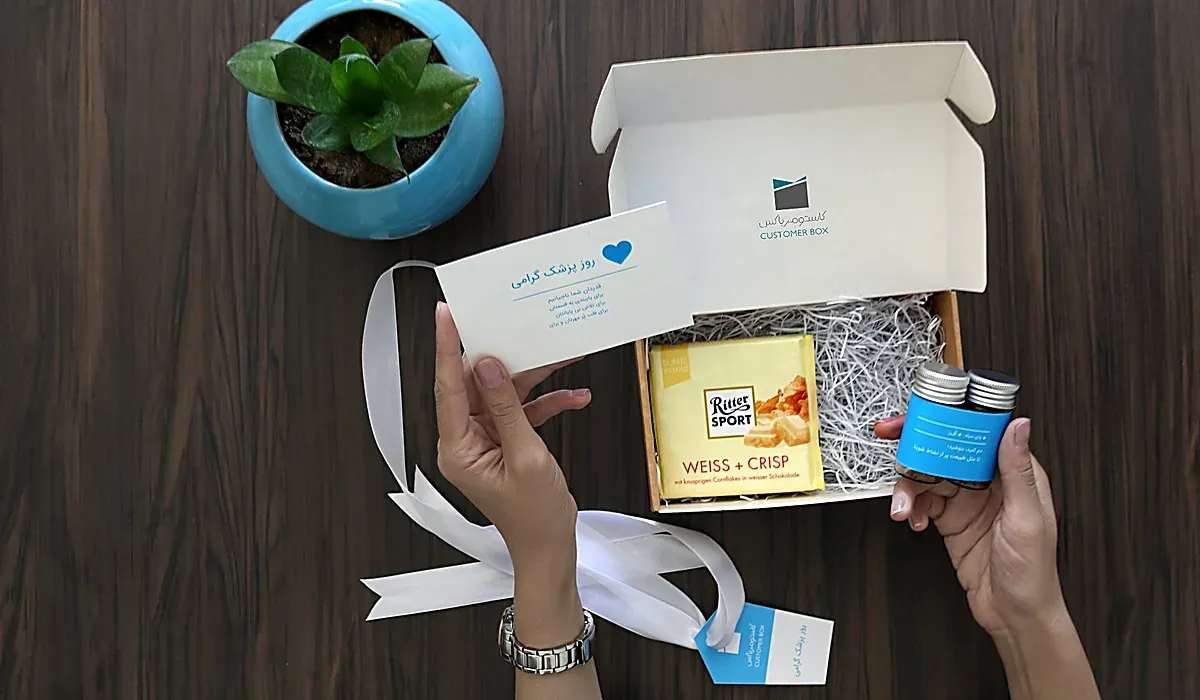
Card placement follows the same rule as stagecraft: what is seen first carries the first message. A welcome card laid on top of the tissue is read before the product appears; a card slotted under the insert is discovered at the lift-out, which is the moment the owner handles the box with the most attention; a message printed inside the lid is seen by the person who keeps the box. Each position earns a different sentence of copy, and the artwork brief should say which sentence goes where.
The choreography is rehearsed at sampling, not invented at the studio. Film the opening of the free digital sample — it arrives in about 5 days — with the same hands and lighting the campaign will use, and watch where the eye goes: the surfaces it visits are the surfaces the budget should serve. Technical questions about mechanisms are answered within 12 hours, while the sequence can still be changed at the cost of a drawing rather than a die.
Two realities keep the choreography honest. The first is sound: a magnet snap, a tissue rustle and the slide of a drawer are the audio track of every unboxing film, and they are engineering choices — magnet strength, tissue weight, drawer tolerance — not accidents. The second is the majority: most customers never film anything, and the reveal has to work one-handed at a kitchen counter as well as it works on a tripod. A lid that needs two hands, a tear strip that runs the wrong way or a card that falls out when the box tilts survives on film and fails in life, so the sample is tested both ways before approval.
Keep-Me Boxes: Designing for a Second Life
A keep-me box is built to outlive its contents: drawer boxes become desk storage, lid-and-base cases keep photographs and cards, hinged boxes hold the products they once carried. The test is whether the structure is useful without the product inside it — a drawer that holds stationery, a case that stacks, a lid that stays attached through hundreds of openings. Programmes that pass the test earn a second life on a shelf, and every day of that life is a daily impression the brand did not pay for.
Durability is a board decision. The same 1200 g greyboard that survives transit survives a drawer, and wrapped in 157 g art paper the corners stay glued and the wrap resists peeling. Hinges and magnets specified for repeated cycles rather than a single opening are why their MOQ runs 300-500 pcs: the hardware and the hand assembly dominate cost at low volume, and a keep-me box that fails at the fiftieth opening was never a keep-me box.
Two design rules keep the box keepable. First, date the message, not the box: seasonal artwork printed as a belly band or an insert leaves the structure neutral, so the box survives the season it was bought in. Second, make reuse self-explanatory — a printed line or icon inside the lid tells the owner what the box is for without a manual. Sustainability completes the story: the factory is FSC-ready and can supply certified board on request, and a box designed for a second life is the most believable environmental claim a programme can make.
Keep-me design is not right for every programme. Replenishment products — the second and third order of a consumable — gain little from a structure the customer already owns, and the honest answer is a lighter product layer with the savings moved into the message layer. The test is frequency: a first purchase earns a keep-me box, and a repeat purchase inherits one. Programmes that answer that question at briefing avoid paying presentation cost twice, and the specification states which order in the lifecycle the structure is built for.
Cost Allocation: Spend Where the Eye Lands First
The eye lands on three surfaces, in order: the lid exterior as it is lifted, the lid interior at the moment of opening, and the first product surface revealed. Budget follows that order. A foil logo on the lid top, a printed message inside the lid and a clean first product surface carry most of the perceived value; the box base, the underside of the tray and a fourth finish on a surface the size of a coin earn almost nothing. Interior printing is the highest-value pass in the sequence because it is seen once and remembered, and soft-touch lamination is the finish most often chosen when the occasion is the message.
The discipline is two finishes; a third adds a set-up pass and registration risk that small surfaces rarely repay.
A workable split for a filmed programme puts the smallest share in the transit layer, the largest in the product layer and a deliberate, visible share in the message layer, because the message layer is where inexpensive components read as care. Tissue folded rather than stuffed, a card printed both sides, a seal centred rather than rushed — each costs little and photographs distinctly. The split is written into the brief per layer, so the quotation prices the intention rather than a vague word like premium.
The programme mechanics fit the budget logic. MOQ starts from 100 pcs per size and design; a quotation arrives within about 24 hours of a complete specification; mass production runs 10 to 20 working days after approval; payment is 30 percent deposit and the balance before shipment; AQL inspection runs before packing. Scale sits behind the order: output of about US$10 million a year, shipments to 80+ countries, and a 5,000 m² floor where about 100 staff run wrapping, inserting and assembly as consecutive cells, so a finish added at sampling moves into production without a second set-up.
The budget conversation is settled across two samples, not one. The first sample proves the structure and the reveal order; the second moves a finish if the film of the first shows the eye going where the money did not. Each pass costs days, which is why the sequence starts with a complete specification — the calendar has room for two iterations only when the front of the programme is not wasted on open questions. Buyers who arrive with the layer map and the reveal sequence already drawn spend their iterations on refinement, and the refinement is where the programme becomes worth filming.
Frequently Asked Questions
What are the three layers of an unboxing experience?
Transit, product and message. The transit layer takes the journey and opens clean — a tear strip on a 300 to 500 g folding carton works well. The product layer is the box the camera points at, typically 1200 g greyboard wrapped in 157 g art paper. The message layer — cards, tissue, printed interiors — is specified like structure, with position and sequence decided at briefing.
How do you design the reveal moment?
Decide the sequence of small mechanics: the lid angle held by magnets or set by a ribbon pull, the tear strip direction on the transit layer, and the card placement so the first message is read before the product. A drawer build delivers a two-stage reveal where a sleeve lifts an inner tray. The choreography is rehearsed by filming the digital sample before production.
What makes a box worth keeping?
A structure that is useful without the product: drawer boxes that hold stationery, cases that keep photographs, lids that stay hinged after hundreds of cycles. Durability follows the board — 1200 g greyboard with a 157 g wrap — and the seasonal message should sit on a belly band rather than printed large on the structure, so the box survives its season. A hint inside the lid makes reuse self-explanatory.
Where should the budget go first?
Where the eye lands: the lid exterior as it lifts, the lid interior at the moment of opening, and the first product surface. A foil logo on the lid top and a printed message inside the lid carry most of the perceived value; the base and the underside of the tray earn almost nothing. Two finishes are usually the ceiling before set-up passes outweigh the gain.
What is the MOQ for a custom unboxing programme?
MOQ starts from 100 pcs per size and design on standard structures, so a pilot set of layers can be trialled affordably. Builds with magnets, hinges or drawers typically run 300-500 pcs because placement dies and repeated-cycle hardware dominate cost at low volume. Exact quantities per design are confirmed on the quotation, which arrives within about 24 hours of a complete specification.
How is the experience verified before shipping?
Two checks carry most of the weight. The choreography is filmed at sampling: the digital sample is opened with the campaign's hands and lighting, and the sequence is adjusted while changes are cheap. Then AQL inspection runs before packing, cartons are verified against the 22 kg ceiling, and standard builds follow the packing baseline of 100 pcs per master carton.
Conclusion
An unboxing experience is three layers and one sequence: a transit layer that opens clean, a product box that presents under studio light, and a message layer placed where the eye lands first. Choreograph the reveal with lid angle, tear strips and card order, design the structure for a second life, and spend the budget on the surfaces the camera loves. The mechanics are straightforward — quotation within about 24 hours, a digital sample in about 5 days, and 10 to 20 working days of production after approval. Send your layers, sequence and quantities, and Request a Wholesale Quote from our Dongguan factory.