Buying Guides
Custom Boxes Arrived Damaged: Carrier or Supplier?
Custom Boxes Arrived Damaged: Carrier or Supplier?: The pallet arrived with a crushed side, and the buyer did the natural thing: called the factory. Custom...
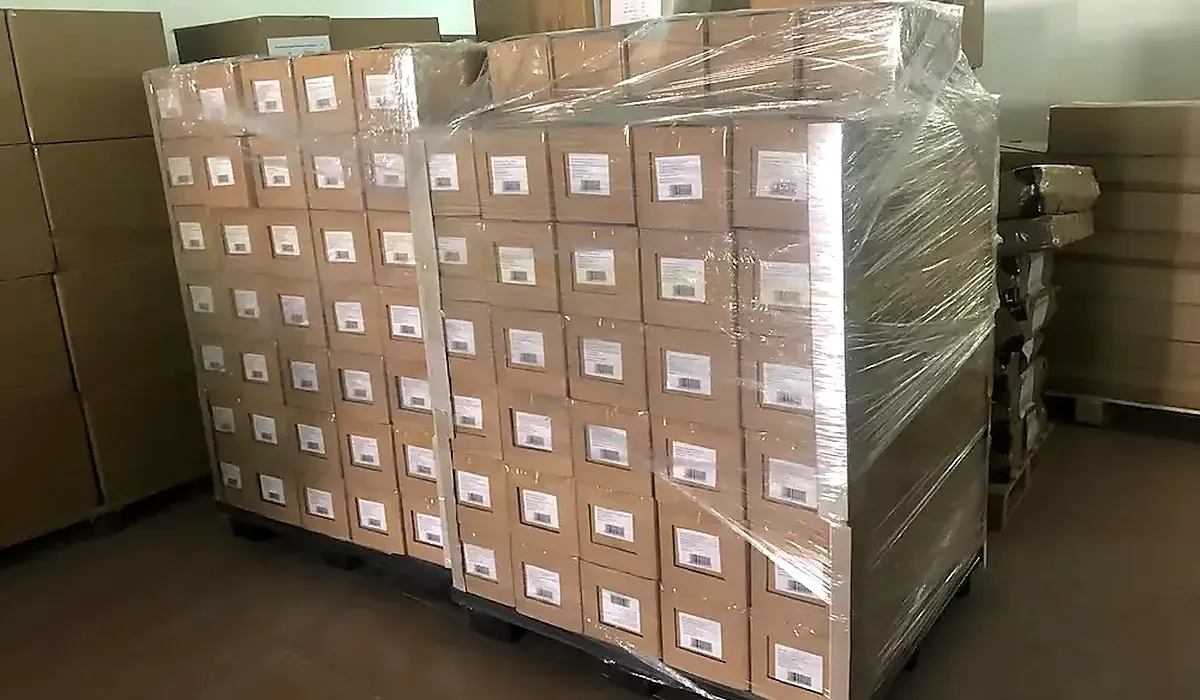
The pallet arrived with a crushed side, and the buyer did the natural thing: called the factory. Custom boxes arrived damaged is a diagnosis before it is a dispute, and the evidence is gone 48 hours after delivery.
The factory asked for photos of the cartons before opening. The buyer had already opened everything, flattened the cartons and thrown away the pallet wrap. The evidence that would have settled the question — whether the damage happened in the container or at the distribution center — went into the skip.
At boxeschina, we handle damage claims from both directions — Since 1998, 1,000+ projects, 80+ countries — and the honest answer is that most damage is neither purely "the supplier's fault" nor purely "the carrier's fault." It is a design decision that met a handling reality.
This guide is about diagnosing which, quickly, before the evidence disappears.
The 48-Hour Rule
Damage claims are decided by evidence collected in the first two days, and by paperwork that must be noted at delivery.
Do this before you open anything:
Photograph the pallet or carton as it arrived, including the label and any carrier stickers. Photograph the damage from three angles, with something for scale. Note the damage on the delivery document — "carton 3 crushed, signed subject to inspection" — before you sign. A clean signature is the single most common reason a carrier claim fails. Photograph the inner packing as you open: void fill, corner protection, how the units sat. Count and photograph the damaged units in place, then separately. Keep the cartons, the void fill and the pallet wrap until the claim is resolved.
A clean signature followed by a damage report three days later is a claim the carrier will decline, correctly.
When Custom Boxes Arrived Damaged: Read the Pattern
Damage has a signature. The shape and location of the failure usually identifies the cause before anyone argues.
In practice the ranges work out as follows. Damage pattern: Crushed corners on outer cartons, units inside intact; What it usually means: Stacking load exceeded carton compression strength; Likely owner: Supplier (carton spec). Damage pattern: Crushed corners, units also crushed; What it usually means: Impact or drop, not compression; Likely owner: Carrier, or insufficient corner protection. Damage pattern: Puncture or tear on one face; What it usually means: Forklift, cargo hook, or hub handling; Likely owner: Carrier. Damage pattern: Water staining, wavy board, musty smell; What it usually means: Container condensation or ingress; Likely owner: Carrier or freight forwarder.
The distinction that matters most: compression damage versus impact damage. Compression crushes vertically and leaves units intact if the carton absorbed it. Impact crushes locally and takes the contents with it.
Where the Journey Actually Breaks Things
A unit passes through more handling than most buyers imagine:
Factory packing — packing method, void fill, carton closure Inland haul to port — road conditions, loading, multiple drops Container loading — stacking, lashing, weight distribution Ocean transit — humidity, temperature swings, container condensation ("container rain") Destuffing — forklifts, dropped pallets Carrier hub — conveyor drops, sorting, rehandling Last mile — the highest-impact leg, and the shortest Your warehouse — stacking above compression strength
Damage that appears on the outer carton but not the contents happened at step 3 or later. Damage that appears on the contents but not the carton is a packing-method problem at step 1.
Supplier-Side Causes Worth Fixing
These are the ones a factory controls, and they are often cheaper to fix than to argue about.
Carton grade chosen for cost, not for load
A single-wall carton is fine for light, non-stackable goods. It fails when stacked four high for 30 days in a humid container. The relevant number is box compression strength against the actual stacked load, not the board's thickness.
Fix: specify the stacked load and duration in the PO, and ask the factory to confirm the carton grade against it.
No corner protection
Rigid boxes have weak corners and a fragile wrap. Units shipped loose in a carton will rub, scuff and crush at the corners.
Fix: corner protectors, individual tissue or polybag, and a divider or tray so units cannot move.
Void fill that moves
Loose fill settles. Once it settles, the contents shift, and shifting contents break corners.
Fix: fill to the top, use a retention tray, or size the carton to the product rather than to a standard size.
Overfilling
A carton packed beyond its capacity bursts seams and loses stacking strength.
Fix: define units per carton, and check the packed weight and cube against the carton's rating.
No moisture protection on humid routes
Ocean containers move through climate zones. Condensation forms on the container ceiling and drips onto the load.
Fix: desiccant where appropriate, a moisture-barrier liner for sensitive stock, and no cartons placed directly against the container walls.
Pallet configuration
Overhang is the classic error: cartons extending beyond the pallet edge lose most of their stacking strength, because the corner — the strongest part — is unsupported.
Fix: no overhang, corner boards, and stretch wrap that binds the load to the pallet.
Carrier-Side Causes
These are outside the factory's control, but not outside your influence.
Handling impact
Conveyor drops, forklift tines, and manual throwing at hubs. Visible as punctures, tears and localised crushing.
Influence: stronger cartons, corner boards, and fragile labelling that is actually respected.
Container condensation
A steel container crossing climate zones can produce free water inside. The damage looks like damp, not like an accident.
Influence: desiccant, liner bags, and avoiding peak humidity loading windows.
Poor lashing and weight distribution
Heavy cartons on top of light ones, or an unlashed load shifting in heavy weather.
Influence: a loading plan, and a forwarder who inspects the stow.
Rehandling in LCL
Less-than-container-load shipments are consolidated and deconsolidated, which means more touches and more opportunities for damage.
Influence: FCL where volume allows; better cartons where it does not.
Who Pays
Three mechanisms decide it, and they are often misunderstood.
The Incoterm. Risk transfers at a defined point. On FOB, risk passes when goods are on board; damage after that is yours or your insurer's, not the supplier's. On delivered terms, the supplier carries risk further. Know where your risk starts.
Cargo insurance. Carrier liability is limited — often by weight, not by value — and is rarely enough to cover custom packaging. Separate cargo insurance is the only reliable protection, and it must be in place before the shipment sails.
The supplier's replacement policy. Many factories will replace defective goods but not transit damage, because transit is not their risk. Ask what their policy covers before you order, not after.
A useful discipline: insure the goods, not the argument. A claim against a carrier for $6,000 of packaging will usually settle at a fraction of that, months later.
A Prevention Checklist
In practice the ranges work out as follows. Control: Specify carton grade against stacked load; Where it acts: Compression. Control: No pallet overhang; corner boards; Where it acts: Compression and impact. Control: Individual wrapping or tissue per unit; Where it acts: Scuffing. Control: Divider or tray to stop movement; Where it acts: Scuffing and impact.
If It Has Already Happened
Photograph everything now — cartons, labels, packing, units, with dates. Note it on the delivery document, or send a written reservation to the carrier within their stated window. Notify your insurer immediately. Most policies require prompt notice. Separate the damage types. Compression, impact and moisture are three different claims with three different owners. Quantify: units damaged, units at risk, cost to replace, cost of delay. Ask the supplier for a root-cause view, with photos of how the shipment was packed. A good factory will identify its own packing weakness rather than blame the carrier reflexively. Fix the spec before the replacement ships. Replacing damaged goods into the same carton invites the same result.
A buyer who puts all of this into one written brief gets a comparable quotation from the first reply, because every supplier then prices the same board, the same structure and the same packing pattern. A buyer who leaves the material open gets a number that looks lower and changes at the sample. That is why we ask for the grade, the dimensions and the destination together, and why the written material declaration travels with the order rather than arriving after it. Decide the specification once and the reorder becomes a repeat of a decision already proved on a physical sample.
The sample stage is where the argument is settled. Put the real product in the real box, close the lid, then pack the box into the real master carton and let it stand under a stacked load. A specification that survives that hour survives the channel; one that does not is a drawing change, not a gamble on the warehouse. We issue the free digital sample first and the physical approval sample second, and we ask that both be signed off against the same written specification, because a sample approved against a different one resolves nothing and merely moves the disagreement into production.
At goods-out the same discipline continues. Cartons are checked for grade, dimensions, printing, closure and packing pattern against the approved master, and the inspection record is kept with the order. That record protects the brand later: a shipment that left the factory within specification shifts any conversation about damage onto the handling that happened afterwards. It also makes a reorder boring in the best sense, because the plant is reproducing a documented decision rather than interpreting a memory of what the buyer liked last time.
Factory Specification Baseline
Our factory in Humen, Dongguan has run since 1998, with 5,000 m² of floor and about 100 staff delivering 1,000+ cases to buyers in 80+ countries for 50+ brands on roughly US$10 million in annual output. Rigid boxes are built on 1200 g greyboard wrapped in 157 g art paper; folding cartons use 300 to 500 g board. Board is FSC-ready, and the mill's written material declaration is attached to the order so the grade can be checked against the specification before production is scheduled. MOQ starts from 100 pcs, a free digital sample takes about 5 days, and mass production runs 10 to 20 working days after sample approval on a 30/70 payment schedule. Finished cartons pack 100 pcs per master carton at or below 22 kg, checked to AQL inspection standards before despatch. Rigid boxes ship assembled rather than flat, and bulk runs are printed by offset lithography.
FAQ
How do I tell compression damage from impact damage?
Compression crushes vertically across a face or corner and often leaves the contents usable. Impact is localised, with a puncture, tear or shattered corner, and usually damages the contents too. Finished cartons are checked to AQL inspection standards before despatch. Folding cartons use 300 to 500 g board, while rigid boxes ship assembled rather than flat.
The cartons were fine but the boxes inside were crushed. Whose fault?
Usually a packing-method problem — no corner protection, no divider, or too much void. That sits with the supplier's packing specification, not the carrier. Folding cartons use 300 to 500 g board, while rigid boxes ship assembled rather than flat. Payment follows a 30/70 schedule, with a 30% deposit and the balance before shipment.
Can I claim against the carrier without noting damage at delivery?
It becomes much harder. A clean signature is treated as evidence that the goods arrived in good condition. Always sign subject to inspection when you see damage. Payment follows a 30/70 schedule, with a 30% deposit and the balance before shipment. Bulk runs are printed by offset lithography once the approved sample is signed off.
Is carrier liability enough to cover custom packaging?
Rarely. Carrier liability is typically limited by weight or by a per-kilogram formula, which is far below the value of custom packaging. Insure separately. Bulk runs are printed by offset lithography once the approved sample is signed off. Our Humen, Dongguan factory has run since 1998 across 5,000 m² of floor with about 100 staff.
Should the factory replace transit damage?
Only if the contract says so. Transit risk usually transfers at the Incoterm point. The stronger lever is fixing the packaging spec so it survives the journey. Our Humen, Dongguan factory has run since 1998 across 5,000 m² of floor with about 100 staff.
How much stacking should a carton take?
Specify the real condition: how many cartons high, for how many days, in what humidity. Then ask the factory to confirm the grade against that load rather than against a generic description. The quotation is issued transparently, with no hidden fees and no surprise add-ons.
Conclusion
Damage is a diagnosis before it is a dispute. Photograph before opening, note it on the delivery document, and read the pattern: compression points to the carton spec, impact points to handling, moisture points to the route. Then fix the cause, not the invoice. A replacement shipment in the same carton will produce the same photographs. Send your dimensions, structure and quantities to our Dongguan factory and Request a Wholesale Quote. Put the grade, dimensions and packing pattern in writing at quotation so the reorder reproduces the same decision.