Buying Guides
Soy Candle Packaging: How Wax Type Changes Boxes
Wax changes the box: weight, scent load, surface marks, and burn behavior differ between soy and paraffin, and packaging should respond to each accordingly.
Opening
Soy candle packaging asks different questions of a box than paraffin does, and the differences start in the wax itself. Soy pours softer, cools slower, and carries scent differently, which changes how a jar travels, how long it should rest before boxing, and which finishes show fingerprints or frost. Buyers who treat every candle carton the same discover the gaps at the worst moment: a summer container arriving with marked lids and softened shoulders.
This guide walks through what wax type changes in practice: weight and softness in transit, scent retention and closure choices, surface behavior under finishes, and how blends complicate decisions. It is aimed at brand owners and buyers comparing waxes or running both, so the packaging decision is made once, correctly, and documented for every reorder that follows.
Why Wax Chemistry Reaches the Box
Wax is the heaviest, warmest, most reactive part of a candle, and the box wraps all of it. Softer plant waxes stay pliable longer after pouring, hold more fragrance oil at the surface, and show blooming or frosting as they age. Harder petroleum waxes cool firm, resist marking, and travel with fewer cautions. None of this makes one wax better; it means the packaging brief should say which wax is in the jar. When the quote request includes the wax type, structure, insert, and finish recommendations arrive aligned to reality.
Weight and Softness: Soy in Transit
A soft wax column moves. In a hot truck a soy candle can slump against the glass, and if the vessel is packed touching a printed wall, the wax leaves a mark that reads as a defect at receiving. Firmer waxes hold their shape through the same journey. For soy lines we plan slightly deeper cradles, keep jars upright through every handling step, and note on the packing spec that masters should ride wax-up in the container where possible. Small planning choices prevent the classic summer complaint.
Scent Load and Closure Choices
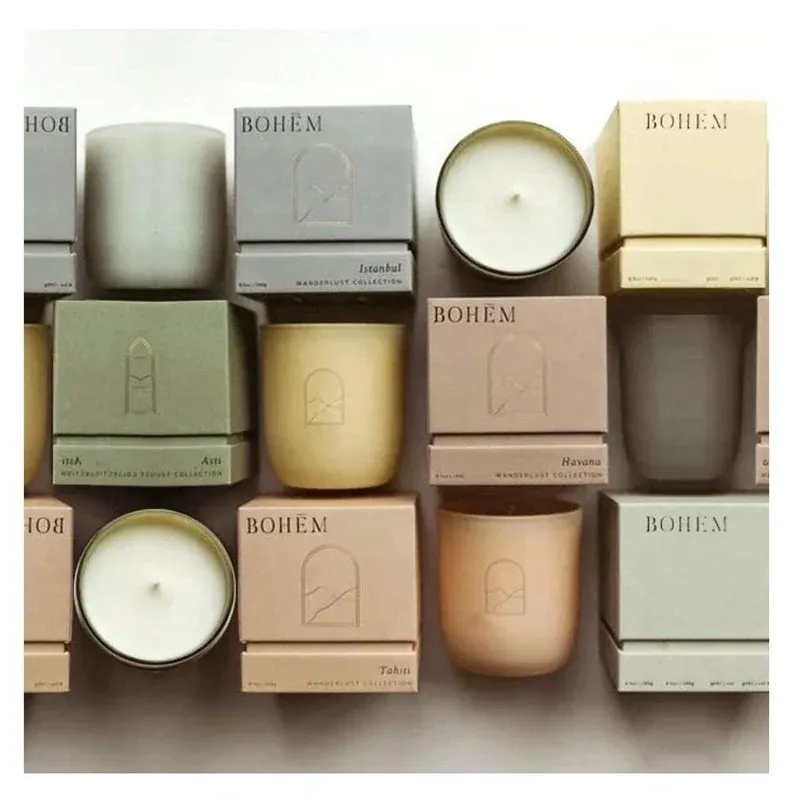
Heavy scent loads raise a question buyers rarely connect to packaging: what does the box smell like after a month on a shelf? A tightly sealed rigid box holds fragrance beautifully, which is why premium soy candle packaging often uses lid-and-base construction with a snug slipcover. A loose folding carton lets top notes drift, which some brands accept for a natural profile and others fight with a closed structure. Decide the intent early: if scent preservation is part of the promise, say so in the brief and the closure follows.
Surface Marks, Frosting, and Finish Picks
Soy candles bloom. The pale, crystalline frosting that develops on natural wax is harmless, but on a shiny jar it photographs like damage, and buyers return it. Packaging cannot stop frosting, yet it can shape how a candle is judged: matte lamination, kraft textures, and soft-touch films forgive minor surface variation, while high gloss amplifies it. If your wax frosts, ask for finish samples under warm light before approving. The same jar reads premium or problematic depending on the surface it travels behind.
Paraffin Pillars and What They Ask of a Carton
Paraffin pillars change the geometry problem. Without a jar, the candle itself is the display object, so the box protects a sculpted surface and often shows it through a window or an open tray. Firm wax means fewer transit cautions, but scuffed pillars still claim refunds. We pack pillars in cradles sized to the widest point, use interleaving where surfaces touch, and design long-format cartons that stop end-to-end sliding. Pillar programs live or die on this fit discipline more than on any finish choice.
Blends and What They Inherit
Most commercial lines are blends, which inherit traits from both parents. A soy-paraffin blend may pour firm yet still bloom, or hold scent well yet soften in heat, so the safe rule is to spec the blend with the quote request. We treat blends by behavior, not by name: cradle depth follows softness, finish follows bloom tendency, and closure follows scent load. When the ratio shifts between production batches, note it in the packaging brief so the fit decision travels with the wax, not behind it. A short call with your wax supplier usually settles the question before tooling is ordered.
Board Selection by Wax Format
Board follows weight and presentation. Jarred soy lines typically run folding cartons in cardstock from 300 to 500 g, while flagship soy candle packaging moves to 1200 g greyboard wrapped in 157 g art paper for a rigid, print-ready face. Pillar cartons sit between the two, using heavier folding board where the candle supports itself. We recommend a board after seeing the vessel and the price target together, because the right answer balances shelf feel, freight, and unit cost rather than maximizing any single one of them.
Structures: Rigid or Folding by Line
Structure should follow the sales channel. A soy line sold in boutiques justifies rigid boxes that slow the unboxing and protect soft wax with air between lid and surface. The same line sold online in multi-packs often converts better in folding cartons that ship flat and pack efficiently. Many brands split the difference: rigid for hero products, folding for the volume range. Because both structures are produced in-house, running the two side by side does not complicate the schedule or force a second supplier.
Inserts for Soft Wax and Glass
Inserts carry the transit story for soft wax. Molded pulp cradles grip the jar at its strongest points and keep warm glass away from printed walls, while corrugated platforms add air underneath and stacking strength above. For sets, individual wells stop vessels touching, which matters when soft wax can mark a neighboring lid. Depth is the quiet variable: a cradle that reaches past the shoulder spreads impact across the wall instead of concentrating it at the rim. We size insert depth to the vessel, not to a catalog standard.
Labeling and the Melt Pool Story
Natural wax invites a story, and the box is where that story begins. Buyers of soy candle packaging often add melt pool guidance, cure time notes, or wick care copy directly to the carton, turning the package into an instruction manual that earns trust. Leave room for it: a reserved side panel makes educational print feel designed rather than crammed. The same panel later carries seasonal messaging without a redesign. Brands that plan the education space once reuse it for years across every new scent they launch.
Sampling With Real Wax
Approve soy candle packaging against a real candle, never an empty jar. Our pre-production samples ship in about 5 days, printed on the final board with the chosen finish. Drop a cured, room-temperature candle inside, then test a freshly poured one if your line boxes warm, and watch for marking, condensation, or lid pressure on the wax surface. Photograph the results beside the sample. This routine costs a few days of patience and prevents the bulk-run surprises that soft wax is famous for.
Production Timing and Minimums
Production runs in 10-20 working days after approval, with a minimum order of 100 pcs per design. That floor lets a new soy brand test one scent family before scaling, and it lets established ranges add a seasonal release without retooling the whole line. Larger quantities spread tooling across more units, so share the twelve-month plan and we will show where the per-unit curve bends. Lead time includes printing, converting, and inspection, with premium finishes adding scheduling rather than shortcuts.
Quality Control for Scent Lines
Inspection follows AQL sampling, with attention on the points wax stresses: insert fit, lid clearance, and finish integrity at the contact ring where a vessel rests. Inspectors draw finished boxes across the run, not from the head of the queue, so drift shows while correction is still cheap. Documents travel with the shipment, giving your team a baseline for receiving checks. Scented categories also punish glue odor, so curing times get monitored before anything is packed. Clean boxes protect clean fragrance.
Master Cartons for Heavy Glass
Masters finish the job. We pack 100 pcs per master carton and keep each under the 22 kg limit so stacks stay predictable and handlers stay safe. Inside, cradle flanges separate vessels so wax never presses wax, and orientation marks tell the warehouse which way up the case should ride. Mixed programs split by design rather than blending formats, keeping counts honest at receiving. For long sea lanes in warm seasons, we discuss case orientation and liner options before booking rather than after claims.
Terms for Blended Product Lines
Terms stay factory-direct: a 30% deposit books the slot, the balance clears before shipment once inspection passes. Quotes itemize board, structure, insert, and finish so a buyer running both soy and paraffin ranges can compare like with like and trim deliberately. Because production sits under one roof, structure changes between lines do not require a second vendor or a second minimum. Many blended-range buyers standardize interiors across both waxes, which simplifies forecasting and keeps warehouse logic clean across seasonal peaks.
Sustainable Materials for Natural Wax Brands
Buyers choosing plant wax usually want the packaging to match, and the materials make that easy. FSC-ready paperboard, recovered-fiber greyboard, and molded pulp inserts return to recycling streams, and uncoated surfaces print beautifully with plant-based inks. For soy candle packaging, the sustainability story works best when it is specific: request the composition sheet with your quote and quote it exactly in public claims. Vague green language invites skepticism, while precise materials build the trust that natural-wax customers are already primed to give.
Factory Depth Behind the Recommendations
The recommendations in this guide come from a floor running since 1998 across about 5,000 m², where 100 staff handle printing, die-cutting, gluing, and inspection in one facility. Annual output nears US$10 million, serving 80+ countries, supporting 50+ brands, with 1,000+ cases delivered across categories. Wax-sensitive categories shaped much of that experience, because candles test packaging harder than dry goods do. Direct factory access means the team that runs your job answers your questions, which is why revisions stay fast and guidance stays practical.
Planning a Mixed Wax Range
Brands running both waxes should document the differences once. Record which interiors, inserts, and finishes belong to soy lines versus paraffin lines, and carry those notes into every quote request. When a new scent or pillar joins the range, packaging becomes configuration instead of negotiation, and reorder lead times stay predictable. The same notes make customs and retail documentation easier, since materials and weights are already written down. Send the range map with your inquiry and pricing returns aligned to each line.
Frequently Asked Questions
Does soy wax soften enough in transit to need firmer inserts?
In warm containers it can, and the risk shows as slumping against glass or marking where wax touches a printed wall. Deeper cradles that grip the vessel below the shoulder and upright orientation through every handling step handle most of it. Share the wax type and destination climate with the quote request so the insert spec matches the journey.
Why do soy blends sometimes need wider clearance at the shoulder?
Blends pour and set differently from either parent wax, and vessels sized to one measured sample can bind once a softer fill expands against glass in heat. Planning interior width around the widest expected production tolerance, rather than a single jar, keeps loading easy year-round. The insert then takes up the slack instead of the wall.
Do scent throw differences change how a box should close?
They change the closure decision, yes. A tight lid-and-base construction holds fragrance at the surface for months, while a looser folding carton lets top notes escape gradually. Neither is wrong: natural-profile brands sometimes want gentle diffusion. Decide whether the box should preserve or breathe, and the structure, slipcover, and liner choices all follow from that intent.
Is greyboard overkill for paraffin pillar lines?
Usually, unless the pillar is a flagship piece sold as a gift. Firm wax supports itself, so heavy folding board with a good cradle handles most pillar programs at a friendlier cost. Rigid construction earns its price where presentation is the product: sculpted or decorated pillars, premium channels, and any format where the box becomes part of the display.
How does frost bloom on soy affect label placement?
Frosting migrates toward vessel surfaces over time, and a clear label pressed against glass can show it underneath, especially on pale wax. If bloom is likely, choose opaque label materials, keep label edges clear of the fill line, and pick box finishes that forgive surface change. Photograph a cured candle under the chosen finish before approving artwork.
Should soy candles rest before boxing after pouring?
Yes, and the rest period belongs in your production checklist rather than in the packaging spec alone. Warm vessels radiate into a closed box, creating condensation on glossy surfaces and softening wax at contact points. Staging racks that cool candles to room temperature before the boxing station prevent most heat-related surface claims without slowing the line.
Which finishes hide wax oil marks best on carton surfaces?
Matte lamination, uncoated kraft, and soft-touch films all forgive minor oil contact far better than high gloss, which shows every fingerprint as a bloom across the panel. Textured surfaces also disguise the faint rings a warm vessel can leave. If your line boxes candles warm, make the forgiving finish part of the specification from the start.
Conclusion
Wax type is a packaging input, not a detail for the spec sheet alone. Softer, fragrance-heavy soy asks for deeper cradles, forgiving finishes, and closures that hold scent, while firmer paraffin asks for surface protection and sculpted fit. Decide the intent once, confirm it on a physical sample, and both lines ship clean. If you are comparing waxes or planning a range that runs both, send vessel details, wax types, and target quantities, and Request a Wholesale Quote for factory pricing with structure and finish recommendations included.