Buying Guides
Q4 Gift SKUs: Backward Planning from the Ship Date
Q4 gift SKUs reward backward planning from the ship date: reserve the sample, production and freight windows so gift packaging lands giftable, not late.

<!-- META_EXCERPT: Q4 gift SKUs reward backward planning from the ship date: reserve the sample, production and freight windows so gift packaging lands giftable, not late. -->
Opening
Q4 gift SKUs fail in a way no other product line fails: the review reports a box broken before the holiday, and no remedy exists because the moment has passed. Seasonal lead times are the discipline that prevents that review, and the discipline only works in one direction — backwards from the date the parcel must leave your warehouse. Buyers who plan forwards from artwork are always surprised by the calendar; buyers who plan backwards from the ship date are never surprised by it.
The pattern shows up clearly in the review mining we follow. Praise clusters around gift-readiness — buyers write that an item arrives in a gift box, perfect for gifting, directly giftable without extra wrapping — and the negative reviews in the same clusters are not complaints about price or design. They are complaints about arrival: crushed corners, dented lids, a gift that could not be given. Every one of those reviews was written by a buyer whose supplier planned forwards from artwork.
This article lays the calendar out from the ship date backwards: the sample gate, the production window, the freight leg and the buffers, plus the places where Q4 programmes actually lose their days. The numbers are ours — our factory in Humen, Dongguan has run seasonal programmes since 1998 — and they are stated so you can hold any supplier to them.
The Review That Cannot Be Answered in December
A damaged gift box is the one packaging failure with no service recovery path. A dented cosmetic carton can be replaced next week; a dented gift box on the twenty-third of December has missed its only purpose. The buyer cannot wait for a replacement, cannot resell the damaged unit, and cannot give a box that announces its own accident. That is why the Q4 reviews read differently from ordinary damage reviews: they record a lost occasion, not merely a lost product, and lost occasions do not generate repeat orders.
The economics match the sentiment. A gift SKU bought for a holiday has one sales window; a unit that misses the window is not deferred stock but dead stock until next year, with all the carrying and obsolescence costs that implies. Add the refund, the replacement freight and the review that will still be on the listing next November, and the true cost of one late or damaged parcel is a multiple of its invoice value. Budgeting Q4 gift packaging as if it were ordinary stock is the planning error that produces the December reviews.
The positive side of the same ledger is just as concentrated. When gift-ready packaging arrives intact and on time, buyers say so, and the language they use — perfect for gifting, came in a gift box, no extra wrapping needed — is exactly the language that sells the listing for the rest of the season. Safe arrival is the whole game in Q4, which is why the calendar, not the artwork, is the first specification to freeze.
Seasonal Lead Times, Read Backwards
Backward planning starts with the ship date and subtracts. The first subtraction is freight: ocean transit varies by lane and by season, and Q4 demand inflates both sailing schedules and port congestion, so the transit window is confirmed with your freight forwarder, not assumed from last year. The second subtraction is production: mass production runs 10-20 working days after sample approval, and in the Q4 press the number trends towards the top of that range for gift-grade work, because foil, lamination and hand assembly queues fill first. The third subtraction is sampling: a digital sample takes about 5 days from a complete specification, and each revision restarts those days.
Before any of that sits the quotation: a complete specification is quoted within about 24 hours and technical questions are answered within 12 hours, so the front of the calendar is cheap if the brief is complete. Behind the sample sits approval — a human decision that takes as long as your organisation lets it — and behind production sits inspection and packing, which is part of the production window, not an afterthought. Written as a chain: ship date, minus confirmed transit, minus 10-20 working days of production, minus about 5 days of sampling per round, minus your approval time, minus a buffer week that absorbs the one thing nobody predicted.
Two calendar warnings belong in every Q4 plan. First, factory closures around major holidays are confirmed on your quote — do not plan against a rumoured calendar, because closures shift with the lunar calendar each year and the quotation is the only binding statement. Second, working days are not calendar days: a 10-20 working day production window is four working weeks or more, and every public holiday inside it moves the end date. Buyers who convert working days to calendar days in writing avoid the most common four-day surprise in seasonal planning.
What Gift SKUs Change in the Specification
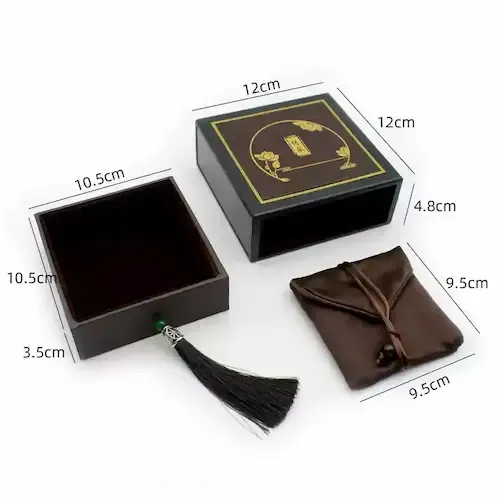
Gift-grade construction is a different specification, not a nicer colour. The working standard for a rigid gift box is 1200 g greyboard wrapped in 157 g art paper: walls that stay flat, corners that stay square, a lid that closes with the same resistance in unit one and unit one hundred. Folding gift cartons run on 300 to 500 g board and earn their place on lighter products, but the insert then carries the protection, and the insert must be engineered for the product rather than improvised from tissue at the packing bench.
The gift context also moves damage tolerance. For ordinary stock, the product surviving transit is success; for a gift SKU, the box is part of the product, and a scuffed lid or a crushed corner is a failed unit even when the contents are perfect. That is why gift programmes justify the outer shipper even for retail-packed units: the presentation box travels inside a corrugated master carton, packed 100 pcs per master carton with gross weight at or below 22 kg, so the shelf-ready box never touches the distribution system alone. The carton costs cents; the December review it prevents is written in hundreds.
MOQ arithmetic favours gift SKUs that plan early. MOQ starts from 100 pcs per size and design on most structures, so a four-SKU gift range is a realistic trial at a few hundred units — but only if the calendar allows a production run ordered in summer rather than in October. Seasonal lead times and small minimums work together: the 100 pcs threshold exists because set-ups dominate at small volumes, and a Q4 order placed inside the press pays for its set-up twice, once in money and once in queue position. Payment follows the standard structure — a 30 percent deposit releases material buying, with the balance before shipment — so a dated order can be placed as soon as the ship date is known, rather than after the artwork is perfect.
Where Q4 Calendars Break
Artwork is the first place programmes bleed days. A brief that changes after sampling restarts the about 5 days sample clock, and three rounds of well-meaning revisions consume the entire buffer. The fix is procedural: freeze the dieline and the copy before the sample is requested, and route late changes through a cost-and-calendar question — what does this change cost in days — rather than through an aesthetic debate. Our engineers answer that question within 12 hours, and the answer is usually less expensive in money than in time.
Finishing is the second bottleneck. Foil stamping, spot UV and lamination each add passes to the calendar, and in the Q4 press those passes queue: every brand with a gift SKU wants foil in September and October. A programme that decides on one foil colour instead of three, or that reserves lamination for the surfaces buyers touch, keeps its position in the queue. Surface finishing should be chosen at specification, not discovered at production, and the choice should be tested on the first sample rather than assumed from a rendering.
Material allocation is the third. FSC-ready board is available with certified stock supplied on request, but certified stock is allocated per order — a requirement flagged at quotation reserves material before the press, and the same logic applies to specialty wraps and ribbons. The programme that flags its materials in August buys from the mill; the programme that flags them in October buys from somebody else's unfulfilled plan. Confirmed on the quote is the only status that counts.
A Worked Calendar, From Ship Date Backwards
Take a ship date of the first of November for ocean freight to a northern-hemisphere market, with transit confirmed by the forwarder. Working backwards: production must be finished and inspected before the container loads, so mass production occupies the 10-20 working days before that, ending no later than early October — which puts sample approval in mid-September and the first digital sample, about 5 days earlier, in the first week of September. The complete specification therefore needs to be in the quotation system by the end of August, with the quotation itself returned within about 24 hours of its arrival.
The same exercise run for air freight shifts every node later, and buyers sometimes choose it deliberately for top-up orders. The discipline is identical: the freight leg is a confirmed number, production is 10-20 working days, sampling is about 5 days per round, and the buffer is one full week. What changes is the size of the freight number, not the structure of the plan — which is why the structure should be agreed in summer even when the freight decision waits until September.
Write the calendar into the purchase order. Ship date, production window, sample deadline, approval deadline and quotation date, each as a date and not a duration, each with an owner on your side. The suppliers who meet seasonal commitments are the suppliers whose buyers put dates in writing, and our production schedule treats a dated order very differently from an intention — the dated order is allocated, queued and tracked through AQL inspection and packing to goods-out. Backward planning is not a slogan; it is a row of dates somebody signed.
It is also worth knowing the floor the calendar describes. Our plant in Humen, Dongguan runs about 5,000 m² with roughly 100 staff, has produced seasonal packaging since 1998, and records about US$10 million in annual output across 1,000+ cases delivered to 50+ brands in 80+ countries — which is why a dated Q4 order is allocated rather than merely acknowledged. The same floor quotes within about 24 hours of a complete specification and answers technical questions within 12 hours, so the front of your backward calendar is answered by people who can see the machines it depends on. A trading company's calendar describes somebody else's floor; ours is the floor.
Frequently Asked Questions
When should a Q4 gift packaging order be placed?
Work backwards from your ship date: confirm freight transit with your forwarder, subtract 10-20 working days of production, subtract about 5 days for the sample and any revisions, and subtract your own approval time. For most ocean-freight programmes this puts the complete specification in the quotation system by late August, with sample approval in September and a one-week buffer held for the unexpected.
How long does production take for gift boxes?
Mass production runs 10-20 working days after sample approval, with gift-grade work tending towards the upper end in the Q4 press because foil, lamination and hand assembly queues fill first. The window is in working days, not calendar days, and public holidays inside it move the end date. Factory closures around major holidays are confirmed on your quote, never assumed.
What MOQ applies to seasonal gift SKUs?
MOQ starts from 100 pcs per size and design on most structures, so a multi-SKU gift range is a realistic trial at a few hundred units. Complex builds such as magnetic hinged boxes typically run 300 pieces or more because set-up dominates at small volumes. Quantities per design are confirmed on the quotation, which is issued within about 24 hours of a complete specification.
How do we avoid artwork delays in the seasonal calendar?
Freeze the dieline and copy before the sample is requested, and treat any later change as a cost-and-calendar question rather than an aesthetic debate. A late change restarts the about 5 days sample clock, and three revisions consume a typical buffer. Deciding finishing at specification — one foil colour instead of three, lamination only where hands touch — also keeps your position in the Q4 finishing queues.
How should gift boxes be packed for transit?
The presentation box should never travel alone: pack it inside a corrugated outer, with finished boxes at 100 pcs per master carton and gross weight at or below 22 kg. The construction standard for the presentation layer is 1200 g greyboard with a 157 g art paper wrap, or 300 to 500 g board for lighter folding cartons with an engineered insert carrying the protection.
Can we get certified sustainable board for the season?
The factory is FSC-ready and can supply certified board on request, for both rigid and folding gift programmes. Flag the requirement at quotation rather than after sample approval, because certified stock is allocated per order and the allocation needs to happen before the seasonal press. The wrap paper and insert board follow the same request and the same timing.
Conclusion
Q4 gift SKUs are won in August and lost in December, and the difference is a calendar read backwards. Fix the ship date, confirm the freight leg, reserve the 10-20 working days of production and the about 5 days of sampling, put dates with owners into the purchase order, and hold one full week of buffer against the unpredicated. Specify the presentation layer for a zero-damage journey — 1200 g greyboard, 157 g wrap, a corrugated outer at 100 pcs per master carton — because a damaged gift box is a review that no reply can answer. Send your gift range and ship dates and Request a Wholesale Quote: the quotation is returned within about 24 hours, while the season still has room on the schedule.