Buying Guides
Custom Jewelry Packaging Cost: What Drives the Price
Custom jewelry packaging cost: what moves the unit price — board grade, hand assembly, lining and foil passes — and where fixed costs sit.
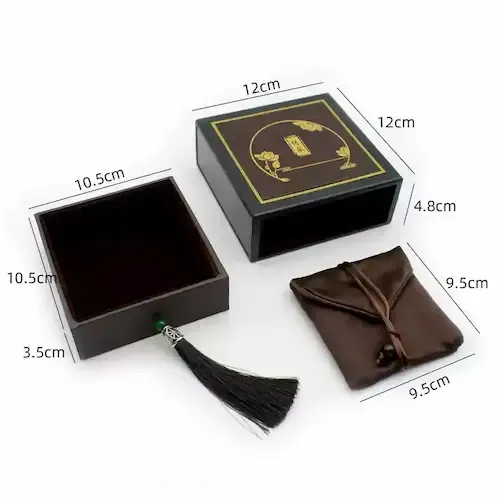
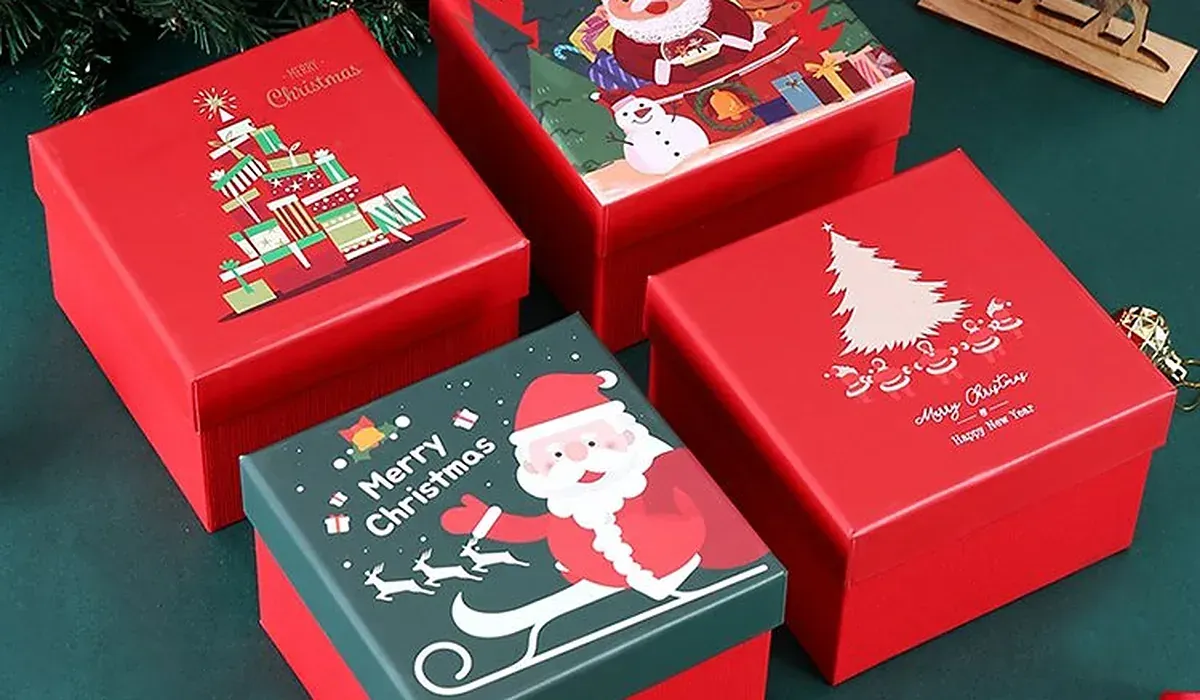
Every jewelry brand asks this. Almost none get a straight answer — because "how much is a box" is like asking "how much is a car." The honest answer depends on four levers you control, and once you see them, custom jewelry packaging cost stops being a mystery and becomes a set of choices.
At boxeschina, we build jewelry packaging for brands in North America, the UK and Europe, and we have watched the same four variables decide the number on every brief. This guide gives you the mental model: what actually moves the price, three realistic tiers, and the four places brands overspend without knowing it.
The Four Variables That Drive Price
Ranked by impact, biggest first.
1. Material and board weight
This is the single largest swing. A rigid board box (800–1,500gsm) costs materially more per unit than a folding carton — more material, more labor, more freight volume. If you are comparing quotes and one is half the price, check the board weight before you celebrate.
2. Insert type
Brands obsess over the box shell and under-budget the insert. A molded or velvet tray can cost as much as the shell itself. A die-cut card insert costs a fraction of that.
This is also where cutting costs hurts most visibly, because the insert is what the customer sees when the lid comes off.
3. Finishes
Each additional process adds setup cost plus per-unit cost. One hero finish is cheap. Four finishes is a different project. Matte lamination and a single hot-stamp is the sweet spot; foil plus emboss plus spot UV plus soft-touch is a luxury build with a luxury bill.
4. Quantity
Unit price drops meaningfully at 500 pieces and again at 1,000. Most of the drop is setup amortisation — the tooling and plate costs are fixed, so they spread thinner as volume rises.
This is why a 100-piece pilot order looks expensive per unit and a 1,000-piece reorder looks cheap. Same box, same tooling.
Three Realistic Cost Tiers
Without quoting figures that will be wrong for your spec, here is how the tiers stack up relative to each other:
Entry — folding carton, card insert, one spot finish. Ships flat, assembles fast, lowest freight. Right for fashion jewelry, subscription boxes, and high-volume lines where the box is protective rather than keepsake.
Mid — rigid board, foam or velvet insert, one hot-stamp. The most common choice for fine jewelry. Substantial in the hand, takes branding well, photographs properly. This is the default recommendation for most brands we work with.
Premium — heavy rigid, molded or flocked tray, two finishes, specialty wrap. For brands where the unboxing is the marketing. Higher unit cost, but it is doing the job of a photographer and a sales assistant.
Rule of thumb: each tier up roughly doubles the unit cost of the tier below it. That is the mental model to carry into a quote review.
What's Usually Not in the Unit Price
Four things that surprise brands on the first order:
- Tooling and plates. One-off setup for die-cutting and hot-stamp plates. Usually charged separately, sometimes waived above a volume threshold. Always ask.
- Freight. Rigid boxes ship assembled and eat volume. A heavy premium box can cost more to ship than to make, on a long route.
- Color proofs. Physical pre-production samples cost money and are worth every cent — screen color never matches print exactly.
- Duties and import costs. These depend on destination and Incoterm. FOB, CIF and DDP produce wildly different landed costs.
Ask for an itemised breakdown, not a single number. If you cannot see which lever is driving the total, you cannot reduce it.
How to Cut Cost Without Cheapening the Box
Five moves that work:
- Reduce finishes, not materials. Drop from three finishes to one and keep the rigid board. The heft survives; the invoice drops.
- Standardise sizes across the collection. One dieline for five SKUs beats five dielines. Tooling is per-structure.
- Choose a stock insert over a custom tooled one. Stock velvet trays in standard sizes cost far less and look identical in photos.
- Ship flat where possible. Folding cartons and knock-down rigid constructions cut freight dramatically.
- Order slightly above the price break. If the drop at 500 is steep, ordering 500 instead of 300 can lower the total bill. Do the maths before you assume less is cheaper.
What not to cut: the insert, and the board weight. Those two are the first things a customer feels.
What We Can Share, and How Fast
We do not publish prices — every jewelry box is quoted per spec, because board, insert, finish and freight move the number too much for a public rate card to be honest. What we can commit to:
- A spec review — send dimensions, quantity and artwork, and we will confirm structure, insert and finish options that fit your budget.
- MOQ 100 pcs, so you can validate a design at real cost before scaling.
- Free customised samples, typically delivered in about 5 days, so you can check fit and color physically.
- 28 years in production, 1,000+ projects across 80+ countries — we know which specs inflate cost for no visible gain.
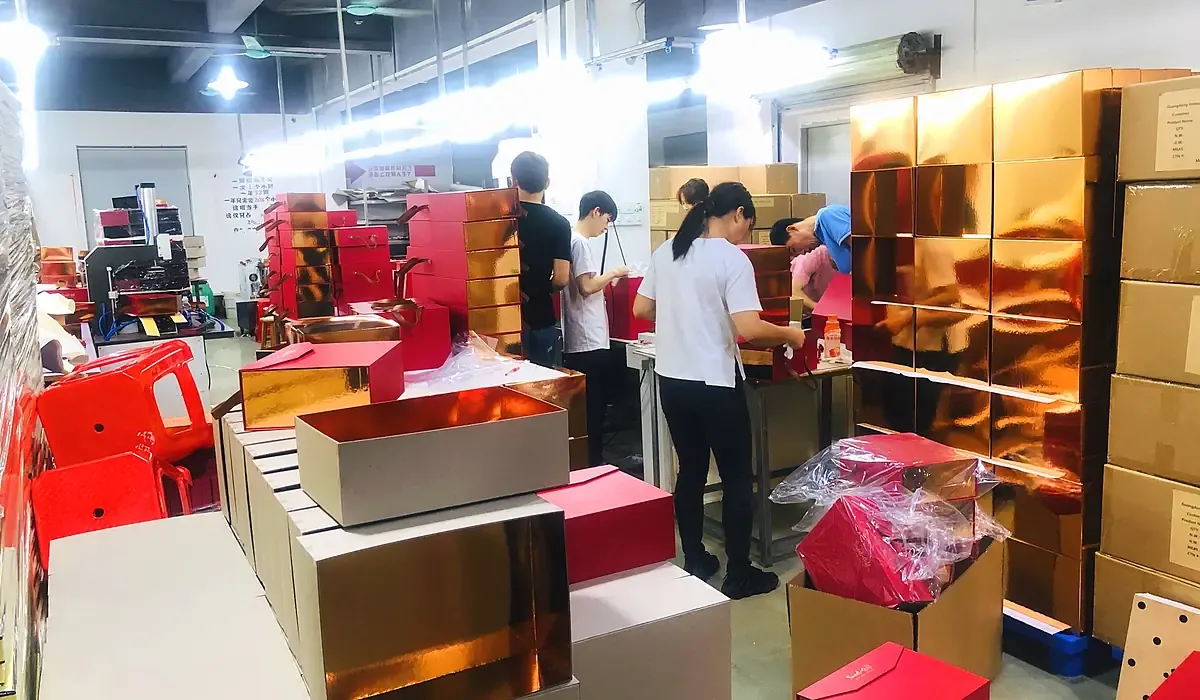
Factory-direct note: you work directly with the factory. We can arrange DDP shipping so freight and duty are handled end to end — but we scope each project individually rather than publishing rates.
FAQ
What is the minimum order for custom jewelry packaging? 100 pieces for custom work. Below that, setup costs dominate and the unit price stops making sense. Free customised samples let you validate the design before you commit to the run.
Why is my 100-piece order so much higher per unit than the 1,000-piece price? Tooling, plates and setup are fixed costs. Spread across 100 units they add a large amount to each; spread across 1,000 they nearly vanish. The box itself has not changed.
Is rigid board worth the extra cost over folding carton? If the box is part of the product experience — fine jewelry, gifting, anything unboxed on camera — yes. If it is a protective sleeve for a high-volume line, folding carton is the better business decision.
How can I reduce packaging cost without it looking cheaper? Cut finishes before you cut materials. Drop from three finishes to one, standardize sizes across SKUs to reuse one dieline, and use stock inserts in standard sizes.
Are tooling and plate costs included in the unit price? Usually not — they are charged separately as one-off setup, sometimes waived above a volume threshold. Always confirm, because it changes how you compare two quotes.
Does shipping significantly affect the total cost? For rigid boxes on long routes, yes — an assembled rigid box occupies far more volume than a flat-packed carton. Compare landed cost, not unit cost, when choosing between structures.
Conclusion
Packaging cost is a set of choices, not a number you are handed.
So which lever will you actually pull — material, insert, finish, or quantity?
- If margin is tightest: keep rigid board, drop to one finish, standardize on a single dieline.
- If volume is the plan: order past the 500-piece break — the tooling is already paid for.
- If perception is the goal: spend on the insert and the board, not on extra finishes.
Send us your dimensions, target quantity and brand assets. We will confirm the spec and structure that fits your budget — MOQ 100 pcs, free samples in about 5 days.