Buying Guides
Compostable vs Recyclable Packaging: The Buyer's Decision
Compostable vs recyclable packaging: infrastructure, market regulation and cost decide the route. What PPWR means for EU orders and how to state FSC-ready.

Opening
Compostable or recyclable: most buyers meet this choice as a values question, and it is better handled as an infrastructure question. Both claims describe what happens to the packaging after use, and both depend less on the material itself than on the system that receives it. A compostable claim needs an organics collection and a composting facility that will actually take the item; a recyclable claim needs a paper recovery stream that is, in most developed markets, already running at scale.
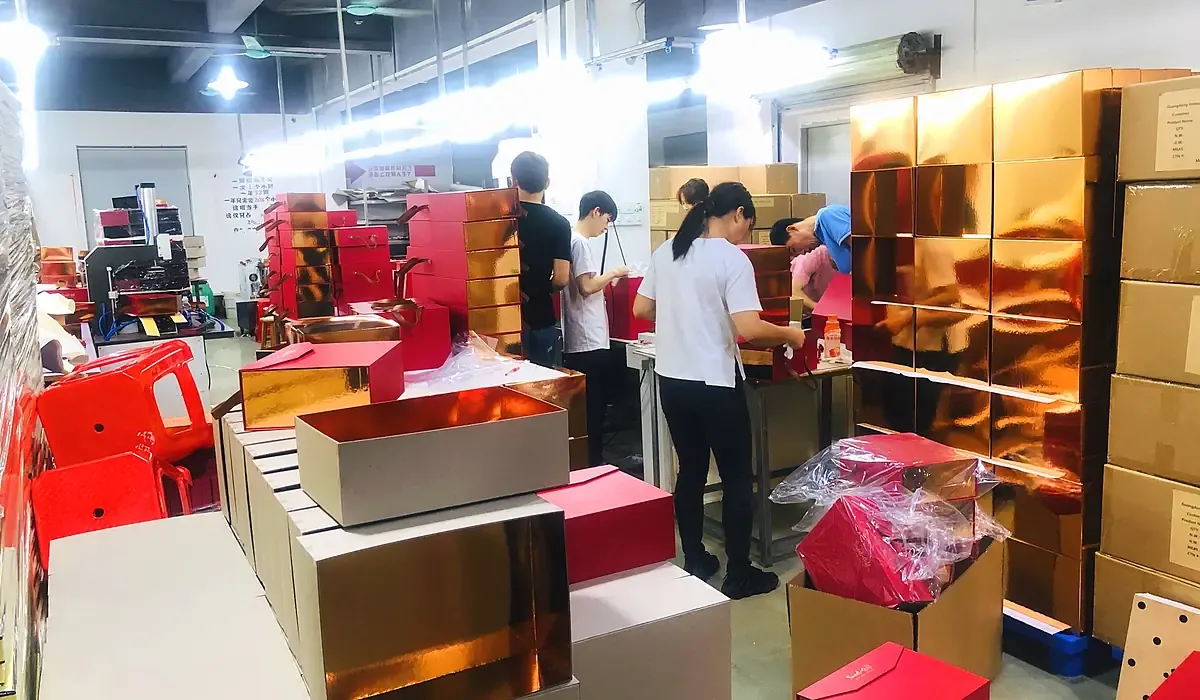
We answer the question from the factory side. Our plant in Humen, Dongguan has made rigid and folding paper boxes since 1998, and across 1,000+ cases buyers have asked for both routes, usually in the same quarter. What follows is how we see the decision: what each claim actually requires, why paper recycling is the default route for box programmes, what the EU's PPWR changes for European orders, and the framework we suggest buyers use to choose.
The short version: for a rigid or folding box programme, recyclable paper is the default because the infrastructure already exists, and compostable is a specialist route that pays only where organics collection is proven. The sections below justify that position and mark where it flips.
A caution before the detail: this article deliberately avoids certifying anything. Claims about compostability and recyclability belong to the buyer's market and its regulators; what a factory owes the buyer is construction that supports the claim, stated in language an audit can verify. That division of labour is the theme underneath every section below.
Two Claims, Two Infrastructures
A compostable claim is a promise about an endpoint: the packaging will break down in industrial composting within the timeframe the relevant standard defines. The promise has two dependencies the buyer does not control. The first is collection: the used packaging must reach a composter, which requires an organics stream that accepts packaging, and that stream varies by municipality and by country. The second is the facility itself: composting sites accept what their process can handle, and packaging format, coatings and labels all influence whether an item is taken or screened out.
A recyclable claim is a promise about a system that already exists. Paper is among the most widely recovered packaging materials in the world, with collection networks, sorting infrastructure and mills that want the fibre. A corrugated case or a paperboard box enters a stream that runs whether or not any single brand participates. The claim is easier to keep because the receiver of the promise, the recovery system, predates it.
This is the honest difference between the two routes: compostability asks the buyer to bet on infrastructure that may not exist at the point of disposal, while recyclability asks the buyer to enter infrastructure that does. Neither claim is a material property alone; both are claims about a chain, and the buyer's decision is really a decision about which chain their customer actually stands in.
The language trap sits between the two claims. Compostable, biodegradable and recyclable are not points on one scale; they describe different processes with different evidentiary standards, and several loose variants are being legislated out of marketing use in major markets. When a brief says sustainable, ask which of these words the brand intends to print, because the word chosen determines the infrastructure question, the certification question and the claims-compliance question in different ways.
Where Compostable Performs, and Where It Struggles
Compostable packaging earns its place where recycling fails on contamination. Food-soiled items, greasy formats and anything coated with organic residue are problematic in a paper recycling stream, and composting handles them naturally: the residue is feedstock, not contamination. This is why the compostable route performs strongly in food service, fresh grocery and anything that travels with food on it.
It struggles where disposal is ordinary and dry. A rigid gift box, a folding carton for electronics or cosmetics, a subscription mailer: these arrive clean, and a clean paper box is exactly what the recycling stream wants. Sending it to composting forgoes the fibre, and the fibre is the asset. Paper recycling keeps material in circulation through multiple loops, while composting ends the material's life in one good one. For dry-goods packaging, the recyclable route usually preserves more value.
The buyer's test is empirical: does the destination market actually collect organics at scale, and does the accepted list include your format? Across the 80+ countries we ship to, the answer varies more than any material datasheet suggests. Where the answer is yes, compostable is a real option; where it is no, a compostable claim degrades into a wish, and a wish printed on packaging is a claims-compliance risk.
One more dependency is worth naming: labels and inks. A compostable claim has to hold for the whole item as disposed, including the label, the adhesive and the print system. This is solvable, but it is a specification exercise, not a material swap, and it is exactly the kind of detail that turns a well-meant switch into a non-compliant one when it is handled at the artwork stage instead of the RFQ stage.
Why Paper Recycling Is the Default Route
Paper box programmes start with an advantage: the product is already mono-material. A rigid box in 1200 g greyboard wrapped in 157 g art paper, or a folding carton in 300 to 500 g board, is paper through and through, and the recovery stream is built for exactly that. It is where nearly all of our around US$10 million annual output lives, and the engineering task is to keep it that way through the finishes and the attachments.
What disturbs the stream is lamination and mixed attachment. A plastic film lamination turns a paper surface into a composite the mill has to separate; heavy plastic inserts, foam and adhesive-backed fittings ride into the stream with the box. The practical controls are ordinary factory decisions, made daily on our 5,000 m² floor by a team of about 100 staff: choosing coatings that repulp with the fibre, keeping foil and varnish areas small, and designing inserts from paper where the product allows. None of these controls costs the presentation; they cost a conversation at specification time.
Sustainability of the fibre itself is a separate axis, and it is where language matters. We are FSC-ready and can supply certified board on request: that phrasing is deliberate, because certification is granted to a chain of custody for a specific order, not held as a blanket claim by a factory. Buyers who write the requirement into the RFQ get certified stock allocated before production scheduling; buyers who assume it discover the difference in their audit.
How to verify rather than trust: ask the factory to describe the construction as a bill of materials covering board, wrap, coating, insert and adhesive, and read it as a recycler would. Every line that is paper strengthens the claim; every line that is plastic weakens it by its area. This reading takes minutes, and it is the difference between a claim that survives a customer's audit and one that depends on nobody checking.
What PPWR Changes for European Orders
The EU's Packaging and Packaging Waste Regulation, PPWR, converts most of this from preference to compliance for European orders. Its centre of gravity is design for recycling: packaging placed on the EU market from 2030 is graded for recyclability, and formats that cannot be recycled are restricted. For a box programme, the practical meaning is that the finish schedule is now a compliance document.
The buyers we supply in Europe have begun asking the question in a new form: not whether the box is recyclable in principle, but whether it grades well under the criteria the market will apply. That shifts decisions that used to be aesthetic, such as full lamination, heavy plastic inserts and mixed-material closures, onto the compliance side of the ledger. Mono-material construction, paper-based inserts and repulpable coatings are no longer only a sustainability story; they are the low-risk answer to a regulation.
Two working habits follow. First, ask the factory to state which finishes preserve recyclability, and price the alternatives side by side, because the difference is often smaller than assumed. Second, treat the PPWR timeline as a specification deadline rather than a news item: a programme switching finish systems needs a sample and a validation cycle, and a sample takes about 5 days while production planning runs on its own calendar. Buyers who start in advance choose; buyers who start late comply.
What does not change under PPWR is the economics of the choice. Paper-based mono-material construction was already the cost-efficient route for most box programmes before the regulation; the regulation mostly confirms it. The programmes that face a real cost are the ones unwinding mixed-material construction bought into years ago, and even there the switch is a finish decision more than a structural one.
A Decision Framework for the Channel
The framework we suggest has three questions, in order. First, where does the packaging actually end its life: which market, which stream, and is that stream proven at scale? Second, what may be claimed there: claims regulation is tightening everywhere, and across 50+ brands we have watched the difference between a claim the market supports and one it does not. Third, what does the route cost: not just the unit price, but the freight, the compliance and the risk.
For most box programmes the framework lands on recyclable paper as the default: the infrastructure exists, the claims are defensible, and mono-material construction is already the factory's home ground. Compostable becomes the deliberate choice where the organics stream is proven and the contamination argument is real, above all in food-adjacent formats. The order matters: infrastructure first, claims second, cost third, because a cheap route with no facility behind it is the most expensive option on the page.
Whichever route the framework selects, switching is cheap to trial and expensive to assume. A trial run starts from 100 pieces per design, a digital sample in about 5 days, production in 10-20 working days, finished goods verified to AQL before shipment, and payment of a 30% deposit with the balance before shipment. The freight arithmetic travels unchanged, at 100 pcs per master carton and at or below 22 kg, so the sustainability decision does not have to reopen the logistics one.
Where the two routes can coexist: by market rather than by SKU. A brand selling into one market with proven organics collection and another without can run one construction and two claims, or two constructions under one platform; the data that makes that call is the infrastructure question from the framework, answered per market. Decide per market, not per brand value, and the range stays buildable.
Frequently Asked Questions
Is compostable packaging better than recyclable?
Neither is better in the abstract; they answer different disposal systems. Compostable performs where organics collection is proven and contamination is the problem, such as food-adjacent formats. Recyclable paper is the default for dry-goods boxes because the recovery infrastructure already runs at scale. Choose with the destination market's infrastructure first, and the better option usually chooses itself.
Does compostable packaging actually compost?
Only where it reaches an industrial composter that accepts the format. The claim depends on collection, on the facility's accepted list and on the whole item as disposed, label and print included. Where organics collection is absent, compostable packaging follows the general waste, and the claim becomes a compliance risk rather than an environmental achievement.
Is a paper box automatically recyclable?
Almost, but not quite. Construction in 1200 g greyboard with a 157 g art paper wrap, or cartons in 300 to 500 g board, is mono-material paper and fits the recovery stream. What disturbs recyclability is plastic film lamination, heavy plastic inserts and large mixed-material fittings. Ask for the construction as a bill of materials and read it the way a mill would.
What is PPWR and why should buyers care?
The Packaging and Packaging Waste Regulation is the EU's framework for packaging placed on its market, with design-for-recycling grading applying from 2030. For box buyers it converts finish choices into compliance choices: laminates, plastic inserts and mixed-material closures are the exposures. Programmes that move to mono-material construction early inherit the low-risk answer rather than paying for it late.
What does FSC-ready actually mean?
It means the factory is prepared to supply certified board for an order that requires it: we are FSC-ready and can supply certified board on request, allocated before production scheduling. It is deliberately not a blanket factory certification, because certification attaches to a chain of custody for a specific order. Put the requirement in the RFQ and the audit finds no gap.
How do I trial the other route cheaply?
Run a trial order at 100 pieces per design with a digital sample in about 5 days, production in 10-20 working days, and verification to AQL before shipment. Payment is a 30% deposit with the balance before shipment. The freight arithmetic stays unchanged at 100 pcs per master carton and up to 22 kg, so the trial measures the sustainability question without reopening logistics.
Conclusion
Compostable and recyclable are not rival virtues; they are two claims about two chains, and the buyer's job is to know which chain the customer stands in. For most box programmes the recyclable paper route is the default: proven infrastructure, defensible claims, and mono-material construction the factory already builds. Compostable earns its place where organics collection is real and contamination is the enemy. Map the infrastructure, check the claims rules, trial before you switch, and Request a Wholesale Quote with your market list so the construction arrives matched to the claim you intend to print.