Buying Guides
Paper Tube Packaging: Round Structures for Modern Shelves
Paper tube packaging: straight-wall and telescoping structures, end caps, poster cosmetic and food uses, crush strength, MOQ from 100 pcs, factory since 1998.
Opening
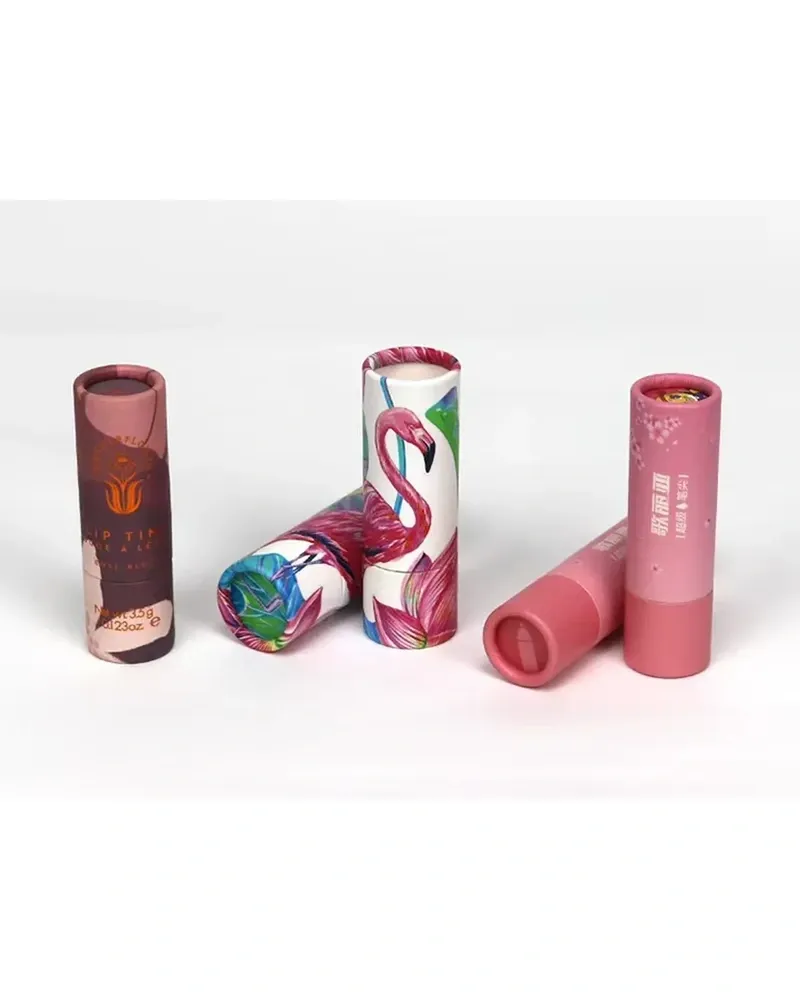
Paper tube packaging is the structure buyers reach for when the shelf, not the shipping lane, is the battleground. On a wall of rectangular cartons, a cylinder is the only silhouette the eye has to travel around; on a desk, it is the only pack that invites a hand to rotate it. The form is older than the modern shelf — wound paper tubes carried posters and documents long before they carried cosmetics — but the modern use is deliberate: a rigid, round, fully printable body that reads as considered the moment it is picked up.
This guide is written from our factory floor in Humen, Dongguan, where tubes are produced alongside rigid boxes and folding cartons, and where the first question from a buying team is usually the right one: when does a cylinder earn its premium over a carton? The answer comes from structure. Tubes are rigid, so they do not ship flat, and that single property drives the freight arithmetic, the stacking behaviour and the categories where the format makes sense.
The sections below cover how the wall is built, why the round form differentiates on the shelf, how end closures succeed or fail, which loads the structure carries across posters, cosmetics and food, and how crush strength and stacking change the freight decision. The facts a buyer needs to fix before quotation follow the same order.
Inside the Wall: How a Tube Is Built
A tube wall is wound, not folded. Plies of paper are wound around a mandrel until the wall reaches the specified thickness, which is why a tube has no seam to split and why stiffness rises with both the ply count and the diameter itself. The cylinder is, geometrically, the strongest shape per gram of material — a fact the packaging world borrows every time it ships something fragile in a round case.
Two structural families cover most programmes. A straight-wall tube is a single body with fittings at both ends: clean, continuous, and usually closed with plug lids. A telescoping tube pairs an inner and an outer body, so the lid slides over the base with a tuned friction and the opening becomes a small ceremony — the base rises out of the jacket as the lid is drawn away. Straight wall wins on simplicity and unit cost; telescoping wins on the reveal, which is why gift-led categories choose it even though it adds a second wound body and an extra assembly pass.
The end fittings are where the heavier board lives. Plugs, lids and base discs are die-cut from stiff board — thicker than the 300 to 500 g used for a folding carton, though the tube wall itself does the structural work and nothing in the build needs the mass of a 1200 g greyboard rigid box. That is the honest comparison at briefing: a tube buys its strength from geometry, a rigid box buys it from material, and the two routes arrive at very different freight weights.
Why Paper Tube Packaging Differentiates on the Shelf
The graphic advantage is circumference. Graphics are printed on 157 g art paper and wrapped around the body, so the artwork runs continuously around the form with no front panel and no spine — the brand owns the full 360 degrees, and the pack presents equally from every approach angle. On a shelf where every neighbour offers one face, that is a structural attention advantage that no extra ink on a flat carton can buy.
The physical advantage is the hand. A cylinder has no edges to pinch and no corners to set down carefully, so it is picked up and turned more often than an equivalent carton, and every rotation is a second look at the brand. Across 50+ brands we have seen the same pattern repeat: the tube earns its place on single-SKU premium formats — tea, skincare, spirits gifting — where the pack itself is part of the gift and is expected to be kept rather than discarded.
The limits are just as consistent. Across 1,000+ cases, tubes underperform in two situations: assortments that need flat, discrete compartments inside a rectangular footprint, and products that must hang on pegs or stand in a clip strip. A round body also resists an efficient master carton unless the packing plan is designed with it — which is exactly why the freight question belongs in the brief and not after the first shipment.
End Closures: Where Tubes Succeed or Fail
The closure is the interaction, and it is where tube programmes are won. A plug lid is friction-fit into the open end, often with a terraced or stepped profile that gives the pull a controlled resistance instead of a sudden release. A telescoping lid rides over the outer wall, and its fit is tuned so the tube stays shut in the carton but opens with one hand. Flat lids read as modern; domed lids soften the form. Metal end caps appear on premium tubes and change the weight in the hand as much as the look.
Fit tolerance decides whether any of this works. A plug that is a step too tight tears the label on opening or needs two hands; a step too loose lets the base slide out when the tube is lifted by the lid. We tune the fit at sampling with the real product, not with a dummy, because the contents — a stack of posters, a glass bottle, a tea tin — change the way the body behaves when it is gripped.
Tamper evidence is a specification line, not an afterthought. A label laid across the lid seam seals the tube for retail and doubles as a branding surface; a shrink band does the same job with a different ceremony. Decide the closure, the fit and the seal together at quotation, because all three are cut by the same tooling decisions and changing one after sampling usually means changing all three.
Cost follows the closure as surely as fit does. A plug lid is the economical choice because it shares the body's tooling; a telescoping lid adds a second wound body, a second set of end tooling and an assembly pass, which is why it is specified for the reveal it earns rather than by default. Metal end caps add material and a sourcing line. The quotation prices the closure as part of the system, so changing it after sampling ripples through all three rather than one.
Posters, Cosmetics and Food: One Form, Different Loads
Posters and mailers are the oldest use and the simplest brief: the tube exists to defeat crushing in transit, so light walls do the job and the end caps take the impact. The pack is functional, printed once, and thrown away after the contents are unrolled — the specification conversation is short and the cost discipline is strict.
Cosmetics move the goal to presentation and durability in one. Skincare formats and gift sets use the tube as the primary pack, so the wall is specified heavier, the wrap is finished to resist handling, and the opening is tuned for a counter or bathroom shelf. Between those poles sit the loads that decide the wall: a tube carrying a glass bottle needs the stiffness, a tube carrying a rolled print does not, and the diameter alone tells you nothing about which is which.
Food adds a barrier layer and a compliance line. Tea, coffee and snack tubes carry a liner inside the wound wall to hold aroma and resist grease, and the food-contact requirement is confirmed with documentation at quotation rather than assumed from the format. Where the sustainability brief matters, the wound board is FSC-ready and certified stock can be supplied on request when it is flagged before production scheduling. The rule that holds across all three loads: the content decides the wall, never the diameter.
Crush Strength, Stacking and the Freight Question
The cylinder's crush behaviour is its quiet engineering argument. Vertical load distributes around the circumference instead of concentrating at corners, so an upright tube stacks predictably and resists the point loads that flatten the corners of a carton first. In a mixed pallet, tubes upright between rectangular cases hold their line better than their board weight suggests.
Orientation in the master carton is the specification that unlocks it. Upright packing maximises stacking strength; lying packing maximises density and lets smaller diameters nest inside larger ones. Small-diameter formats pack at up to 100 pcs per master carton with the carton capped at 22 kg, which keeps per-unit freight predictable and the cartons liftable at the receiving dock.
The honest trade-off is volume: rigid walls do not ship flat, so a tube occupies more freight volume than the folding carton it replaces, and that difference is paid on every shipment for the life of the programme. The formats that justify it are the ones where shelf attention, hand feel or the keep-able reveal convert directly into price — and the formats that do not are the high-volume, margin-thin lines where a folding carton in 300 to 500 g board ships flat and wins on landed cost. Run both numbers before committing; the cylinder is a premium the market must pay back.
Ordering Paper Tube Packaging: MOQ, Samples and Schedule
MOQ starts at 100 pcs per size and design, which makes a first tube programme a realistic trial rather than a commitment made blind. A free digital sample in about 5 days shows the wall build, the wrap artwork and the closure fit on screen; approval triggers mass production of 10 to 20 working days. Payment is 30% deposit and 70% balance before shipment, and inspection to AQL standards runs before packing, with the closure fit checked against the approved sample on every inspection.
Complete briefs move faster for a mechanical reason: the winding specification, the closure tooling and the wrap artwork are quoted as one system, so a brief that fixes all three receives its quotation within about 24 hours and answers to technical questions within 12 hours. A brief that leaves the closure open receives a quote for a closure the factory chose, which is rarely the closure the brand wanted.
The floor behind the schedule is worth knowing. Our 5,000 m² factory in Humen, Dongguan runs about 100 staff across winding, printing and assembly, with roughly US$10 million in annual output shipped to 80+ countries. A first order of 100 pcs enters that flow at the same inspection standard as a full pallet, and the tube that survives sampling — fit, crush and wrap — arrives on the shelf behaving the way the sample did.
Frequently Asked Questions
What is paper tube packaging most often used for?
Posters and document mailers, cosmetics and skincare gift formats, dry food such as tea and coffee, and premium single-product gifting are the core uses. The common thread is a product that benefits from shelf attention, hand feel or crush protection, and a brand willing to pay the freight premium that rigid round walls carry over a flat-shipping carton.
What is the difference between straight-wall and telescoping tubes?
A straight-wall tube is one wound body with fittings at both ends, closed by a plug lid, and it wins on unit cost and simplicity. A telescoping tube pairs an inner and outer body so the lid slides over the base and the product rises out on opening. Choose straight wall for efficiency and telescoping when the reveal is part of the product experience.
Are paper tubes strong enough for stacking?
Yes, upright. Vertical load distributes around the circumference instead of concentrating at corners, so an upright tube stacks predictably and resists point loads better than its board weight suggests. Orientation in the master carton is the controlling decision: upright for strength, lying for density and nesting. Both are planned at quotation rather than discovered at the warehouse.
Can paper tubes be used for food?
Yes, with a barrier liner inside the wound wall to hold aroma and resist grease, and with the food-contact requirement confirmed with documentation at quotation. The liner specification depends on the content — dry tea, ground coffee and snacks each make different demands — so send the product details with the brief and the wall and liner are specified together.
What is the MOQ and lead time?
MOQ starts at 100 pcs per size and design. A free digital sample takes about 5 days, mass production runs 10 to 20 working days after approval, and payment is 30% deposit with the balance before shipment. A complete brief that fixes the wall, closure and artwork receives a quotation within about 24 hours, which keeps the calendar predictable from the first week.
How are graphics applied to a tube?
Graphics are printed on 157 g art paper and wrapped around the wound body, which gives a continuous 360-degree artwork surface with no front panel or spine. The wrap carries lamination and finishes like any flat sheet, so brand colour and imagery reproduce as designed. Artwork is supplied as a developed circumference so the seam lands where the design intends.
Conclusion
Paper tube packaging wins where roundness is the message: the only circumference on the shelf, the only pack a hand wants to rotate, the only structure whose strength comes from geometry rather than mass. It costs freight that a folding carton does not, so the decision is made by whether the format converts attention into price. Specify the wall for the load, tune the closure with the real product, and plan the master carton orientation as deliberately as the artwork. Send your product, dimensions and quantities, and Request a Wholesale Quote — the quotation arrives within about 24 hours, a digital sample in about 5 days, and the fit is proven before mass production begins.