
Buying Guides
Hot Foil Stamping Adhesion on Coated Board
Hot Foil Stamping Adhesion on Coated Board. Practical guidance on hot foil stamping for importers and brands, from spec to shipment. Talk to our export desk.
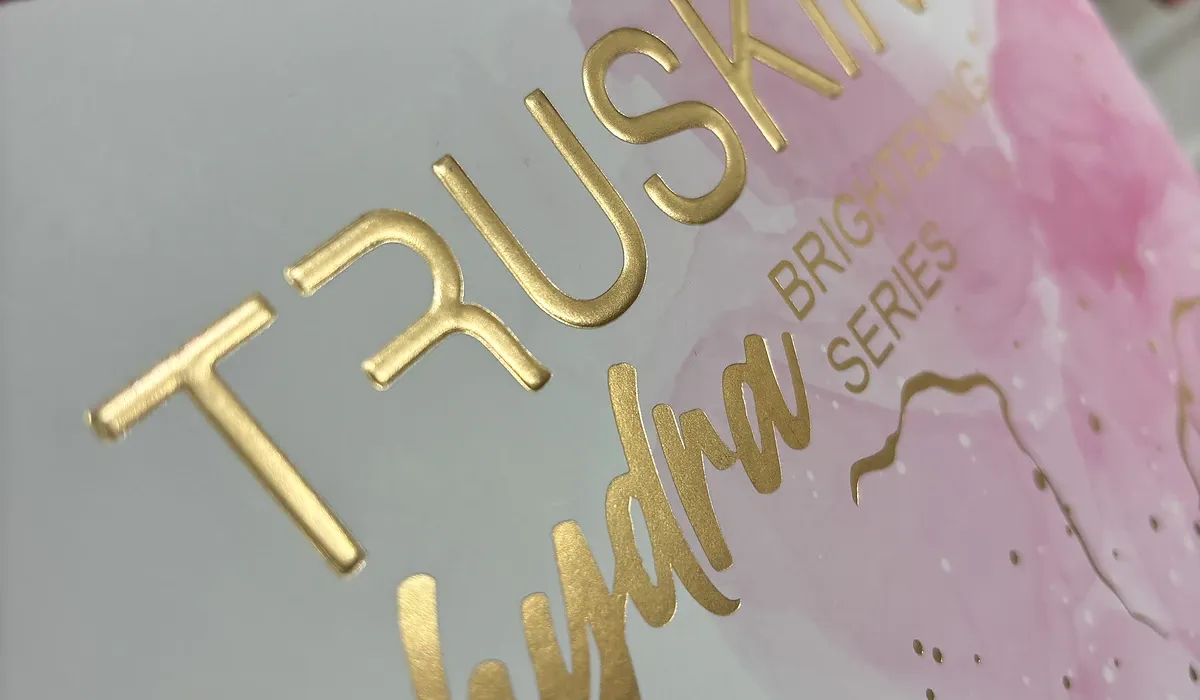
Importers and brands usually notice hot foil stamping only after a run has gone wrong: a colour that reads off, a finish that scuffs, or an edge that frays at the fold. Print is where a brand promise becomes measurable, and the tolerance belongs in the spec sheet before any die is cut.
Behind the artwork, the factory runs to a fixed standard. Roughly 100 staff work across production, prepress, and QC. A 5,000 m2 site houses the whole converting line. We return a free digital proof in about 5 days. Annual export value runs above US$10M.
The practical question behind foil lifting or patchy coverage on coated cartons after lamination is which details can be measured and repeated. A short proof loop, a named reference, and a dated approval turn that into a process rather than a series of judgement calls.
Why hot foil stamping Decides the Carton's First Impression
Print is usually judged in two seconds, so hot foil stamping has to be right before anything else on the panel is read. The failure is rarely dramatic: it is a colour that reads slightly off, an edge that frays, or a finish that scuffs in the parcel network. Agree in advance who signs off artwork and who re-proves after a change; undefined ownership is what lets a stale file back into production.
Buyers often treat hot foil stamping as a decorative decision and discover at inbound that it is a process decision. The tolerances for foil adhesion, coated board, stamping temperature belong in the spec sheet, not in an email after the run has started. Set the sample size and the pass criterion before the run starts, then record the result against the lot code so the decision is auditable later.
Setting a Measurable Print Specification
A defensible hot foil stamping spec names the substrate, the ink system, the reference condition, and the acceptance band. Without those four items, two competent people can look at the same carton and disagree about whether it passes. Freeze the specification before tooling. Every change made after hot foil stamping has been cut into a die costs more than the same change made on a digital proof.
Turn foil lifting or patchy coverage on coated cartons after lamination into measurable terms: a numeric tolerance, a viewing condition, and a signed reference. That converts a subjective argument into a check anyone on the line can repeat. Confirm the carton's behaviour at the temperature and humidity it will actually see, rather than at the conditioned environment of the sample room.
It helps to put the operating figures on the table. Bulk decoration uses offset printing for colour stability. Shippers are packed to 22 kg or below for manual-handling limits. Our standard rigid build is 157 g face paper on 1200 g greyboard.
Proofing Before Tooling
The digital proof is where hot foil stamping is cheapest to correct. Review the dieline at actual size, check the safe zone, and confirm that foil adhesion, coated board, stamping temperature sit on flat, uncreased panels before any cutting die is ordered. Model the total shipped cost, not just the converting quote, because hot foil stamping decisions move freight, damage rates, and chargebacks at the same time.
Approve a physical sample as well, because a screen cannot show how hot foil stamping behaves across a fold or under a coating. A no-charge proof in about five days makes that comparison affordable. Use a modular label with a fixed compliance block; that way hot foil stamping updates for one jurisdiction do not force a complete artwork rebuild.
Controlling Variation Across a Long Run
The first hundred cartons are easy; the ten-thousandth is the test. hot foil stamping drifts with plate wear, ink viscosity, and board lot changes, so the brand palette should be locked at proof stage and checked at intervals. Compare the second thousand against the first, not against the drawing; consistency at volume is the real test of any hot foil stamping decision.
Large runs use offset litho printing for consistent brand color, and incoming and outgoing lots are checked against AQL sampling plans. That is what keeps hot foil stamping stable from the first pallet to the last. The golden sample, the spec sheet, and the purchase order should carry the same version number; that is what makes hot foil stamping repeatable across a second and third run.
These are the constants we hold on every order. We work on 30/70 terms for most export orders. MOQ starts at 100 pcs per SKU for most formats. Our plant has made custom packaging in Dongguan, China since 1998.
Failure Modes and How to Catch Them
The usual defects behind hot foil stamping are predictable: set-off, poor adhesion, registration drift, and scuffing at the crease. Each has a specific cause and a specific check, so a generic visual inspection is not enough. Record who signed off and when. When hot foil stamping is challenged months later, a named approval and a dated file settle the question faster than any recollection.
Build a short pre-shipment checklist tied to foil lifting or patchy coverage on coated cartons after lamination, then photograph representative panels against it. Catching a defect at the plant is days cheaper than absorbing a reprint or a retailer claim. The pre-shipment photo audit is where hot foil stamping becomes evidence: representative panels are compared with the signed sample before the container is booked.
Reordering Without Re-litigating the Spec
A reorder should be deliberately boring. Reuse the approved artwork for hot foil stamping, keep the same golden sample, and hold the run to the same acceptance band and AQL plan. Keep the mandatory text in a fixed block of the layout, so a later hot foil stamping revision for one market cannot accidentally move or delete required wording.
Only a documented change should trigger a new approval: a new substrate, a new market, or a revised logo. That rule keeps hot foil stamping consistent without slowing the program down. Photograph the assembly, not just the flat carton, because hot foil stamping problems often appear only when the product is actually packed inside.
One practical note on how the carton is actually built. Mass production runs in 10-20 working days after proof sign-off. FSC-ready chain-of-custody readiness covers our paperboard programs. Every order carries a 60-day quality guarantee on workmanship.
Working With BoxesChina on hot foil stamping
For teams weighing hot foil stamping, the practical question is which partner turns a brief into a shippable carton without a long learning curve. BoxesChina runs a manufacturing base built in Dongguan in 1998, with FSC-ready chain-of-custody readiness for paperboard programs and lines that have shipped 1,000+ custom case programs to date. We supply buyers in 80+ countries through export documentation, and more than 50 private-label brands use our lines for their packaging.
The plant covers roughly 5,000 m2 and about 100 staff run sampling, printing, and QC on one site. Minimum order quantity starts at 100 pieces per SKU, digital proofs are turned around in about five working days at no charge, and mass production typically runs 10-20 working days after proof sign-off. Payment terms are commonly 30% deposit and 70% before shipment, and every order carries a 60-day workmanship guarantee, so hot foil stamping can be validated on a small run before volume.
The supply side is unglamorous but measurable. More than 50+ private-label brands run on these lines. For folding cartons we work in 300-500 g board grades. Our team has shipped 1,000+ custom case programs to date. AQL sampling plans govern both incoming board and outgoing cartons.
To keep the spec checkable, we hold a few constants in writing. Our export desk covers 80+ countries on repeat programs.
Additional Considerations for hot foil stamping
Check the closure and the opening force on a physical sample, because a spec that reads well on a drawing can feel wrong in the hand.
A short pilot lot is the cheapest way to check hot foil stamping against the real route, and it exposes problems while a reprint still costs days instead of weeks.
Request the material declaration with the quote, not after the order; waiting for a certificate at the port is the slowest way to clear a shipment.
Ask the supplier to confirm foil adhesion, coated board, stamping temperature at proof stage, since these details determine whether the carton clears inspection on first presentation at the border.
Separate the artwork revision from the structural revision in the file name, so a colour change never gets confused with a dieline change.
Procurement and finance should see the same one-page comparison for hot foil stamping, with barrier, weight, unit cost, and end-of-life route set side by side.
Put the acceptance criterion in numbers, so a dispute over hot foil stamping becomes a measurement against an agreed band instead of an argument about appearance.
Light-blocking, moisture control, and edge protection are cheap to specify early and expensive to retrofit once hot foil stamping has been tooled for production.
A 60-day workmanship guarantee is useful, but the real protection for hot foil stamping is the sampling discipline that catches a drift before a full container is committed.
Keep a dated, versioned artwork file so every reorder of hot foil stamping starts from the approved state; uncontrolled edits are the most common source of a mismatched shipment.
Verify scannability and legibility at the plant, not at the fulfillment centre, because hot foil stamping failures found after inbound become a fee rather than a fix.
Buyers shipping to more than one market should hold a single core layout plus a controlled block of market-specific marks for hot foil stamping, avoiding a full reprint for each destination.
Right-size the structure to the product footprint, then validate the stack and the drop; over-specifying board is a silent tax, under-specifying it is a claim.
When a structure, material, or channel changes, re-test rather than assume; a carton validated for one route can fail badly in a parcel network.
FAQ
What should a pre-shipment check cover?
Photograph representative panels against the spec sheet, verify adhesion and registration, and archive the images with the lot code before the container is booked. For hot foil stamping, confirm this on the approved proof before the full run is committed. Ask your supplier to record the tolerance in the spec sheet for every reorder.
What belongs in a print spec for hot foil stamping?
Name the substrate, ink system, reference viewing condition, and the acceptance band, then attach a dated draw-down or spectral reading as the reference. Keep the dated record with the shipment documents for any later query. Check how the requirement changes per destination if you sell into several markets.
Is a digital proof enough before tooling?
A digital proof settles artwork and dieline, but a physical sample is still needed to see how hot foil stamping behaves across a fold or under a coating. Put the number in writing rather than leaving it to interpretation on the line.
How fast can I get a revised proof?
Digital proofs are turned around in about five working days at no charge, so an artwork correction is a short step rather than a restart. Photograph the representative panels and archive them with the lot code. Name the person who signs off, so a later change has a clear owner.
How do I stop hot foil stamping drifting between reorders?
Lock the brand palette at proof stage, keep a versioned artwork file, and hold each run to the same numeric colour tolerance against the signed golden sample. Model the total cost, not just the converting quote, before you decide. Condition the board to the ambient environment before converting it.
Why does hot foil stamping scuff in transit?
Scuffing usually comes from an unmatched coating and board combination or from insufficient rub resistance on a high-contact panel; test the finished surface, not the ink alone. Ask for the test report in numbers rather than a simple pass stamp. Review the last order's defects before approving the next one.
What causes registration problems?
Registration drift traces to plate mounting, substrate stretch, or press tension; check register marks under a loupe at defined intervals during the run. Make the file usable by someone who was not on the project. Keep the sample, the spec, and the order on one version number.
Conclusion
The reliable path on hot foil stamping is deliberately unglamorous: define the measurable requirement, approve a proof, validate a small lot, then hold every reorder to the same standard. That is what turns foil lifting or patchy coverage on coated cartons after lamination from a recurring fire drill into a controlled process. Document the decision, archive the evidence, and re-test only when something actually changes. If you are weighing suppliers, Request a Wholesale Quote and we will put the board grade, the acceptance band, and the production window in writing so the carton arrives ready for your channel.