Buying Guides
Custom Match Boxes: Small Formats, Sharp Details
Custom match boxes with sharp details: tray and sleeve tolerance, striking strip rules, foil at small scale, hotel and gift programmes, MOQ from 100 pcs.
Opening
Match boxes are the smallest slide structure a paper factory builds, which makes them the least forgiving. At full drawer-box scale a half-millimetre of slop disappears; at match box scale it becomes a jammed pull or a tray that drops out on the first tilt. Small formats do not shrink the engineering — they magnify it, and they put every flaw close enough to a customer's fingertips to be found immediately. That is the whole brief in one sentence: a match box is a precision part that happens to be printed.
The judgments below come from our factory in Humen, Dongguan, where we have built slide-format packaging since 1998, alongside the rigid and folding programmes that share the same board, wraps and assembly cells. Hospitality and gifting brands order match boxes in short, steady runs, and the questions they ask are consistent: why does one supplier's box pull smoothly and another's does not, where does the striking strip actually go, and what a small format can afford in finishes.
This guide covers the tray-and-sleeve tolerance first, then striking strip placement, the finishes that small formats reward, the three settings where match boxes live — hotels, restaurants and gifting — and the assembly and packing economics that decide the unit cost. Read it once before commissioning artwork, because two of those subjects, tolerance and strip placement, are drawing decisions that artwork can later spoil.
Slide Structure: Tray, Sleeve and Tolerance
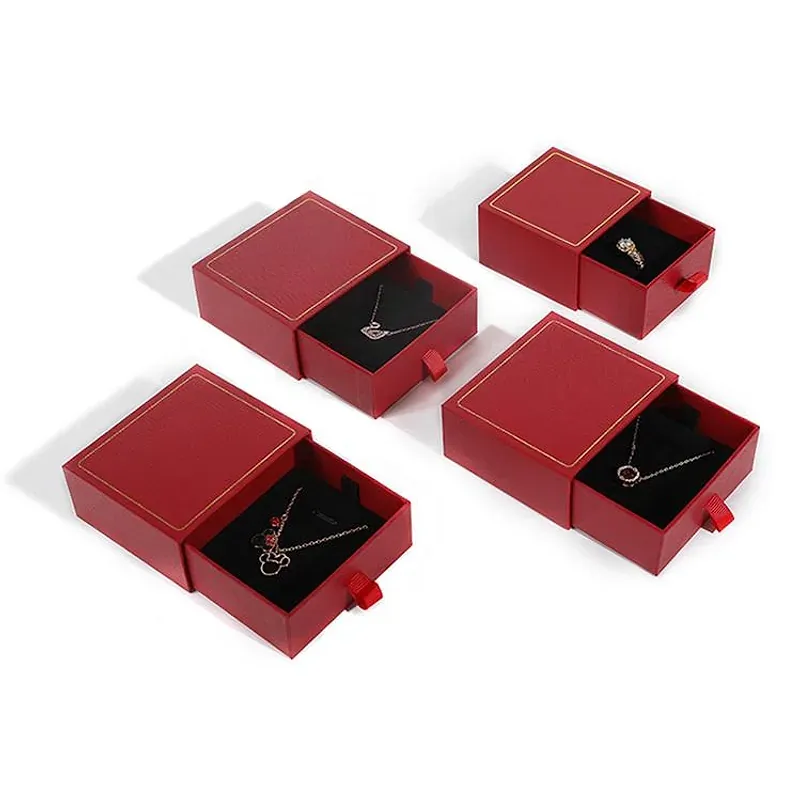
The anatomy is two parts: an inner tray that holds the matches, and an outer sleeve that slides over it. Everything else follows from the clearance between them. Too tight and the box jams mid-pull; too loose and the tray slides out under its own weight when the box is tilted. The working clearance is a fraction of a millimetre, held by cutting tray and sleeve on the same tools in the same run, and the pull should be one-finger smooth with a slight resistance at half travel — a feel that is specified at sampling, not hoped for at delivery.
Warp control matters as much as the cut. Tray and sleeve are folded with their grain running in the same direction, so humidity moves both parts together instead of twisting one against the other; a printed wrap in 157 g art paper sits thin enough not to fight the board it covers. It is worth stating plainly: a full rigid drawer box needs 1200 g greyboard to carry heavy contents, but at match box scale the format runs lighter, with sleeves folded from 300 to 500 g board that stay square through a lifetime of pocket and drawer use. Lighter is correct here, and pretending otherwise only adds cost.
Across 1,000+ cases of slide formats, the same acceptance pattern repeats. The box is cycled open and closed twenty times at sampling; the tray must never fall free when the closed box is tilted and shaken gently; and the sleeve must return to square after a night in a crowded drawer. All three checks take minutes, and all three catch the two failures that matter — a tight box nobody pulls twice, and a loose one that empties itself into a coat pocket. Tolerance discipline also decides reorders: a repeat run cut on the same tools reproduces the same pull, which is why tools stay on file and why a change of board stock between runs is flagged rather than assumed. The pull a customer learned is a property of the pair of parts, and both parts have to return to it.
Striking Strip Placement: Four Rules
Rule one: the strip sits on the outside of the sleeve, on one side only. One side is the convention for a reason — it makes the striking surface predictable in the hand, and it keeps the opposite face clean for branding. Both-sides strips exist and cost little more, but they double the places where the compound can scuff against neighbouring boxes in transit, so the default is single-side unless the brief says otherwise.
Rule two: the strip stays clear of lamination and varnish. Friction works because the compound meets raw board, so the strip zone is left unprinted in the die-line and the strip is applied after the wrap, not before the finish. Rule three: the strip's height is aligned with the match bed inside the tray, so a natural draw across the strip falls in the middle of the band rather than at its edge. Rule four: the strip sits away from the tray opening, so fingers pulling the tray do not scuff it before the first match is ever struck. A fifth consideration is packing: strips face one direction in the carton, separated by orientation so compound never rubs compound, and that orientation is noted on the specification so the packing line does not have to rediscover it.
All four rules are artwork decisions as much as production ones, which is why they belong in the first drawing. Flag the strip zone when the die-line is briefed, and the factory can quote the application step with the rest of the programme instead of discovering it after print. The wrap and the strip carrier can both be specified on FSC-ready board, with certified stock reserved per order when the requirement is raised at quotation rather than after sampling.
Small Formats Reward Foil and Fine Detail
A small format is where hot foil earns its keep. The wrap in 157 g art paper is barely larger than a thumb, foil registration holds easily at that size, and a single foil colour reads as a complete design language rather than an accent. Blind deboss works the same way: at match box scale, a pressed line or monogram is visible from across a table, which is exactly the distance at which a match box is noticed.
Restraint still applies, and it applies harder at small scale. Two finishes are the practical ceiling — a matte lamination for the faces and one foil colour for the mark — because a third finish multiplies set-up passes on a surface the size of a palm, where the customer cannot distinguish the difference at arm's length. Misregistration that would vanish on a shirt box is glaring on a match box, which is why the artwork is proofed at full size and checked under a loupe rather than reviewed on screen.
Detail is structural as much as decorative. Wrapped edges, square corners and a sleeve that returns to shape after a squeeze are the details customers register without naming them, and they cost discipline rather than money. Interior printing is the one upgrade worth considering beyond the exterior: a single brand line inside the sleeve is seen every time the box is opened, and on a piece this small the inside is seen often, since opening the box is the entire point of owning it. Hospitality buyers should also sample the box in the setting it will live in: a desk box is lifted with one hand, a table box with two fingers, and the pull must work for both grips without the box sliding away.
Match Boxes in Three Settings: Hotels, Restaurants, Gifting
Hotels use match boxes as a desk-level brand token, and the format suits the job precisely because it is small, inexpensive and handled. A hotel programme is a steady drumbeat of short runs rather than one large order, which is why MOQ starting from 100 pcs matters here: each property or season can have its own mark without anyone committing to a warehouse of sleeves. The artwork carries the property name, and the box itself does the quiet branding every time a guest opens a drawer. Multi-property groups add a data layer: one structure, several marks, and a naming convention for the artwork files that keeps property versions from drifting.
Restaurants use match boxes at the table, where the box lives beside the candle light at the end of a meal. The sleeve takes more handling in this setting, so corner wrapping and board weight are specified against repeated pocketing and table contact rather than a single gift moment. Reorders follow the refill cadence of the venue, and the same tooling serves year after year, which is what keeps the per-unit cost flat across seasons.
Gifting uses match boxes as the smallest piece in a larger set — alongside a candle or a bar accessory, inside a presentation box, or as a favour in its own right. Across 50+ brands in hospitality and gifting, the match box is usually the first piece a new customer touches, so it is treated as a brand ambassador rather than a commodity. The lesson from those programmes is consistent: spend the effort on the pull feel and the foil mark, and the smallest item in the set becomes the one people keep. A gifting programme should also decide early whether the box carries the set's brand or its own, because the answer changes the artwork schedule rather than the structure.
Assembly, Packing and Programme Economics
Assembly passes dominate the cost of a small format. Tray gluing, sleeve folding and strip application are each a pass, and a die-line designed to fold without re-orientation removes handling from every one of them. That is a drawing-stage decision, not a speed-up the floor can improvise later. On the 5,000 m² production floor in Humen, about 100 staff run these small-format assemblies beside the larger rigid programmes, so a match box order shares set-ups and materials rather than standing alone. The economics reward standardisation twice: a shared die-line across sizes gangs the cut, and a shared wrap size across finishes lets a hotel group hold one board stock for every property.
The commercial frame is quick to use. MOQ starts from 100 pcs per size and design; a complete specification receives a quotation within about 24 hours and answers to technical questions within 12 hours; a free digital sample follows in about 5 days. After approval, mass production runs 10-20 working days, with payment of 30 percent deposit and the balance before shipment. A repeat order skips the set-up a first run pays, which is why hospitality buyers see the unit cost fall on the second and third run.
Packing follows the format. Larger counter formats pack 100 pcs per master carton at or below 22 kg, and the smallest sleeves run to many hundreds per carton under the same weight ceiling, with the exact count confirmed on the quotation against the box size. AQL inspection runs before packing, so cartons leave the line sampled against the approved master rather than merely counted. The factory runs about US$10 million in annual output to 80+ countries, so a short hospitality run sits inside a normal flow rather than at its margins.
Frequently Asked Questions
What clearance should the slide have?
The working clearance is a fraction of a millimetre, held by cutting tray and sleeve on the same tools in the same run. The acceptance test is a one-finger pull with slight resistance at half travel, cycled twenty times at sampling, plus a tilt test where the closed box must not release the tray. Both checks are written into the sample approval.
Where does the striking strip go?
On the outside of the sleeve, one side only, clear of lamination and varnish so the compound meets raw board. The strip is applied after the wrap, aligned with the match bed inside the tray, and sits away from the tray opening so fingers do not scuff it. The strip zone is left unprinted in the die-line, which is why it is flagged when the artwork is first briefed.
Which finishes read best at this size?
One foil colour and a matte lamination are the combination that earns its cost at match box scale, because foil registration holds on a small wrap and the matte face resists the fingerprints a pocket piece collects. Blind deboss works well for monograms. More than two finishes multiply set-up passes on a surface the size of a palm, where the extra detail cannot be seen at arm's length.
What board weights do you use?
Sleeves fold from 300 to 500 g board, matched to the sleeve size and the handling the setting produces; trays are cut from the same stock family so the parts move together in humidity. A printed wrap in 157 g art paper sits thin enough not to fight the board. Full 1200 g greyboard belongs to large drawer boxes, not to this format, where lighter board is the correct specification.
What are the MOQ, sampling and production timelines?
MOQ starts from 100 pcs per size and design, which suits the short, steady runs hospitality programmes produce. A complete specification receives a quotation within about 24 hours, technical replies within 12 hours, and a free digital sample in about 5 days. Approved samples move to mass production of 10-20 working days, with 30 percent deposit and the balance before shipment.
How are match boxes packed for export?
Counts are confirmed on the quotation against the box size: larger counter formats pack 100 pcs per master carton, the smallest sleeves run to many hundreds per carton, and every carton is capped at 22 kg. AQL inspection runs before packing, so the cartons that leave the line have been sampled against the approved master. Strip faces are separated by packing orientation so the compound is not scuffed in transit.
Conclusion
Match boxes reward the same discipline as full-size slide boxes, concentrated into a format small enough to expose every shortcut. Fix the tray and sleeve tolerance at sampling, place the striking strip in the die-line rather than after print, spend on one foil mark instead of three finishes, and let the pull feel be the quality test a customer performs without knowing it. Send your artwork, quantities and setting — hotel, restaurant or gift set — and Request a Wholesale Quote from our factory in Humen, Dongguan; the quotation arrives within about 24 hours, and the tolerance questions are settled before artwork is finalised.