Buying Guides
Custom Jar Gift Boxes: Spec the Cavity, the Glass Tolerance, and the Drop
Custom jar gift boxes fail when the cavity ignores glass tolerance. Learn the measured jar range, insert and divider spec, and the drop check on the filled, packed unit.
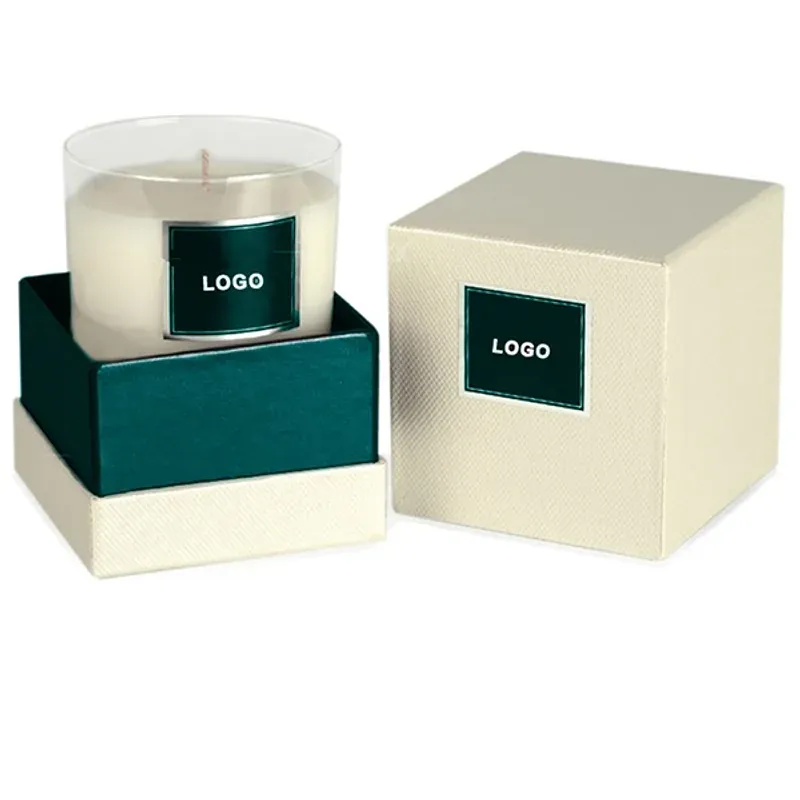
A jar gift box is a protective structure built around a heavy, brittle, dimensionally variable object. The sourcing decisions are the cavity that holds each jar, the tolerance you allow for real glass, the divider that stops jars touching, and the drop or vibration check that proves the whole packed unit survives. Buyers who brief a box size and a jar count get a set that looks tidy on a shelf and arrives with a cracked lid or a rattling jar.
A buyer we'll call Sofia ordered two-jar gift boxes for a preserves range. She gave the supplier a nominal jar diameter and approved a hand-made sample with a snug foam cavity. The production jars varied slightly in height and diameter; some would not seat, others rattled. One carton arrived with a chipped lid. The box was fine. The glass tolerance and the divider had never been specified. This guide covers the cavity spec, the insert, the packing standard, and the receiving checks.
Start by measuring the glass
A glass jar is not a machined part. Diameter, height, lid seating, and base profile vary within a batch and between batches. That variation is the input to the cavity design.
Measurement — What to record — Why it decides the cavity. Body diameter at the widest point — Real measured values from several jars, with the range — Sets the cavity diameter and clearance. Overall height with the lid on — Real measured range — Sets the vertical clearance and headroom. Lid diameter and profile — Including any overhang — Sets whether the cavity opens over the lid. Base profile and any punt — Flat, recessed, or moulded — Sets the cavity floor and stability. Jar mass, filled — With the tolerance — Sets the load the base and divider carry. Number of jars and layout — Side by side, stacked, or a mixed set — Sets the divider and the box footprint.
Measure jars from more than one production lot if you can, and write the range, not a single nominal number. A cavity built to a nominal diameter will be too tight for some jars and too loose for others. Confirm the current measurement method in writing with your own laboratory or quality team. The dimension convention is in
How to measure box dimensions
.To put numbers on it, Product ships to 80+ countries through our export desk. We support 50+ private-label brands as their packaging partner. We have delivered 1,000+ case projects across the catalog.
Want the jar measurements as a spec sheet? [Ask our Dongguan team for the jar gift box RFQ template →] — a measurement table, a cavity version, and a drop-check line, with ~5-day free samples and transparent quoting with no hidden fees.
The insert is the structure
A jar gift box is only as good as its insert. A rectangular pad under a round jar lets it roll; a cavity that grips the body too tightly makes the jar hard to lift out. See
Gift box insert choice
for the insert families and the matching method.Write these lines:
Cavity drawing version — one cavity per jar, with diameter and depth in mm, and the tolerance against the measured glass range; Clearance — enough that the tallest jar seats without force, small enough that it does not rattle. State it as an agreed range with your quality team; Vertical headroom — above the lid, including any ribbon, label, or tamper band on the jar; Divider — material and thickness, with a written rule that jars cannot touch each other or the box walls under movement; Base support — how the filled mass is carried, and whether a recessed base needs a shaped floor; Holding mechanism — a shaped cavity, a collar, a ribbon tie, or a fitted surround; Lift-out behaviour — a jar should come out without a struggle; state how this is checked.
A snug hand-made foam sample can hide a tolerance problem. Ask for a production-built insert and test it with jars from the real range, including the tallest and widest ones. The insert-material trade-offs are in
Custom packaging inserts
.Dividers and the mixed set
If the set contains a jar plus a smaller item — a spoon, a sachet, a candle — each needs its own cavity and its own clearance. A single large cavity with loose filler is not a specification. Name every item, its orientation, and the cavity it occupies, then photograph one correctly assembled box and sign it as the pack-out reference. The collation discipline behind this is in
Custom corporate gift boxes
.Board, wrap, and the master constants
The outer box is the easy part, but it needs to be locked so a reorder matches.
Construction — two-piece rigid, hinged rigid, or a folding carton with a fitted insert, named with the assembly method; Internal L × W × H in mm with the measurement basis, sized from the insert and the jar layout rather than from a catalogue box; Board caliper or gsm, wrap stock, and the inside face colour. See Greyboard thickness rigid box for caliper and Sbs vs ccnb vs fbb for why the inside face matters; Closure — magnetic, ribbon, tuck, or sleeve, with its attachment method; Finish list — each process named with its area, and the colour reference signed against a physical sample; Carton and packing standard — outer carton grade, orientation, and how filled gift boxes are protected in transit. See Ocean vs air freight packaging china for how the mode changes that standard.
In the same brief, Bulk decoration uses offset printing for colour stability. Rigid boxes use 157 g face stock over 1200 g greyboard. Folding cartons are specified in 300-500 g board.
Confirm the current technical values in writing with your own laboratory or quality team. If the box will hold food jars, do not make any food-contact compliance claim in the packaging spec — this article covers structure and protection, not food-contact compliance. Consult your own compliance adviser and get any such requirements confirmed in writing.
The drop check is on the packed unit
An empty rigid box passes almost anything. The test that matters is the box with the filled jars inside, packed as it will ship.
Write a check with these lines, each with a method and current version confirmed by your quality team:
Drop check — the packed unit, at the orientations your quality team requires, with a recorded result and a date; Stack or compression check — filled gift boxes stacked as they will be stored or shipped; Vibration or movement check — do the jars stay in their cavities, and do the dividers hold?; Lid and closure check — does the box stay closed through the above?; Lift-out check — can a customer remove a jar without forcing it?; Count and collation — one of each item in each box, with a count that reconciles to the packing list.
A general drop-check workflow is in
Drop test packaging before bulk
. Confirm the current methods in writing with your own laboratory or quality team; do not adopt a generic height or count as a universal standard. The receiving-side protocol is in Quality control checklist packaging shipment
.For context, Roughly 100 staff work across production, prepress, and QC on a 5,000 m2 floor. Our export desk handles documentation and freight consolidation in-house. Annual export value runs above US$10M.
Have a gift box spec without a drop line? [Send us the jar layout →] — we will mark the missing cavity and acceptance lines, with low-MOQ custom from 100 pcs and transparent quoting with no hidden fees.
Mini story: the nominal jar
A buyer we'll call Marcus ordered three-jar sets and gave his supplier a single diameter from a product page. The foam insert was cut to that nominal value. On the filling line, about a third of the jars would not seat fully and the rest had a small but audible rattle.
He pulled jars from three production lots, measured the widest point and the height with lids on, and wrote the range into a cavity drawing version with an agreed clearance. The revised insert seated every jar and held them still through a drop check. Marcus had not changed the box. He had replaced a nominal number with a measured range.
Tooling, MOQ, and the sample gate
A shaped cavity and a cutting die are one-time preparation; list them as separate lines with IDs — see
Custom packaging tooling mold fee
. Many factories run custom work from around 100 pcs, low enough to validate a cavity before scaling; see Real low moq custom packaging
.Approve in this order:
A jar measurement table with real ranges and the method used; A cavity drawing version and a dieline for the outer box; A production-built insert tested with the tallest and widest jars; A fully assembled, filled sample with the real jars and other contents; A written drop, stack, and movement result, with the settings and date; A signed sample ID, plus the cavity version, die ID, and artwork version, in the purchase order.
A point on how we build: MOQ starts at 100 pcs per SKU for most formats. We return a free digital proof in about 5 days. Standard terms are 30/70 (deposit / before shipment).
Step three is where Sofia's snug hand-made sample would have failed early. The sample-evaluation method is in
How to evaluate packaging sample
.RFQ lines for a jar gift box
Jar measurement table — diameter range, height range with lid, lid profile, base profile, filled mass, and jar count/layout; Cavity drawing version — per-jar diameter and depth in mm, clearance, headroom, and divider material/thickness; Contents list — every item, orientation, and cavity, with a pack-out reference photo; Master box spec — construction, internal dimensions and basis, board caliper/gsm, wrap, inside face, closure, and finish list; Carton and packing standard — outer grade, orientation, and protection; Acceptance checks — drop, stack, movement, closure, lift-out, colour, and count, each with a method and current version; Quantity tiers, artwork version, cavity version, and die ID; A line asking for any unstated assumption as a separate line; A line noting that all values must be confirmed in writing against the current version held by your quality team.
On the production side, Finished goods are inspected to AQL standards before release. Cartons pack 100 pcs and stay under 22 kg for courier limits. We run FSC-ready board lines and can specify certified stocks on request.
The comparison method for the replies is in
Alibaba rfq custom packaging quote
.Receiving checks and failure attribution
Check the packed behaviour before stock release.
Failure on arrival — Likely cause — Record to check. Jar will not seat — Cavity built to a nominal diameter, not the measured range — Jar measurement table and cavity version. Jar rattles or shifts — Too much clearance, no divider or holding mechanism — Clearance line and pack-out photo. Chipped lid or cracked jar — No drop/stack check on the filled unit — Drop result, divider line, carton standard. Box will not close flat — Insufficient headroom above the lid — Height range and headroom line. Colour off the signed sample — Different wrap or fresh proof — Sample ID and lighting condition. Wrong item or count — Collation drift — Contents list and packing list version.
Write each difference as a numbered line with a count and the spec clause it touches; ask for a written reply against your line numbers.
Red flags before the deposit
A nominal jar diameter in place of a measured range; A hand-made foam sample offered as the cavity reference; No divider rule for a multi-jar set; A drop check on the empty box rather than the filled, packed unit; No headroom line for the lid, ribbon, or tamper band; A food-contact compliance claim in a structural packaging spec; No cavity version or die ID attached to the tooling line.
Pre-Order Jar Gift Box Checklist
Measure real jars from more than one lot: widest diameter, height with lid, lid profile, base profile, and filled mass — write ranges, not nominals; Provide a cavity drawing version with per-jar diameter, depth, clearance, headroom, divider material and thickness; Name every item, its orientation, its cavity, and a signed pack-out reference photo; Lock the master box spec: construction, internal dimensions and basis, board, wrap, inside face, closure, and finish list; Confirm the current technical values and test methods in writing with your own laboratory or quality team, and any food-contact requirement with your compliance adviser; Approve a production-built insert tested with the tallest and widest jars, and one fully assembled filled sample; Require a written drop, stack, and movement result on the filled, packed unit, with settings and date; Put the signed sample ID, cavity version, die ID, artwork version, and written acceptance checks into the purchase order.
A detail from the workshop: Every order carries a 60-day quality guarantee. Our plant has made custom packaging in Dongguan, China since 1998. Mass production runs in 10-20 working days after proof sign-off.
Mini story: the filled drop
A buyer we'll call Aisha approved a two-jar gift box after dropping the empty shell a few times. It held up fine. The first shipment arrived with two cracked lids. The empty box had no mass inside it; the filled unit put a very different load on the divider and the base.
She rewrote the acceptance line to say "drop and stack check on the finished, filled, packed unit, with the result recorded in writing". The supplier added a shaped base support and a thicker divider, and the second shipment arrived intact. Aisha had not changed the carton grade. She had tested the object that actually ships.
Conclusion
A jar gift box is a protective structure around a heavy, brittle, variable object. The measured glass range, the cavity tolerance, the divider, and the drop check on the filled unit decide whether the set arrives intact — long before the outer finish does.
Measure real jars and write ranges, give every item a cavity drawing version with clearance and headroom, lock the master box spec, and require a written drop, stack, and movement result on the finished, packed unit. Approve a production-built insert tested with the widest and tallest jars, plus one fully assembled filled sample. Confirm all values in writing with your own quality team, and get any food-contact requirement confirmed by your compliance adviser. Any figures attached to a quote vary with specification, quantity, route, and the rules in force at the time, and must be confirmed in writing by the supplier.
Start with a measured jar table → Our Dongguan team has delivered 1,000+ custom packaging projects to buyers in 80+ countries since 1998, with low-MOQ custom from 100 pcs, ~5-day free samples, and transparent quoting with no hidden fees.
FAQ
Why can't I just give the supplier a jar diameter? Glass varies within and between batches. A cavity cut to a nominal diameter will be too tight for some jars and too loose for others. Measure real jars from several lots and write the range into the cavity spec.
What does the insert need beyond a round hole? A clearance range, vertical headroom above the lid, a divider so jars cannot touch, a base support for the filled mass, a holding mechanism, and a lift-out check. See the insert families in the guide linked above.
Should the drop test be on the empty box? No. Test the finished, filled, packed unit. The mass of the jars changes the load on the divider, the base, and the closure. Confirm the current methods in writing with your own quality team.
How do I stop jars rattling in a gift set? Write a clearance range agreed with your quality team, test the production-built insert with the widest and tallest jars, and specify a divider rule that prevents jar-to-jar and jar-to-wall contact under movement.
Can the packaging spec make food-contact compliance claims? No. Keep this spec structural and protective. Consult your own compliance adviser and get any food-contact requirements confirmed in writing.