Buying Guides
Verify Capacity: Questions That Expose a Trading Company
Verify a box factory's capacity up front: questions that locate the production line, answer patterns that expose intermediaries, and four free cross-checks.
Opening
Capacity is the most quoted and least examined number in packaging sourcing. Every supplier has one, the figures rarely decompose, and the buyer discovers the difference between claimed and actual capacity at exactly the moment it matters: when the calendar slips, when the reorder competes with a bigger account, or when the sample that won the order cannot be reproduced at volume. Verifying capacity before the first order is therefore not diligence theatre; it is the difference between a schedule and a hope. And the verification is mostly a matter of questions, because capacity that is real can be located, while capacity that is borrowed can only be repeated.
We answer capacity questions from the answering end. Our box factory in Humen, Dongguan has run since 1998, and the questions we hear from careful buyers are the ones this article recommends, because they are the questions a real plant enjoys and an intermediary dreads. Capacity, honestly told, is not one number; it is a web of specifics — which steps on which lines, which materials stocked, which calendar owned, which gates worked — and every specific is checkable by a buyer with an email and a camera.
This article builds the verification in four moves: what capacity actually consists of, the questions that locate the production line, the answer patterns that expose a borrowed story, and the cross-checks that confirm a real one without costing a cent.
Capacity Is a Set of Answers, Not a Number
The word capacity invites a number, and the number is nearly useless on its own. Boxes per day means nothing until it says of what box, on which line, at what quality gate, with whose labour, in a week that also contains four other programmes. A plant running a single folding line and a plant running printing, die-cutting, wrapping and assembly lines have capacities that are not just different in size but different in kind, and a quotation drawn from either can look identical on a screen. The first step of verification is refusing the number and asking for the set: capacity of what, where, for which steps, in which materials.
The set has a natural structure, and buyers can memorise it as five locations. Structural capacity: which processes the plant runs itself — printing, die-cutting, folding-gluing, wrapping, assembly, inserting. Material capacity: which board weights and paper stocks are held in working quantity, the 1200 g greyboard and 157 g art paper pair, the 300 to 500 g folding range, the certified options held for FSC-ready programmes. Calendar capacity: which lead times the plant controls itself, sampling in about 5 days, production of 10-20 working days, and how the schedule absorbs a new order. Quality capacity: which gates run between production and shipment, inspected to which standards. And recovery capacity: what happens when a batch fails, when a die breaks, when a material substitutes. A supplier who can answer all five locations owns their capacity; a supplier who answers one number is quoting a story about someone else's floor.
Why the distinction matters commercially: capacity that is owned behaves differently under stress. When a real plant is squeezed, the buyer hears about it early, in scheduling conversations, because the plant is managing its own calendar. When borrowed capacity is squeezed, the buyer hears about it late, as a delay with no anatomy, because the intermediary is learning about it from the factory at the same speed as the news travels. Verification before the first order is how a buyer chooses which kind of surprise to be available for.
The five locations also make quotations comparable in a way unit prices never are. Two suppliers at the same price with different capacity sets are different products, and the set is what the questions below are designed to expose.
Questions That Locate the Production Line
The locating questions share one design: each asks the supplier to place your box in physical space, and only the producer can do it from memory. First: for this structure, walk me through the steps in order, and say which are done in your building and which are bought outside. A plant answers with a map — printing here, die-cutting there, wrapping and assembly on our own benches, a special finish bought from a partner we have used for years — because the map is how the job actually flows. The answer to watch is the one that claims every step in-house at the same fluency with which it claims everything else; total vertical integration is rare, and claiming it casually is the first marker of a borrowed story.
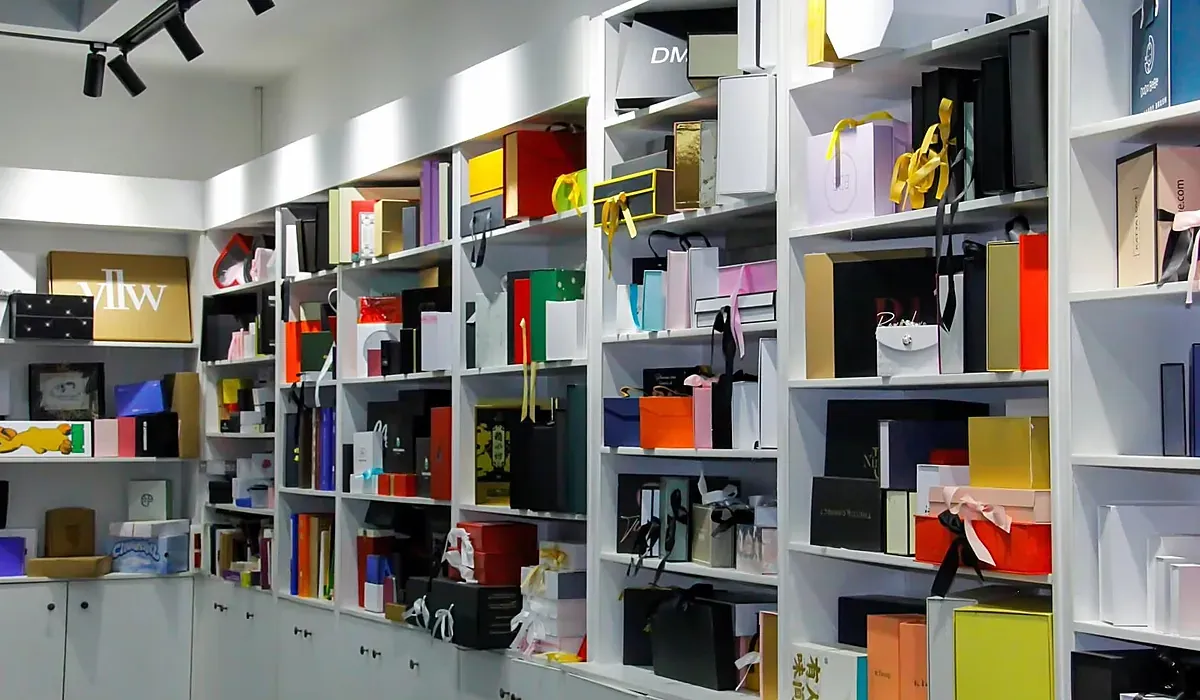
Second: what material will you use, in what weight, and what do you hold in stock versus buy to order? The plant answers by inventory: standard weights stocked deep — the greyboard and art paper pair, the folding range — and non-stock materials with an honest buy-to-order lead time attached. The inventory answer does double duty, because it also dates the supplier's knowledge: a stock list is a living document on a real floor and a decoration anywhere else.
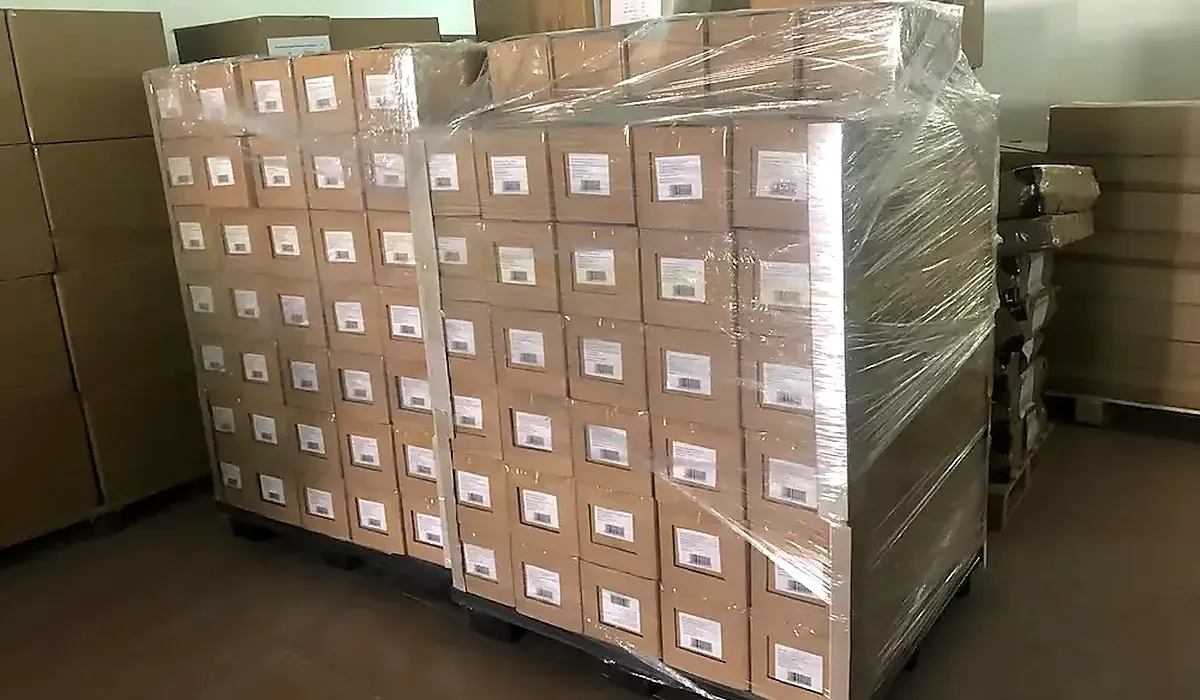
Third: how will the boxes be packed, at what count, under what ceiling? Our own answer is the working one: 100 pcs per master carton at or below 22 kg, carton grade stated, pattern adjusted to the channel. The packing answer locates a physical habit — plants that pack daily answer in patterns; intermediaries answer in numbers they have been told.
Fourth: how do you validate that the carton protects the product? Here the honest answer speaks in industry terms rather than promises: corrugated and board grades are selected against stacking and transit, the trade measures material in edge-crush terms and finished boxes in compression terms, and laboratory drop and vibration protocols exist for pack-outs that need third-party proof. A plant discusses these as tools it can specify and commission; it does not recite impressive figures, because compression results belong to tested configurations, not to marketing. A supplier fluent in the vocabulary and honest about its limits is showing you a quality culture; a supplier trading in unanchored test numbers is showing you a script.
Fifth: what is your calendar for this order, stage by stage, and what stretches it? The plant names its own gates: quotation in about 24 hours, sample in about 5 days, production of 10-20 working days after a 30% deposit, inspection to AQL standards before packing — and names the bottlenecks by name, because every floor has them. The padded calendar with no anatomy is the sound of schedules being forwarded.
The Lie Patterns in Supplier Answers
Intermediary answers fail in patterns, and naming the patterns is most of the defence. The first is the everything claim: every process in-house, every material available, every service offered, answered with the same fluency and the same speed for a jewellery box and a heavy-duty transit carton. Real plants are particular — they know what they make, and their limits are specific. Uniform capability is a composite picture, and composites are assembled, not built.
The second pattern is the floating number. Capacity figures that never decompose — no line, no shift structure, no material basis — and prices that move without a specification moving. The floating number is designed to keep a conversation alive rather than to describe a factory, and the test is a single request: show me the basis. A plant shows the basis in one sentence because it has one.
The third pattern is the instant yes. Every requirement agreed in real time — the tolerance, the certified material, the impossible calendar — with no question back and no constraint volunteered. Production is a negotiation with physics, and a supplier who never negotiates has no physics to negotiate with. The plant's answers come back with edges: this weight, not that one; this calendar, plus two days if the die is new. Edges are what knowledge looks like in correspondence.
The fourth pattern is the perfect-sample trap, and it is the most expensive. A flawless sample arrives quickly and cheaply, and the batch that follows cannot reproduce it, because the sample was made as a demonstration while the batch must be made as a process. The lie is not the sample; it is the absence of a story about how the sample scales — no golden sample procedure, no retention, no inspection gate, no AQL, just the object. Ask how the sample becomes a batch, and the pattern identifies itself.
The fifth pattern is the document dump: certificates and gallery images supplied generously, none of them load-bearing, none of them connected to your order. Documents are answers to specific questions — this licence for this legal name, this inspection record for this batch — and a pile of paperwork offered in place of specifics is the paper equivalent of the floating number. Real capacity answers questions; borrowed capacity answers emails.
Cross-Checks That Cost Nothing
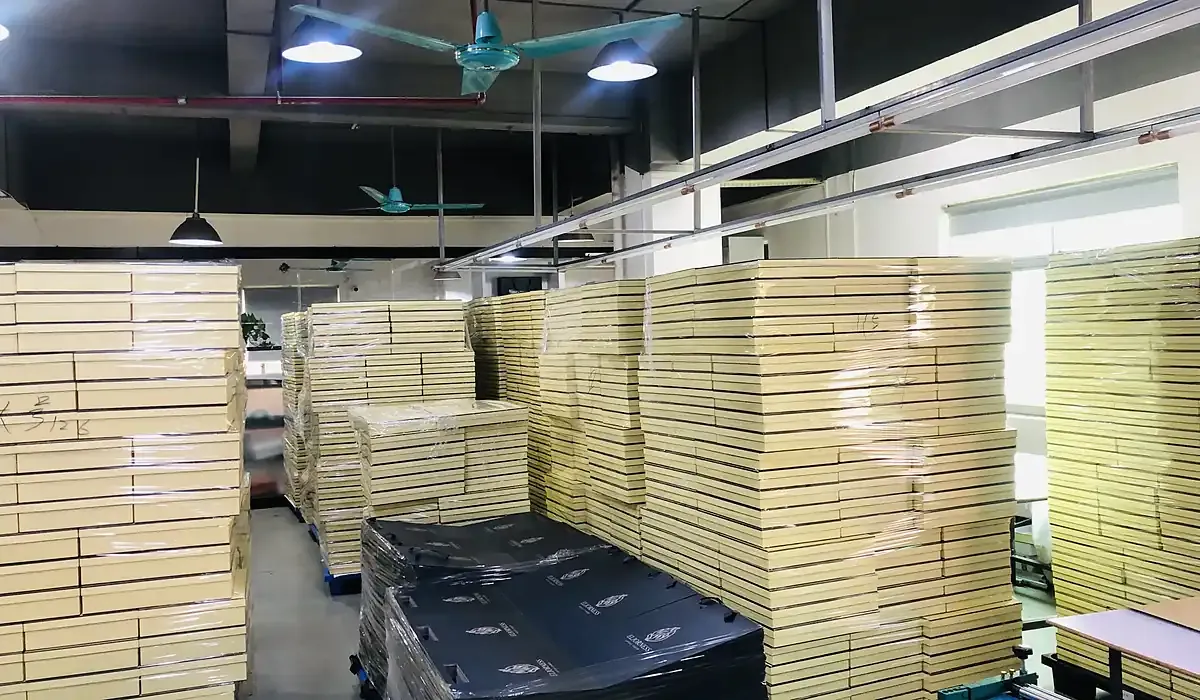
The questions locate the story; the cross-checks verify it, and the best ones cost nothing but a calendar entry. The video walk is the primary instrument: a live camera on the floor during working hours, requested with an agenda — the licence on screen, the machines for your steps in motion, the work in progress, the packing line with a carton open, the inspection bench sampling to AQL. The walk cross-checks the five locations at once, and a plant that welcomes the agenda is exhibiting the transparency the audit is testing for. Details of the walk deserve their own article; the principle here is that a live floor is the one document that cannot be forged on request.
The document cross-check comes second: business licence against the legal name on the quotation, registration year against the claimed history — ours reads since 1998, and the licence agrees because the two were never separate stories — and the registered address against the one that would receive your die and your golden sample. The numbers cross-check third: a claimed floor of 5,000 m², a team of 100 staff, an output around US$10 million, exports to 80+ countries — each figure should be consistent with the others and with what the camera finds, because borrowed stories are assembled from numbers that never met.
The sample cross-check is the quiet one with the highest yield. Ask the supplier to produce, on camera, the material for your specification and a retained golden sample from a comparable job, and read the weights from the objects in hand: the greyboard at 1200 g, the wrap at 157 g art paper, the folding board from the 300 to 500 g range. Then ask where the retention shelf is and watch it appear. Consistency between what a supplier says and what it holds is the property being verified, and it cannot be improvised.
The reorder cross-check comes last because it costs the least attention: ask how a repeat order runs. A plant answers from its own files — the die is on the shelf with your job number, the quotation returns in about 24 hours, production restarts at the same minimum of 100 pieces per size and design, the golden sample governs the batch, and the 60-day quality guarantee stands behind it. Borrowed capacity has no files, and its reorder answer is a first-order answer wearing a repeat order's clothes.
What an Honest Capacity Story Sounds Like
The honest story has a texture that is recognisable once heard, and buyers should learn it as a pattern in its own right. It is specific where specifics exist — the 5,000 m² floor in Humen, Dongguan, the 100 staff, the steps run in-house and the ones bought outside, the standard materials stocked and the ones that wait on a mill. It is humble where humility is true — this structure we make weekly, that speciality we broker, this calendar we own, that peak season we schedule around. And it is checkable everywhere — every claim paired with the object, document or camera angle that would prove it, because the supplier has nothing to hide from the checks.
Across 1,000+ cases and 50+ brands, the honest story also answers the questions the buyer forgot to ask. A plant that plans to deliver your order volunteers the constraints: the artwork deadline that protects the 10-20 working days, the insert decision that affects the packing count, the FSC-ready declaration that must be made at quotation for certified stock to be allocated. Volunteers are what ownership sounds like; a borrowed story only ever answers what it is asked, because anticipating requires being there.
And the honest story survives its own arithmetic. Ask the plant to walk a hypothetical — your order arriving in their peak week — and the answer routes through real furniture: which line, which days, what the inspection gate does to the calendar, what happens to the die after the run. The walkthrough is the final exam, and it cannot be studied for, because the answers are either remembered or invented, and the two read differently at any length.
Verification, in the end, is not suspicion; it is the precondition for trust. The buyer who runs the five questions and the four cross-checks earns the right to relax, because the relationship now stands on a floor that was seen rather than described. Send your structure, dimensions and quantity with the questions attached, and Request a Wholesale Quote — the capacity story comes back checkable, line by line, within about 24 hours.
Frequently Asked Questions
Why is a single capacity number meaningless?
Boxes per day means nothing without the box, the line, the materials and the week it describes. Capacity is a set: which processes run in-house, which materials are stocked, which calendar the plant controls, which quality gates run, and how failures are recovered. A supplier who answers in one number is describing a story about a floor; a supplier who answers in the set owns one.
Which questions best locate a real production line?
Ask for the process steps in order with their locations; the material weights held in stock versus bought to order; the packing pattern with its count and weight ceiling; how carton protection is validated in industry terms; and the stage-by-stage calendar with what stretches it. A plant answers all five from memory, in specific nouns and numbers, usually with questions back about your channel.
What answer patterns expose an intermediary?
Five patterns repeat: the everything claim of total in-house capability stated without particularity; floating numbers that never decompose into line, shift or material; the instant yes that agrees with every requirement without negotiating with physics; the perfect-sample trap with no story about how a sample scales to a batch; and the document dump that answers no specific question. Each pattern signals borrowed capacity rather than dishonesty alone.
How do I cross-check capacity claims without visiting?
Run a live video walk with an agenda: licence on screen, your steps' machines in motion, the work in progress, the packing line and inspection bench. Cross-read the licence against the quotation's legal name and the claimed history, and the claimed numbers — floor, staff, output, export reach — against what the camera finds. Then ask for a repeat-order walkthrough: owned capacity answers from its own files.
What material details should a real factory volunteer?
The standard weights it stocks deeply — 1200 g greyboard with 157 g art paper, or the 300 to 500 g folding range — and the substitution plan if a weight is short. Certified options are declared at quotation: our board lines are FSC-ready, with certified stock allocated before scheduling when required. Packing is stated as practice, 100 pcs per master carton at or below 22 kg, not as a shipping afterthought.
How does the sample stage verify capacity?
Ask the supplier to hold your specified materials and a retained golden sample on camera, reading weights from the objects, and to explain how the approved sample governs the batch: signed, dated, retained, with the production batch inspected to AQL standards before packing. A sample with a process behind it is a capacity claim; a sample without one is a demonstration.
Conclusion
Capacity verification is five questions and four cross-checks, and every one of them can run from a desk: locate the line, the stock, the packing, the validation vocabulary and the calendar; then cross-check with a video walk, the documents, the sample in hand and the reorder story. Real capacity answers in specifics, volunteers its constraints and survives its own arithmetic; borrowed capacity repeats numbers, agrees instantly and forwards your questions to wherever the facts live. Run the checks before the first order, and the schedule you are quoted is a schedule you can keep. Send your specification and Request a Wholesale Quote — the capacity story comes back checkable within about 24 hours.