Buying Guides
Tooling and Plates: The One-Time Costs Behind Custom Boxes
Tooling and plates explained: what cutting dies, print plates and foil dies cost, when the fee is waived, how it amortises, and who owns the die. Since 1998.
Opening
A first quotation for custom boxes usually arrives with a line the buyer did not expect: tooling. The question behind the line is fair — why does a cardboard box need tooling at all? The answer is that a box is not printed into existence; it is cut, creased and formed by physical tools built to your dimensions, and those tools are real objects with real costs. Tooling and plates are the one-time costs that turn a generic sheet of board into your box, and understanding them turns a mysterious invoice line into a manageable, sometimes avoidable, sometimes reusable asset.
We build those tools on our own floor in Humen, Dongguan, where the factory has run custom packaging since 1998. Across 1,000+ cases we have quoted tooling every way a buyer has asked: billed separately, amortised into the unit price, waived against a standard dieline, and transferred out when a programme moved. The cost itself is rarely the problem; the problem is a buyer who did not know whether the fee was one-time or forever, and found out at the first reorder.
This article explains what each class of tooling actually is, how one-time costs amortise across order sizes, when the fee legitimately disappears and when it returns, who owns the die when you change suppliers, and the four tooling questions worth asking before any quotation is accepted.
What Tooling and Plates Actually Buy
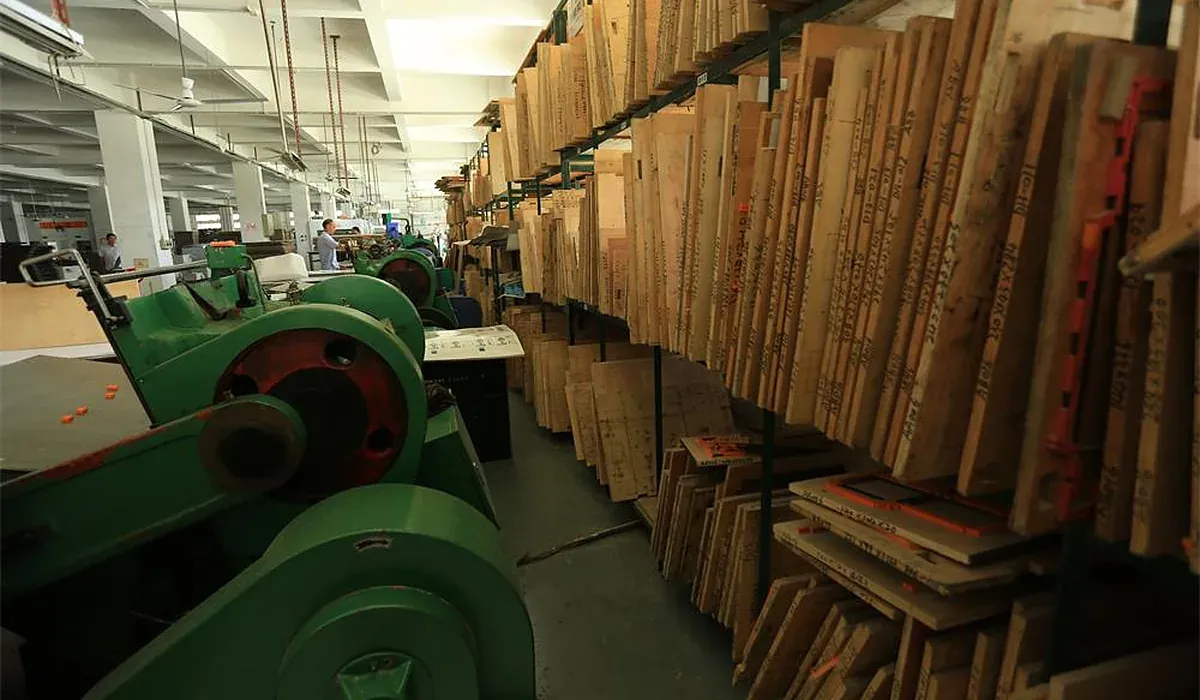
Three classes of tooling sit behind most custom boxes, and they do different jobs. The cutting die is the big one: a flat board, cut and bent with steel rules into the exact outline of your dieline, that punches the flat blank out of the sheet and creases the fold lines in the same stroke. Without it, every box is cut by hand, which is slow, variable and priced accordingly. The die is why a box's corners are square at unit one and at unit ten thousand, and it is built once per structural design.
The second class is the printing plate. On an offset press, every colour in your artwork prints from its own plate, so a four-colour job carries four plates, and a spot colour or a white base adds more. Plates are what make offset economical at volume and relatively expensive at tiny quantities, and they are re-made rather than re-used when artwork changes. The third class is the finishing die: the brass or magnesium block for hot foil, the counter for embossing, the form for a magnetic hinge or a window patch. Each finishing effect carries its own tool, which is why finishes are added deliberately rather than decoratively.
What the buyer gets for these costs is repeatability. A cutting die turns your dieline into a permanent physical object that produces box number four hundred exactly like box number four. That is also why tooling is a one-time cost in the literal sense: the die does not wear out between orders, it waits on the shelf with your job number on it. When a supplier bills tooling again at reorder, the honest explanation is either a lost die or a changed dieline, and both are worth a question.
The materials interact with tooling more than buyers expect. A rigid build in 1200 g greyboard wrapped in 157 g art paper runs on different dies than a folding carton in a 300 to 500 g board, because the crease depths, the rule heights and the make-ready all follow the caliper of the material. Change the structure and the conversation starts again; change the print and only the plates follow.
How One-Time Costs Amortise
Amortisation is the whole economics of tooling, and it is simple division with a strategic tail. A die that costs a fixed amount spread over 100 pieces is heavy per unit; the same die spread over 10,000 pieces rounds to a rounding error. This is the arithmetic behind minimum order quantities: our MOQ starts at 100 pieces per size and design precisely because below that line the one-time costs dominate the per-unit number and nobody wins. The unit price falls with quantity mostly because the fixed costs finally have somewhere to go.
The strategic tail matters more than the first division. Tooling paid once serves every future order of the same design, which means the real question is not what the die costs against this order but what it costs across the programme. A buyer planning three reorders should think of the tooling fee as the entry ticket to a lower recurring price, and a buyer running a one-off event box should push hard for a standard dieline instead, where the factory's existing die does the work and the fee never appears. The worst position is paying custom tooling for a design that will never run again; the best is a custom die on a design that runs every quarter.
Amortised-versus-billed is the presentation question, and the two presentations hide different risks. Amortised tooling folds the fee into the unit price, which looks clean and commits you to recovering it through volume; if the programme dies at 200 pieces, the supplier ate the difference, which is fair but should be priced in. Billed tooling keeps the lines separate, which is more transparent, comparable across suppliers, and refundable in the only sense that matters: the die sits on your account, ready for the next order. Our quotations state tooling as its own line for exactly this reason, so the buyer can see the lifetime of every number.
One more amortisation trap deserves a sentence: artwork changes reset plates, not dies. Revising a print file re-makes the plates at a smaller cost than the original run; revising the structure re-cuts the die at the full cost. Buyers who expect artwork flexibility to be free are usually right, and buyers who expect structural flexibility to be free are usually looking at a new quotation.
When Tooling Is Waived and When It Returns
Tooling legitimately disappears in three situations, and knowing them saves real money. The first is the standard dieline: factories that have made boxes since 1998 hold a library of existing dies for common structures — mailer styles, lid-and-base sets, tuck cartons, drawer sleeves — and a design that fits an existing die carries no cutting tool cost. The second is volume: at quantities where the programme clearly recovers the tooling, suppliers routinely waive the fee because the order economics work without it. The third is the relationship: a returning customer with a programme on file often finds the setup absorbed, because the die already exists and the make-ready is a known quantity.
Waived does not mean vanished, and the honest quotation says which. A fee waived against volume returns if the volumes shrink; a design on a standard dieline stays free as long as the design stays on the standard. The useful question at quotation is not whether tooling is charged but under what conditions it would be charged, and the answer should be a condition, not a mood.
Tooling returns in two situations worth planning for. Structural changes re-cut the die: a dimension that moves, a flap that re-designs, a structure that switches from folding to rigid all start the tooling clock again, which is why structural decisions should be settled at sample stage, when changes cost paragraphs. Supplier changes re-tool everything unless the die travels, which is the next section. And there is a quieter return: a programme that switches material class — say from a 300 to 500 g folding board to a 1200 g greyboard rigid build — needs new tooling for the new caliper even when the outside dimensions are identical, because creasing a heavier board is a different physical operation.
The fifth situation is not a return but a substitution: digital print routes can skip plates entirely for short runs, trading plate cost for a higher unit price on the printing itself. For a 100-piece discovery order that trade is usually correct; for a running programme it usually is not. The supplier who can price both routes honestly is worth keeping.
Who Owns the Die When You Switch Suppliers
The ownership question is simple in principle and contested in practice, so it should be settled in writing at the first order. The principle: a cutting die, a foil block or an embossing counter that your invoices billed to you is your property, held in custody by the factory. It should appear on the quotation as a stated line, and it should be recorded in the job file with a status: owned, amortised, or waived. Amortised tooling becomes your property once the recovery volume is reached; waived tooling usually remains the factory's, because you never paid for it.
The practice: buyers leave, suppliers stall, and a die that exists physically becomes theoretically unavailable. The protections are procedural. Ask for the tooling status in writing on the first quotation. Ask for the die dimensions and an identification number in the job file. And when a programme moves, ask for the tool to be released to you or to your new supplier — in our experience across 50+ brands and 80+ countries, a factory confident in its value releases tooling without drama, because the relationship was never the die.
There is a second migration risk that costs more than the die: the dieline itself. The die is a physical object, but the dieline file is the design, and the design is yours. Buyers should keep a copy of the final countersigned dieline, the artwork files and the specification sheet with the board weights — 1200 g greyboard, 157 g art paper, 300 to 500 g folding board, whichever applies — so that even a worst-case migration re-tools from documents rather than from reverse-engineering a sample. A supplier who resists handing over the dieline is telling you something; a supplier who keeps your files current with version numbers is telling you something better.
The full audit trail — spec, dieline, tooling status, golden sample, inspection records to AQL standards, and the packing pattern of 100 pcs per master carton at or below 22 kg — is what makes a supplier switch survivable. Tooling is one asset in that file, and the cheapest one to replace if the paper trail is complete.
Tooling Questions to Ask at Quotation
Four questions close most of the tooling risk, and they fit in one email alongside the specification. First: is the tooling one-time or recurring, and does any part of it bill again at reorder? Second: is the quoted design on a standard die from your library, and if so, what changes would push it onto custom tooling? Third: who owns the tool once paid, and what is the release process if the programme moves? Fourth: what does an artwork change cost versus a structural change, so the design freeze happens with eyes open?
The answers sort suppliers more reliably than the unit prices do. A factory answers these from its own job files, because it builds the dies, stores the dies and schedules around the dies; our floor of 5,000 m² and 100 staff runs about US$10 million in annual output, and tooling status is a line in every job file because reorders are the business, not an exception. A trader forwards the questions and returns with delays; a platform returns with a brochure. Speed and specificity on tooling is one of the cleanest tests of who you are actually talking to, and the answer arrives within a day from a plant that owns the process — technical questions inside 12 hours, quotation with the tooling line stated within about 24 hours.
The sample stage is where the tooling conversation pays. A physical sample in about 5 days proves the die that exists, or justifies the die that must be cut, and the approved golden sample becomes the reference every later batch is inspected against before packing. Production then runs its 10-20 working days with the tool already proven, a 30% deposit with the balance before shipment, and FSC-ready certified board available on request for programmes that need the chain-of-custody line in their own reporting.
Ask the four questions, get the four answers in writing, and the tooling line on your quotation becomes what it should have been all along: the receipt for an asset you own. Send your structure, dimensions and quantities, and Request a Wholesale Quote — the tooling answer comes back stated, not implied, within about 24 hours.
Frequently Asked Questions
Why does a custom box need tooling at all?
A box is cut, creased and formed by physical tools built to your dimensions. The cutting die punches the blank and creases the folds; offset printing prints each colour from its own plate; foil and embossing each carry a metal block. These tools are what make unit four hundred identical to unit four, and they are built once per structural design rather than per order.
Is the tooling fee charged again on every reorder?
No, not when the design and the tooling status are clear. A cutting die that was billed to you is a one-time cost that waits on the shelf with your job number, and reorders reuse it without a new fee. Plates are re-made when artwork changes, which is a smaller cost than the original. A quotation that bills full tooling again at reorder deserves a question.
When can tooling fees be avoided?
Three routes exist. A design that fits an existing die in the factory library, such as a standard mailer or lid-and-base style, carries no cutting tool cost. Large volumes often earn a waived fee because the order economics recover it anyway. And short runs can route around plates through digital printing, trading the plate fee for a higher unit price. Each route has conditions, stated in the quotation.
Who owns the tooling if I change suppliers?
Tooling you were billed for is your property in the factory's custody, and the status should appear on the quotation: owned, amortised or waived. A confident factory releases the die without drama when a programme moves. Protect the migration further by keeping the countersigned dieline, the artwork and the specification, so a new supplier re-tools from documents instead of reverse-engineering a sample.
Does changing the box size mean new tooling?
A structural change re-cuts the cutting die at the full tooling cost, because the die is the structure. An artwork change re-makes only the plates, which costs less. Switching material class, for example from a folding carton in 300 to 500 g board to a rigid build in 1200 g greyboard, also needs new tooling even at identical outside dimensions, because creasing a heavier board is a different physical operation.
How does tooling affect the minimum order quantity?
Tooling is the arithmetic behind minimums. A fixed die cost spread over 100 pieces is heavy per unit; spread over 10,000 pieces it rounds away. Our MOQ starts at 100 pieces per size and design because below that line one-time costs dominate. Buyers running one-off designs should ask for a standard dieline; buyers planning reorders should treat tooling as the entry ticket to a lower recurring price.
Conclusion
Tooling and plates are not a surcharge; they are the machinery that makes a box yours, and they behave like assets rather than expenses once you understand their lifetime. Ask whether the fee is one-time, whether the design fits a standard die, who owns the tool, and what a structural change costs versus an artwork change. Get the answers in writing, keep the dieline and the spec on your side, and the tooling line becomes a receipt for something you keep. Send your structure, dimensions and quantities, and Request a Wholesale Quote — the tooling status stated openly, the quotation within about 24 hours.