Buying Guides
Offset vs Digital vs Flexo for Packaging: Choose on the Run, Not the Press
Offset vs digital vs flexo for packaging is a preparation decision. Learn the four axes, substrate and colour behaviour, and the production-representative proof buyers should require.
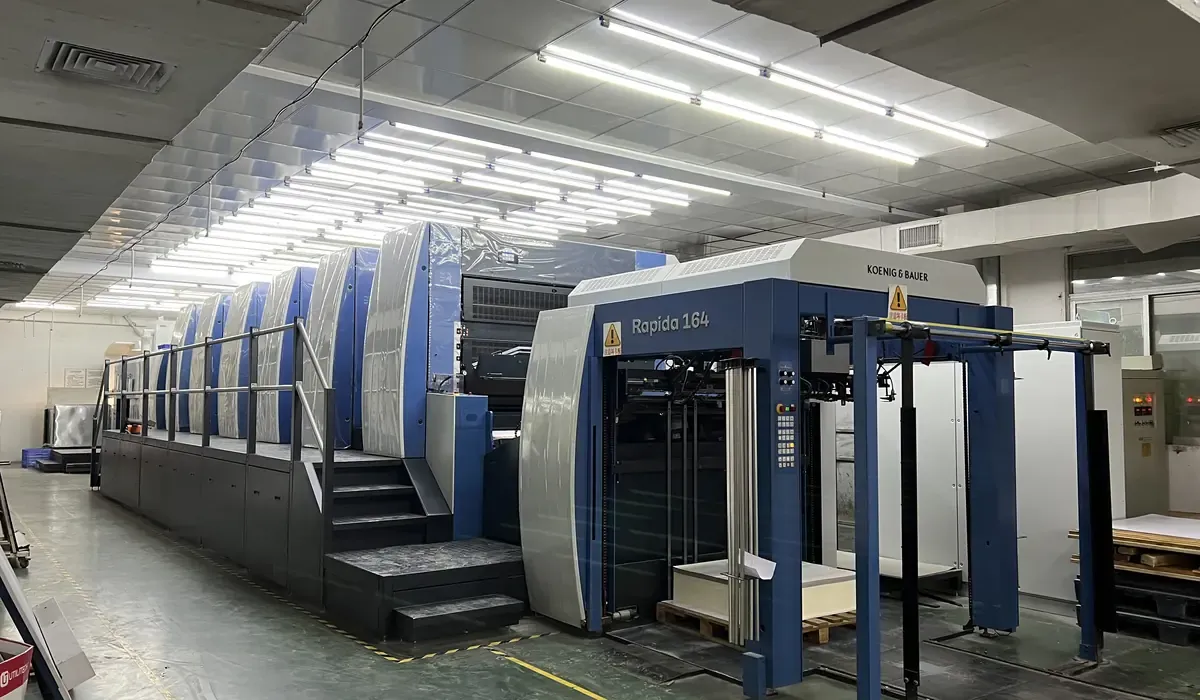
The three main print methods for packaging differ in what they need before the first good sheet, how they hold colour across a run, what they can print on, and how easily a version can change. Buyers who pick a method from a price sheet alone end up paying for plates on a short run, or fighting colour drift on a long one. Decide on four axes: run length and version count, substrate, colour and finish requirements, and how the sample will be approved.
A buyer we'll call Grace ordered a short seasonal run of folding cartons with six variants. She chose offset because the unit figure looked best at a high quantity. The plate setup for six versions cost more than the run, and the leftover stock became a storage problem. The method was not wrong — it was wrong for that order shape. This guide covers what each method actually requires, how to brief it, and how to approve a sample that predicts the bulk.
The four axes that decide the method
Answer these in writing before asking for a quote. The cost comparison comes later — see
Digital vs offset printing cost
for the break-even logic, which this article deliberately leaves to one side.Axis — What to state — Why it decides. Run length and version count — Quantity per version, number of unique versions — Plate preparation spreads differently across short and long runs. Substrate — Board grade, gsm, coating, film, or flexible stock — Some methods suit absorbent board, others suit non-absorbent surfaces. Colour and finish — Colour count, spot colours, brand colour tolerance, finishes — Registration, gamut, and overprint behaviour differ. Change frequency — Whether artwork changes between orders or across a run — Version-heavy work favours a method without fixed plates.
The fourth row is the one Grace missed. Six seasonal variants are six plate sets on offset, and the leftovers from a long run have to go somewhere. A method with no plate preparation can produce six versions in one pass with less stock risk.
Want the four axes as a decision sheet? [Ask our Dongguan team for the print-method RFQ template →] — run shape, substrate, colour, and sample gate in one file, with ~5-day free samples and transparent quoting with no hidden fees.
What each method requires before the first good sheet
Do not think of these as three prices for the same output. They are three different preparation structures.
Method — Preparation before the run — Where it fits — What to watch. Offset — Plates per colour, make-ready, colour registration — Longer, stable runs on flat board — Plate cost across many versions; colour across a long run. Digital — No plates; a calibrated file and a toner or ink system — Short runs, many versions, late artwork changes — Gamut on brand spot colours; behaviour on coated stock. Flexo — Plates or sleeves, ink system, anilox setup — Corrugated board and flexible substrates — Dot gain, registration on uneven surfaces, plate wear.
Note the second column. Preparation that exists once per version behaves very differently from preparation that exists once per order. Ask for it as a separate line with an ID — see
Custom packaging tooling mold fee
for how to keep a tooling register. A quote that folds that preparation into a single figure makes quantity comparisons impossible.Substrate and colour behaviour
The substrate changes the result more than buyers expect.
Absorbent uncoated board softens fine type and shifts colour density. See Kraft vs white paperboard for the surface trade-off; Coated or filmed stock holds detail but may need a different ink or curing approach; Corrugated has a fluted surface, so flexo's behaviour on uneven board matters — the flute profile is in Choose corrugated board grade; Spot and brand colours may sit outside a digital gamut. Ask in writing how a named brand colour will be matched, and against which reference; White underbase is needed when printing light colours on a dark or kraft face — see White ink printing kraft.
A detail from the workshop: We run FSC-ready board lines and can specify certified stocks on request. Finished goods are inspected to AQL standards before release. Cartons pack 100 pcs and stay under 22 kg for courier limits.
Confirm the current technical values in writing with your own laboratory or quality team. Do not adopt a generic density, tolerance, or gamut figure as a universal standard; write the criterion you and the supplier agreed for this substrate and this artwork.
Have a quote with no method named? [Send us the artwork and the run shape →] — we will mark the substrate and colour lines that need a written answer, with low-MOQ custom from 100 pcs and transparent quoting with no hidden fees.
Mini story: the six versions
A buyer we'll call Dev ran a seasonal candle range with six fragrance variants. He chose a method with per-version plate preparation because its unit figure was lowest at the total quantity. The preparation for six versions dominated the order, and he had to store leftover cartons for a range that would not return next season.
The following season he wrote two lines into the RFQ — quantity per version, and number of unique versions — and asked each supplier to state their preparation as a separate line. A plate-free method won on that run shape, and he printed only what each variant needed. Dev had not found a cheaper press. He had described the order accurately.
The sample gate: a proof that predicts bulk
A screen proof or a digital printout cannot predict colour on the final board. The approval sample has to be representative of the production method and substrate.
Approve in this order:
A written method line — which method, on which substrate, with which ink system; A colour reference — a signed physical sample and the lighting condition for comparison. See Digital proof vs wet proof for why a digital proof and a wet proof differ; A production-representative proof on the actual stock, with the actual finish applied; A dated approval with a sample ID, tied to the artwork version; A written acceptance basis for colour, registration, and finish, as agreed with your quality team.
To put numbers on it, MOQ starts at 100 pcs per SKU for most formats. We return a free digital proof in about 5 days. Standard terms are 30/70 (deposit / before shipment).
Step three is where a spot colour on uncoated board gets caught before a plate is made. Ask whether the proof uses the same plates, inks, and substrate as the run; if it does not, ask what the differences are and get them in writing. The artwork pre-flight discipline is in
Packaging artwork check
.RFQ lines for a print-method decision
Run shape — quantity per version, number of unique versions, and expected change frequency; Substrate — board grade, gsm, coating or film, and face colour; Colour — colour count, any spot or brand colours, white underbase, and the matching reference; Finish list — each process named with its area; a foil or film over a code or text block changes readability. See Foil stamping vs metallic ink; Method and preparation — the proposed method, with preparation as a separate named line and an ID; Proof rule — production-representative proof on the actual substrate, with a signed sample ID; Acceptance basis — colour, registration, finish, and the lighting condition, confirmed in writing with your quality team; Quantity tiers, artwork version, die ID, and lot reference; A line asking for any unstated assumption as a separate line; A line noting that all values must be confirmed in writing against the current version held by your quality team.
A point on how we build: Rigid boxes use 157 g face stock over 1200 g greyboard. Folding cartons are specified in 300-500 g board. Bulk decoration uses offset printing for colour stability.
The broader RFQ method is in
Alibaba rfq custom packaging quote
. Figures attached to any quote vary with specification, quantity, route, and the rules in force at the time, and must be confirmed in writing by the supplier.Receiving checks and failure attribution
Check against the signed production-representative sample, not the screen proof. The receiving protocol is in
Quality control checklist packaging shipment
.Finding on arrival — Likely cause — Record to check. Colour off the signed sample — Proof not production-representative, or different stock — Proof rule, substrate line, sample ID. Fine type soft or filled — Absorbent stock or dot gain — Substrate line and method line. Registration drift across the run — Plate wear or make-ready on a long run — Method line and acceptance basis. Spot colour mismatched — Digital gamut limit, no written matching reference — Colour line and brand colour reference. Print scuffing after finishing — Finish over an incompatible ink system — Finish list and proof with finish applied. Different shade across versions — Colour rebuilt per version rather than one reference — Colour reference and artwork versions.
For context, Mass production runs in 10-20 working days after proof sign-off. Every order carries a 60-day quality guarantee. Our plant has made custom packaging in Dongguan, China since 1998.
Write each difference as a numbered line with a count of affected units and the spec clause it touches; ask for a written reply against your line numbers.
Red flags before the deposit
A quote with no method named, only a total; Preparation folded into a single figure with no separate line or ID; A screen proof offered as the colour reference for board printing; Quantity stated as a total with no per-version breakdown on a multi-version run; Spot or brand colours with no written matching reference; A proof on a different substrate than the production run; No acceptance basis for colour, registration, or finish.
Behind that spec, Annual export value runs above US$10M. Roughly 100 staff work across production, prepress, and QC on a 5,000 m2 floor. Our export desk handles documentation and freight consolidation in-house.
Pre-Order Print Method Checklist
State quantity per version, number of unique versions, and expected artwork change frequency; Name the substrate: board grade, gsm, coating or film, and face colour; Specify colour count, any spot or brand colours, a white underbase where needed, and the matching reference; List every finish with its area and check its effect on print readability; Ask for the proposed method with preparation as a separate named line and an ID; Confirm the current technical values and acceptance basis in writing with your own laboratory or quality team; Require a production-representative proof on the actual substrate with the finish applied, signed with a sample ID; Put the method line, substrate, colour reference, artwork version, die ID, lot reference, and written acceptance basis into the purchase order.
On the production side, We have delivered 1,000+ case projects across the catalog. Product ships to 80+ countries through our export desk. We support 50+ private-label brands as their packaging partner.
Mini story: the proof on the wrong stock
A buyer we'll call Priya approved a colour proof printed on a smooth coated sheet. Her run was on an uncoated board. The first cartons came back noticeably warmer and the fine type had softened, even though the ink formulation was identical.
Nothing was wrong with the press. The proof had never been representative. She added one line to the sample gate — "proof on the actual production substrate, with the actual finish applied" — and signed a physical reference with the lighting condition recorded. Her second run matched. Priya had not changed the artwork. She had changed what counted as approval.
Conclusion
Offset, digital, and flexo are three preparation structures, not three prices. Run length and version count, substrate, colour and finish requirements, and how the sample will be approved decide which one fits — long before a unit figure does.
Write the four axes into one versioned RFQ, ask for preparation as a separate named line with an ID, and require a production-representative proof on the actual substrate with the finish applied. Sign a physical colour reference with the lighting condition, and put the method, substrate, acceptance basis, artwork version, and lot reference into the purchase order. Confirm all technical values in writing with your own quality team. Any figures attached to a quote vary with specification, quantity, route, and the rules in force at the time, and must be confirmed in writing by the supplier.
Start with a run-shape table → Our Dongguan team has delivered 1,000+ custom packaging projects to buyers in 80+ countries since 1998, with low-MOQ custom from 100 pcs, ~5-day free samples, and transparent quoting with no hidden fees.
FAQ
Should I choose a print method from the unit figure? No. Decide on run length and version count, substrate, colour and finish requirements, and the sample gate. A low unit figure on a short, multi-version run can hide significant per-version preparation.
Why does version count matter so much? Methods with per-version plate preparation multiply that preparation across every unique variant. A plate-free method suits short runs with many versions and late artwork changes.
Is a digital proof enough to approve colour on board? No. A screen or digital proof cannot predict colour on an absorbent or coated board. Require a production-representative proof on the actual substrate with the finish applied, signed with a sample ID.
What should be a separate line in the quote? Plate, sleeve, or other preparation — with an ID and the version it belongs to. A quote that folds it into a single figure makes quantity comparisons impossible.
Which method suits corrugated board? Flexo is commonly used on corrugated and flexible substrates, with its own plate and dot-gain behaviour. Write the flute profile and substrate into the brief and confirm the current values with your quality team.