Buying Guides
Japan Food Sanitation Act & JIS Packaging Standards
Japan Food Sanitation Act & JIS Packaging Standards. Practical guidance on Japan packaging JIS for importers and brands, from spec to shipment. Ask for a quote.
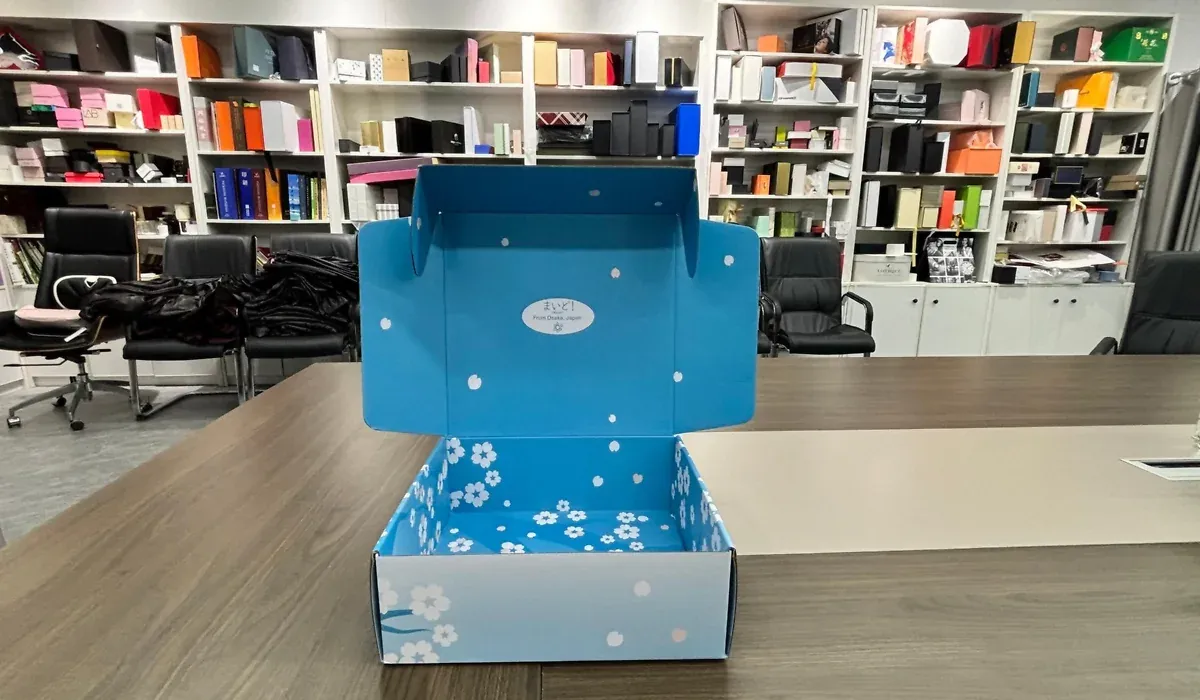
Exporting food and food-contact products into Japan is less a logistics exercise than a documentation and material-science exercise. The carton, the inner tray, the liner, and every ink film that touches product are judged under the Food Sanitation Act (FSA), administered by the Ministry of Health, Labour and Welfare (MHLW), and reinforced by Japanese Industrial Standards (JIS) that define how materials are tested and specified. For a foreign brand, the difference between a smooth Tokyo-bound delivery and a held container at the port is almost always decided at the specification stage, long before a box is printed. BoxesChina runs a manufacturing base built in Dongguan in 1998, and over the years our export desk has assembled reference files for buyers in 80+ countries, including the Japanese market, so the right marks and material evidence travel with the shipment rather than being scrambled together after a customs query.
The plant details behind that spec are worth stating plainly. Standard terms are 30/70, deposit on order and balance before shipment. We return a free digital proof in about 5 days.
The trap most importers fall into is treating packaging as a separate purchase from the product. Under Japan's framework, the package is part of the food safety system. A folding carton that migrates ink components into a dry snack, a PET tray that leaches a non-listed monomer, or a printed lid that fails the positive-list test can all trigger rejection even when the food itself is perfectly compliant. This article walks through the Act, the JIS touchpoints, the substrate and ink decisions that matter, the labeling and traceability expectations, and the import paperwork that gets product released. The goal is a practical spec you can hand to a factory and a broker without rework.
Understanding the Food Sanitation Act and Its Reach
The Food Sanitation Act, originally enacted in 1947 and repeatedly amended, is the backbone of Japanese food safety. Article 18 is the provision importers care about most: it prohibits the manufacture, sale, or import of containers and packaging that are likely to affect food, or that contain or may leach harmful substances. The Act does not itself list acceptable chemicals in exhaustive detail; instead, the MHLW issues the Specifications and Standards for Food, Food Additives, and the Like, which include the positive-list system for synthetic resins used in food-contact plastics. A positive list means a substance is permitted only if it appears, and any monomer, additive, or polymer not on the list is presumed prohibited for food contact.
For packaging buyers, the practical implication is that material choice is a compliance decision first and a cost decision second. A supplier cannot simply claim "food grade" in a vacuum; the claim must be backed by test data showing that the specific resin, the specific additives, and the specific pigments meet the Japanese positive-list and overall migration limits. Many overseas factories are accustomed to U.S. FDA or EU Framework Regulation 10/2011 vocabulary, and the translation to Japanese requirements is rarely one-to-one. We help translate the legal text into a dieline and a material call-out that a printer can execute, so the carton is built to the right standard rather than retrofitted after a failed inspection.
It is also worth remembering that the FSA covers not only the primary food-contact layer but also materials that could indirectly affect food. Outer cartons that hold food-contact inner bags, dividers, and even the adhesives used in lamination can come under scrutiny when migration pathways are plausible. A thorough importer specifies the entire packaging system, not just the tray that touches the product.
JIS Standards That Govern Packaging Materials
Japanese Industrial Standards give the test methods and product specifications that make the Food Sanitation Act enforceable in practice. Several JIS documents are directly relevant to packaging programs. JIS Z 1702 covers cellophane film, JIS Z 1705 covers polyethylene film for packaging, and JIS Z 1707 addresses flexible polyethylene containers for food. JIS K 6950 and related standards define compostable and biomass plastic criteria, which matter when a brand wants an eco claim that will survive Japanese verification. For convenience and accessibility, JIS S 0021 sets requirements for easy-to-open packaging, increasingly relevant as Japan's aging population drives regulatory interest in senior-friendly packs.
The key point for an importer is that JIS is the language of conformance. When a buyer asks for "JIS-compliant film," the request should name the specific standard and the test it implies, because a generic JIS reference on a purchase order is meaningless without the document number. We keep the relevant JIS references in our spec templates so the Dongguan plant and the Japanese broker read the same document, and there is no ambiguity about which migration test or physical-property threshold applies.
The commercial terms stay deliberately simple. Cartons pack 100 pcs and stay under 22 kg for courier limits. MOQ starts at 100 pcs per SKU for most formats.
JIS also intersects with the recycling marks many brands must print. Under the Container and Packaging Recycling Law, PET bottles, glass, paper, and plastic packaging each carry specific sorting marks, and the design must leave clean space for them. We map the required mark and its placement into the artwork stage so it is verified on the digital proof rather than discovered missing at the port.
Specifying Compliant Substrates and Inks
Substrate selection is where most compliance risk is quietly absorbed or created. For folding cartons, the board grade drives both performance and print quality. Folding cartons are produced in 300-500 g board grades, and the choice within that band depends on the product weight, the shelf life, and the printing method. A heavier grade resists crush in Japanese automated distribution centers, while a lighter grade trims freight and dimensional weight. The food-safety question is whether the board's coating, sizing, and any recycled content meet the migration expectations of the FSA positive list.
Inks deserve equal attention. Japan's food-contact regime is sensitive to substances that could migrate from the printed surface, especially on the inside of a carton or on a wrapper that sits against oily or acidic food. Low-migration inks, cured properly, are the standard answer for direct and near-direct contact. We specify low-migration systems for any surface that could contact product, and we document the ink chemistry in the evidence file so the importer can present it to MHLW or a buyer's auditor on demand.
For rigid presentation formats, the construction matters as much as the material. Rigid boxes use 157 g face paper over 1200 g greyboard as standard, a build that protects fragile or premium food items through the long ocean and domestic transit legs into Japan. The face paper is where brand color lives, and for large runs we rely on offset litho printing for consistent brand color across thousands of units, so the fifth thousand cartons match the first in tone and registration.
Labeling and Traceability Expectations
Japan's food labeling is governed separately by the Food Labeling Act, but the packaging itself carries obligations under the FSA and related rules. Importers registered with MHLW must be identifiable, and the importer of record bears responsibility for conformance. For food-contact articles, the ability to trace a specific lot back to its resin batch and production date is a core expectation, not a courtesy. We build traceability into the program by recording lot numbers and keeping incoming and outgoing lots checked against AQL sampling plans, so a question about a specific shipment can be answered with data rather than guesswork.
Language is a recurring stumbling block. While the FSA's material requirements are technical rather than linguistic, the product's own labels often must carry Japanese-language information, and the packaging must accommodate that without crowding the compliance marks. Designing the label matrix before tooling, rather than after, avoids the expensive reprint that a missing Japanese mandatory field would otherwise force. Our export desk flags the documents your broker needs per destination and keeps evidence files on hand so the correct marks land without a second proof.
Country-of-origin marking and any recycling or eco claims must also be defensible. Unverified environmental claims are a common failure point across markets, and Japan is no exception; a vague "eco" statement with no standards backing invites challenge. We print only what the regulation names and pair any voluntary claim with the JIS or other standard that supports it.
Import Documentation and Customs Clearance
Getting product released in Japan starts well before the vessel arrives. Food importers must register with the MHLW and submit import notifications; the packaging evidence is part of demonstrating that the articles meet the FSA. The practical paperwork bundle typically includes a material safety or conformance statement for the food-contact layer, test reports mapped to the relevant JIS or positive-list method, and the label proof showing required marks and Japanese text.
A pre-shipment photo audit against the spec sheet catches the majority of issues before they become a held container. We photograph the carton panels and sign off before the container is booked, which is far cheaper than a correction at the port. About 100 staff run sampling, printing, and QC on one site, and the plant covers roughly 5,000 m2 of production and warehouse space, which lets us stage, inspect, and consolidate shipments without relying on a third party to catch errors.
Payment and production timing should be planned around the compliance work, not against it. Digital proofs are turned around in about five working days at no charge, giving the importer and broker time to validate marks and material evidence before commitment. Mass production typically runs 10-20 working days after proof sign-off, and payment terms are commonly 30% deposit and 70% before shipment, a structure that keeps the program moving without tying up working capital unreasonably.
Common Compliance Pitfalls for Foreign Brands
The first and most common pitfall is assuming "food safe" is a universal certificate. A resin approved under one jurisdiction is not automatically approved under Japan's positive list, and the gap shows up only at testing or audit. The second pitfall is vague briefs; a purchase order that says "food-grade carton" without naming the standard invites the factory to pick the cheapest compliant-enough option, which may not be compliant enough for MHLW. The third is late labeling decisions, where Japanese-language or recycling marks are squeezed in after the dieline is locked, forcing a reprint.
A fourth pitfall is ignoring the full packaging system. Brands often test the tray and forget the adhesive, the varnish, or the outer shipper that sits against the inner bag for weeks in a humid container. The fifth is weak traceability: without lot records and AQL-checked lots, a single questioned shipment becomes a brand-wide audit. We design the spec to close all five gaps before volume, because correcting them after a container is at sea is slow and expensive.
Partnering With BoxesChina on Japan packaging JIS
For teams weighing Japan packaging JIS, the practical question is which partner turns a brief into a shippable, compliant carton without a long learning curve. A manufacturing base built in Dongguan in 1998, with FSC-ready chain-of-custody readiness and lines serving 50+ private-label brands, is structured exactly for that. We hold FSC-ready chain-of-custody readiness for paperboard programs, which supports the document trails Japanese and global buyers increasingly expect for fiber-based packaging.
The plant covers roughly 5,000 m2 and about 100 staff run sampling, printing, and QC on one site, so the compliance check and the production run happen under one roof rather than across vendors. Our team has shipped 1,000+ custom case programs to date, and we supply buyers in 80+ countries through export documentation, which means the Japan evidence set is one of many we maintain rather than a one-off scramble. Annual packaging output is backed by roughly US$10M in production capacity, giving the headroom to absorb launch spikes without sacrificing inspection rigor.
Operationally, the program is simple to start. MOQ starts at 100 pieces per SKU, digital proofs turn around in about five working days at no charge, and mass production typically runs 10-20 working days after sign-off. We back orders with a 60-day quality guarantee on workmanship, so a defect caught after delivery is addressed rather than disputed. Large runs use offset litho for consistent brand color, and incoming and outgoing lots are checked against AQL sampling plans so the second thousand matches the first. For Japan packaging JIS, that means the spec can be iterated and validated before volume rather than discovered after a container is at sea.
FAQ
Does the Food Sanitation Act apply to my outer shipping carton?
The FSA targets containers and packaging that contact or could affect food, but outer cartons that hold food-contact inner bags can still draw scrutiny where migration is plausible. We specify the full system, including dividers and adhesives, so the entire pack is defensible rather than only the tray that touches product directly.
What does the positive-list system require from my supplier?
It requires that any synthetic resin, additive, or pigment used in food-contact plastic appear on the MHLW positive list, with test data to support it. We document resin chemistry and migration test results in the evidence file so your broker can present conformance on first customs inquiry instead of after a hold.
Which JIS standards should I name on the purchase order?
Name the specific document, such as JIS Z 1705 for polyethylene film or JIS Z 1707 for flexible polyethylene containers, plus the test it implies. A bare "JIS compliant" note is meaningless; we map the exact standard into the spec so the plant and broker read the same requirement.
Do I need Japanese-language text on the packaging itself?
The FSA's material rules are technical, but the product label often must carry Japanese information under separate labeling law, and the carton must leave space for it. We design the label matrix before tooling so mandatory Japanese fields and recycling marks fit without a costly reprint.
How do I prove compliance at the Japanese port?
Prepare a material conformance statement, JIS or positive-list test reports, and the label proof showing required marks. We run a pre-shipment photo audit against the spec and keep lot records, so the documentation travels with the goods and clears on first presentation.
Can one carton serve both Japan and other Asian markets?
Sometimes, if you print the strictest common marks and avoid conflicting claims. We design a multi-market label matrix so a single SKU can ship wider without a warehouse of region-specific cartons, while still meeting Japan's specific FSA and JIS expectations.
What happens if the regulation changes after I order?
Rules shift, and the spec must track them. We note the verification date on the file and refresh evidence when a standard is amended, so your Japan packaging JIS compliance stays current and you are not caught by a silent update you never saw.
How fast can I get compliant cartons for a Japan launch?
Digital proof in about five working days, mass run 10-20 working days, with MOQ from 100 pieces, so you can validate the spec and launch without a long lead time. The compliance work runs in parallel with sampling rather than after it.
Conclusion
Getting Japan packaging JIS right is less about a box and more about a spec that survives the regulator, the broker, and the shelf. Start from the Food Sanitation Act's material obligations, name the exact JIS standards, lock the tolerances, and prove them with a sampled carton before you commit volume. With a partner who has shipped to 80+ countries and can turn a digital proof in about five working days, the compliance work becomes a planned step rather than a crisis. If you are preparing a Japan-bound food or food-contact program, Request a Wholesale Quote and we will map the carton, the substrate, and the evidence file to your market.