Buying Guides
Hat & Cap Packaging (Shape Retention)
Hat and cap packaging must retain shape and resist crushing in transit. Explore rigid hat boxes, inserts, fold-flat caps, and master cases for importers.
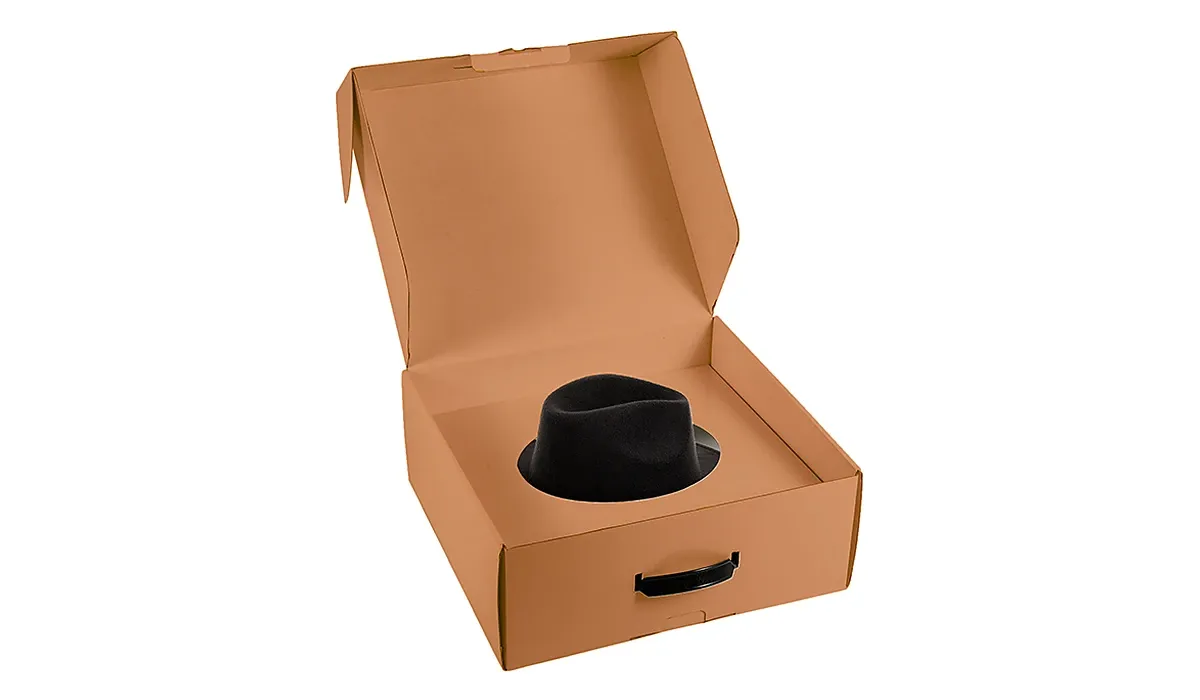
Hats and caps are three-dimensional objects that want to collapse, and the package exists to stop that from happening. A bent brim, a creased crown, or a crushed snapback is a return, not a sale, and the shopper judges a hat by its shape the instant the box opens. Importers and private-label brands that ship headwear by the thousand learn that shape retention is the entire packaging brief, because the product has no flat, stable form to protect it.
These are the constants we hold on every order. More than 1,000+ case programs have gone through these lines. We support 50+ private-label brands as their packaging partner.
The challenge is that hats are bulky relative to their weight, so they fill space and invite stacking pressure, yet they are fragile where they are structured. A good hat pack holds the crown open, supports the brim, and resists the moisture and crush of a long transit. This article covers why hats lose shape, rigid box and insert engineering, retail hang and fold-flat formats, moisture and transit, brand signal, and the master case.
Why Hats Lose Their Shape
A hat fails in two main ways: the crown collapses because nothing holds it open, and the brim curls or kinks because it is thin and unsupported at the edges. Structured caps with buckram fronts are more rigid but still crease at the panels, while unstructured caps and buckets flatten completely under stack load. The enemy is point pressure: a corner of a stacked carton pressing on the crown for weeks leaves a permanent dent.
Moisture compounds the problem because a damp crown loses its stiffness and takes a crease that sets as it dries, and a wet brim waves permanently. Long ocean transits with condensation are a common cause, so the packaging must both support the shape and resist humidity. The lesson is that hat packaging is structural first: if the insert does not hold the form, no amount of pretty printing saves the product, and the return still happens.
For brands, the shape failure is also a brand failure because the first impression is the opened box, and a misshapen hat reads as cheap or damaged regardless of the actual quality. BoxesChina runs a manufacturing base built in Dongguan in 1998 and supplies buyers in 80 plus countries through export documentation, which keeps the carton and the entry paperwork aligned for cross-region headwear shipments.
Rigid Box and Insert Engineering
The standard solution for shaped hats is a rigid box built from 157 g face paper over 1200 g greyboard with an internal insert that holds the crown and supports the brim. The insert can be a molded pulp or corrugated former that mirrors the hat's interior, a tissue-wrapped shape retainer, or a simple crown support that keeps the panels from folding. The goal is to make the hat sit in a fixed, correct form so no point load can dent it.
For structured caps, a crown support plus a flat base that keeps the brim straight is usually enough, while wide-brim hats and fedoras need a full former that cradles the brim curve. A clear window or a die-cut opening lets the shopper see the hat without handling it, which prevents the fingerprint and crush damage that turns a new product into a return. Large runs use offset litho printing for consistent brand color, so the box and the brand stay true across the program.
Here is how the production side supports the brief. Our export desk covers 80+ countries on repeat programs. Board grades of 300-500 g cover most folding formats. Payment is 30/70, with the balance due before dispatch.
Incoming and outgoing lots are checked against AQL sampling plans so a weak insert or a short glue line is caught in the sample rather than after delivery, and orders carry a 60-day quality guarantee on workmanship. The insert and the box are validated in the same loop by about 100 staff running sampling, printing, and QC on one site, so the structure and the print agree before a container is committed.
Retail Hang and Fold-Flat Formats
Not every hat needs a rigid box. Snapbacks and many caps are shipped fold-flat in a polybag or a slim folding carton, relying on the cap's own structure and a cardboard insert to keep the brim from curling. A hang card with a die-cut Euro hole pegs the cap on a retail grid, and a 300 to 500 g folding carton with a brim insert shows the product while protecting the shape enough for the peg.
Fold-flat formats are cheaper and ship denser, which lowers freight, but they offer less protection than a rigid box and depend on the cap's resilience. The choice should be made against the hat type and the channel: a premium structured cap or a wide-brim hat earns the rigid box, while a value snapback can ride the hang card. Digital proofs turned around in about five working days at no charge let a brand validate the card, the insert, and the dieline together before committing a run.
For brands selling both channels, the artwork can be shared between a rigid box for DTC and a fold-flat card for retail, matching each channel while keeping the brand coherent. More than 50 private-label brands use our lines for their packaging, so both formats are well-understood and quick to specify rather than built from scratch.
Moisture, Transit, and Stack Load
Moisture and stacking are the transit killers for hats. A moisture-resistant box coating or a desiccant sachet protects the crown stiffness on long ocean routes, and a tight corrugated shipper prevents the retail packs from sliding and corner-crushing one another. The master shipper groups the packs with the total weight at or below 22 kg, which keeps the case within handling limits and avoids the overweight, dropped case that crushes stock.
Because hats are bulky, the per-shipper count is often volume-limited rather than weight-limited, so the shipper must be sized to prevent the boxes from shifting inside. A well-designed shipper with internal dividers keeps each hat box in place, and clear product, size, and lot labels speed warehouse handling and reduce mis-picks that send the wrong size mix to a region. The plant covers roughly 5,000 m2 of production and warehouse space, with annual output backed by roughly US$10M in capacity.
A few standing numbers keep the specification honest. Mass production runs in 10-20 working days after proof sign-off. MOQ starts at 100 pcs per SKU for most formats. We return a free digital proof in about 5 days.
The proof-to-production loop is short: minimum order quantity starts at 100 pieces per SKU, so a new box or insert can launch in a small run and scale, and mass production runs 10 to 20 working days after sign-off. Payment terms are commonly 30 percent deposit and 70 percent before shipment, which aligns cash with the proof-and-produce cadence that headwear seasons demand.
Brand Color and Shelf Signal
On the shelf or the peg, the hat's shape is the product, so the package should show it honestly and brand it confidently. A consistent palette, a clear size and style hierarchy, and a confident logo beat a cluttered box, and soft-touch coatings or a single foil hit read premium at a folding-carton cost. The finish should be tuned to the price tier so the package signals the correct value rather than over- or under-shooting.
Color consistency across reorders is important because headwear programs reorder constantly and a box that drifts looks like a different line. Offset litho on large runs keeps the box color true to the approved proof, and the palette is locked at the digital proof stage, which turns around in about five working days at no charge. That prevents the mismatch that confuses shoppers and store staff alike.
FSC-ready chain-of-custody readiness for paperboard programs lets a brand signal responsible fibre where a retailer or market demands it, balancing the sustainability story with the structural board the hat needs. A rigid box that is also reusable for storage turns a protective necessity into a brand touchpoint that the customer keeps.
Master Case, Transit, and the Proof Loop
The master shipper protects the hat boxes from crush and keeps the batch manageable. Cartons pack 100 pieces per shipper with total weight at or below 22 kg, which keeps the case within manual-handling and air-freight limits and avoids the overweight, dropped case that damages stock. A tight-fitting corrugated shipper with dividers prevents the boxes from sliding and corner-crushing one another.
Quality at scale is verified, not assumed: incoming and outgoing lots are checked against AQL sampling plans so a short glue line, a missing mark, or a weak insert is caught in the sample rather than after delivery. The proof-to-production loop lets a new hat box test small and scale with the season, and the export documentation for 80 plus countries keeps the carton aligned with the entry paperwork at the border.
Partnering With BoxesChina on hat packaging
For importers and brands weighing hat and cap packaging, the partner question is who can hold shape retention, retail display, and brand color in one program. BoxesChina runs a manufacturing base built in Dongguan in 1998, with FSC-ready chain-of-custody readiness for paperboard and a record of 1,000 plus custom case programs shipped to date. That matters for headwear because the box, the insert, and the brim support must agree on hat shape and stack behavior.
The plant covers roughly 5,000 m2 and about 100 staff run sampling, printing, and QC on one site, keeping the proof-to-production loop short. MOQ starts at 100 pieces per SKU, digital proofs turn around in about five working days at no charge, and mass production typically runs 10 to 20 working days after sign-off. For hats, that means the rigid box, the crown insert, and the brim support can be prototyped and validated before a container is committed rather than discovered after it is at sea.
Payment terms are commonly 30 percent deposit and 70 percent before shipment, with a 60-day quality guarantee on workmanship. We supply buyers in 80 plus countries through export documentation, and large runs use offset litho printing for consistent brand color across the program. Incoming and outgoing lots are checked against AQL sampling plans so the second thousand boxes match the first.
FAQ
Why do hats arrive misshapen?
Hats fail when the crown collapses for lack of support or the brim curls under point pressure from stacked cartons, and moisture makes both worse by softening the structure so creases set as it dries. The fix is a structural insert that holds the form, not just pretty printing on a weak box.
What box protects a shaped hat best?
A rigid box built from 157 g face paper over 1200 g greyboard with a molded or corrugated insert that holds the crown and supports the brim is the standard for structured and wide-brim hats. A clear window shows the hat without handling, and AQL sampling backed by a 60-day guarantee catches weak inserts early.
Can caps ship fold-flat instead?
Yes, snapbacks and many caps ship fold-flat in a polybag or slim folding carton with a brim insert on a hang card, which is cheaper and denser to freight. The choice depends on hat type and channel: premium structured hats earn the rigid box, value caps can ride the hang card.
How do I protect hats from moisture in transit?
Use a moisture-resistant box coating or a desiccant sachet on long ocean routes, and a tight corrugated shipper with dividers that keeps boxes from shifting. The master case at 100 pieces per shipper at or below 22 kg avoids overweight handling that crushes the bulky, light hat boxes.
How do I keep box color consistent?
Offset litho on large runs keeps box color true to the approved proof, and the palette is locked at the digital proof stage, which turns around in about five working days at no charge. That prevents drift between reorders that makes a headwear line look inconsistent on the shelf.
What should the master shipper carry?
The shipper carries product identity, size, and lot code, grouped at 100 pieces per shipper at or below 22 kg with dividers to stop shifting, because hats are volume-limited rather than weight-limited. It must match entry paperwork for customs, and BoxesChina supplies export documentation for 80 plus countries.
How fast is sampling and production?
Digital proofs turn around in about five working days at no charge, so the box art, insert, and dieline can be approved before a full run. Mass production typically runs 10 to 20 working days after proof sign-off, letting a new hat box test small and scale with the season.
What is the minimum order for custom hat packaging?
Minimum order quantity starts at 100 pieces per SKU, so a new rigid box, insert, or hang card can launch in a small test run. Large runs use offset litho for consistent color, and annual output is backed by roughly US$10M in capacity to absorb seasonal headwear peaks.
Conclusion
Hat and cap packaging is a shape-retention problem before it is a branding one, because a crushed crown or a curled brim is a return no matter how fine the hat. Hold the form with the right insert, resist moisture and stack load, and validate the box and brim support on a small run before committing volume. If you want a Dongguan partner built in 1998 with FSC-ready paperboard readiness and export documentation for 80 plus countries, Request a Wholesale Quote and we will engineer your hat box, your insert, and your shipper to keep the shape intact from factory to shelf.