Buying Guides
Candle Shipping Melt Proof: How to Get Wax to the Door Without Warping
How to ship candles without warping: wax softening ranges, insulation and PCM options, condensation control, dispatch timing, and a heat-hold test to run before bulk.
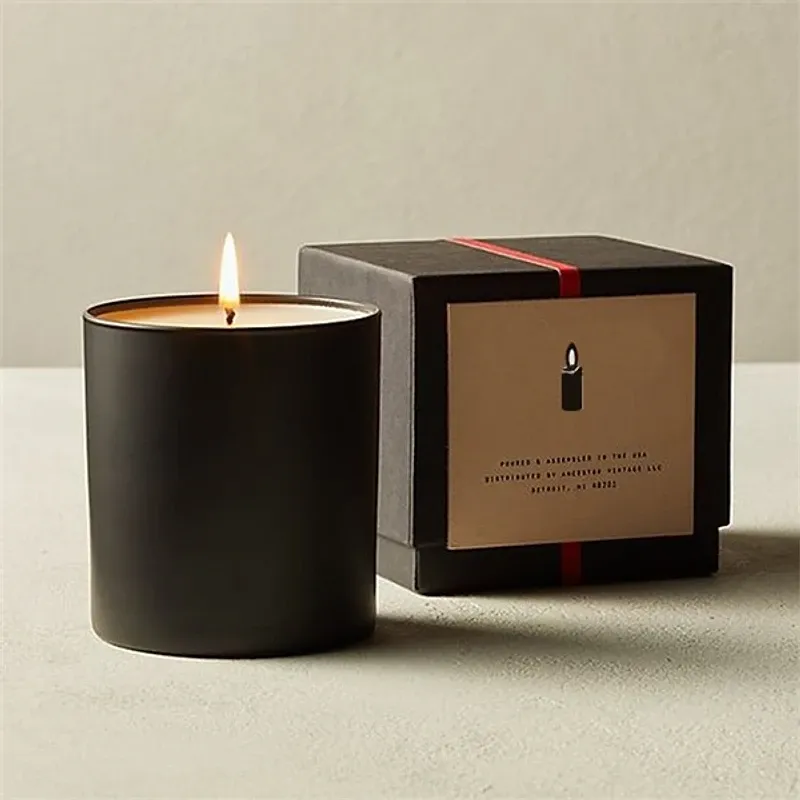
Candle shipping melt proof is not one product — it is a system of wax choice, container fit, insulation, and dispatch timing that keeps a candle below its softening point through the hottest hours of a delivery route. Most candle damage is not a broken jar; it is a warped surface, a sunken top, a sweating or weeping wax, a wick that has migrated, or a label peeling off a condensation-damp glass. All of it is preventable, and almost none of it is fixed by adding more bubble wrap.
The physics is unhelpful. Many common waxes begin to soften well below the temperature a parked delivery van reaches on a summer afternoon. Paraffin blends, soy, and coconut blends each have their own softening range, and a candle that looks perfect at 22°C can slump after an hour at 45°C in a dark truck. Add a cross-border container that sits on a yard in July and the problem compounds across weeks, not hours.
This guide is written for candle brands sourcing packaging from a Chinese factory. It covers the failure modes, the insulation and packing options that actually help, the dispatch calendar that costs nothing, and the test you should run on a sample before a seasonal bulk order. We discuss packaging structure and process, not freight rates — any temperature-control surcharge or express option is a carrier quote that varies and should be confirmed in writing by your logistics provider.
For context, MOQ starts at 100 pcs per SKU for most formats. We return a free digital proof in about 5 days. Standard terms are 30/70 (deposit / before shipment).
Know your enemy: heat, time, and condensation
A candle in transit faces three separate insults, and they need different answers.
Heat gain. A parcel in a delivery van, a sorting hub, or a container on a sunlit yard absorbs heat. Insulation does not cool anything — it slows the rate at which the inside warms up. That distinction matters: for a short last-mile leg, good insulation can be enough; for a two-week container crossing, no practical amount of cardboard keeps a candle at room temperature.
Time above the softening point. Wax damage is cumulative. A brief spike may be survivable; four hours at a lower but still-soft temperature is not. This is why "will it melt?" is the wrong question. Ask "how long can the packed unit stay below the softening range under the expected profile?"
Condensation and humidity. Add a cold gel pack and you introduce a new problem: water condensing on cold glass, softening the label adhesive, spotting the box print, or encouraging mould on a paperboard insert. Warm, humid air inside a sealed polybag is its own microclimate. A melt-proof design has to manage moisture as well as temperature.
Start with the wax, not the box
The single most useful thing a packaging buyer can do is get a number from the candle maker. Ask for the softening point and melt range of the specific blend and fragrance load in production, not a generic datasheet for the base wax. Fragrance oils and additives shift the behaviour, and a high-load summer scent behaves differently from an unscented pillar.
Worth pinning down: Roughly 100 staff work across production, prepress, and QC on a 5,000 m2 floor. Our export desk handles documentation and freight consolidation in-house. Annual export value runs above US$10M.
Broadly, soy and coconut-heavy blends tend to be softer at lower temperatures, paraffin blends generally hold shape better, and container candles behave differently from freestanding pillars because the jar supports the wax. But these are tendencies, not specs. Design around the measured range for your SKU, and add a margin — a parcel's internal temperature is not the ambient forecast.
Two product-side decisions also affect the packaging brief:
Container fit. A jar that fits snugly in a die-cut recess cannot tip or slide as the wax softens. A loose jar in void fill can rotate and leave a wax smear on the lid; Lid and wick retention. A well-seated lid and a centred wick reduce the visible damage even if the surface softens slightly. Specify the insert to hold the jar upright.
Our insert-selection logic in
Gift box insert choice
applies here too, and the artwork/adhesive pre-flight in Packaging artwork check
is where you confirm the label stock can handle humidity.The packaging options, ranked by what they actually do
Option — What it does — What it does not do — Watch out for. Right-sized corrugated mailer with snug recess — Stops movement, adds a little insulation — Cool the parcel — Oversizing invites shifting. Moulded pulp or corrugated liner — Slows heat gain, adds thermal mass — Hold temperature indefinitely — Bulk and cube weight. Reflective / foil-facing liner — Reflects radiant heat — Help much in a sealed dark truck — Mixed-material recyclability claims. Insulated shipper (EPS or padded liner) — Best passive hold for short legs — Survive multi-day heat without a phase-change pack — Cost, cube, disposal perceptions. Phase-change material (PCM) or gel pack — Absorbs heat at a target temperature — Work if it is frozen/conditioned wrongly — Condensation on glass and labels. Absorbent / breathable wrap — Manages condensate — Insulate — Do not seal damp air in.
One practical note: Finished goods are inspected to AQL standards before release. Cartons pack 100 pcs and stay under 22 kg for courier limits. We run FSC-ready board lines and can specify certified stocks on request.
The pragmatic ladder for most DTC candle brands is: snug die-cut recess → right-sized insulated mailer → early-week dispatch → seasonal shipping calendar. Only high-value or genuinely temperature-sensitive candles justify a full PCM-qualified shipper, and that should be validated with a temperature logger rather than guessed.
Shipping into a hot climate this season? [Ask us for a free melt-risk sample build →] Send your jar dimensions, wax softening range, and destination, and we'll return a packed sample with the insert and liner options shown in writing.
The dispatch calendar: the free lever
Packaging gets all the attention because it is a line item you can buy. The calendar is free and often more effective.
Ship Monday to Wednesday so a parcel is not sitting in a hub or a locked warehouse over a weekend; Set a summer cut-off for the hottest destination regions, or switch those SKUs to a qualified insulated/PCM pack for the season; Avoid pre-weekend international handoffs where a container or pallet may dwell on a yard; Stage inventory regionally where possible so the last-mile leg is short; Do not promise next-day delivery into a heat wave without a pack that has been tested for that profile; Tell the customer: a simple "bring the parcel inside promptly" note on the packing slip reduces porch-dwell damage.
None of this replaces packaging, but a well-built box plus a Monday dispatch beats an over-engineered box plus a Friday dispatch almost every time. For the broader transit-loss picture, see
Custom packaging shipping insurance
.Mini story: the August launch that sweated
A small candle studio run by Aisha planned a limited summer launch and ordered 6,000 printed mailers from a Guangdong converter. The boxes were gorgeous — matte board, a snug pulp recess, a foil logo. What nobody specified was the label adhesive or the dispatch day. The launch shipped on a Thursday into a heat wave; a large share of parcels sat in a regional hub until Monday.
The candles were not molten. They were worse than molten in a photographic sense: the tops had a faint sink, the glass had a light condensation haze, and about one label in eight had lifted at a corner. Returns were modest, but the unboxing photos that circulated were not. Aisha reworked three things at once — a humidity-rated label stock, a Monday-to-Wednesday dispatch rule with a summer cut-off for the hottest states, and a thin absorbent wrap inside the recess to manage condensate. The next seasonal drop had a fraction of the complaints, and none of the changes touched the foil logo she loved.
Her note to the factory afterwards was short: "The box was never the problem. The parcel environment was."
Build the packed unit: a buyer checklist
Candle melt-proof packing checklist
Wax softening/melt range for the actual production blend obtained in writing from the candle maker; Jar held upright in a snug die-cut or moulded-pulp recess (±1 mm tolerance), no side shift; Lid and wick retention confirmed; no contact between wax surface and lid under light load; Right-sized outer mailer — minimal void, no excess fill that lets the jar rotate; Insulation level chosen for the real route length and expected profile; If a PCM/gel pack is used: conditioning instructions, a moisture barrier, and an absorbent layer specified; Label stock and adhesive rated for humidity/condensation; see Custom label manufacturer; Closure and seal survive a corner drop and a stack; see Mailer box stays closed; Dispatch calendar rules written into the fulfilment SOP (ship early week, seasonal cut-offs); Customer "bring inside promptly" note on the packing slip.
The heat-hold test to run before bulk
You do not need a chamber to learn something useful, though a lab profile is better for a qualified shipper. On the finished, packed sample:
Condition the sample and the PCM (if used) exactly as the fulfilment team will; Expose the packed unit to a controlled warm environment for the number of hours the real route sees — a warm room or a documented oven-free setup with a logger, never a household oven that overshoots; Log the internal temperature with a cheap data logger or a max/min thermometer inside the box; Open and inspect: wax surface flat, wick centred, jar clean, label adhered, insert dry, box print unmarked; Write the criterion — "no visible sink, no label lift, no condensate on glass after X hours at Y°C" — into the PO, and require the same construction on the bulk run.
Behind that spec, Product ships to 80+ countries through our export desk. We support 50+ private-label brands as their packaging partner. We have delivered 1,000+ case projects across the catalog.
Pair that with a corner-drop and stack check from
Mailer box crush resistance
and the general SOP in Drop test packaging before bulk
. A melt-proof pack that pops open on a corner drop is not a melt-proof pack.Want a packed sample that has been through a heat hold? [Request a free melt-risk prototype →] Our Dongguan team will build the recess and liner to your jar, document the hold test, and hand you the sample — low-MOQ from 100 pcs, ~5-day free samples.
From the factory floor, Our plant has made custom packaging in Dongguan, China since 1998. Mass production runs in 10-20 working days after proof sign-off. Every order carries a 60-day quality guarantee.
Sourcing notes for a Chinese converter
Specify the insert material, the recess tolerance, and the label adhesive as three separate lines; a factory that only hears "candle box" will optimise for shelf appearance. Ask for the flat-folded dimensions and the master-carton count so you can see the inbound cube before committing. If you want a reflective or foil liner, decide up front how that affects the recyclability claim on the box — a mixed-material liner is hard to defend as curbside recyclable, which is covered in
Curbside recyclable packaging
. And keep a golden sample: the board and adhesive substitutions that happen at reorder time are exactly what undo a validated heat test.A detail from the workshop: Bulk decoration uses offset printing for colour stability. Rigid boxes use 157 g face stock over 1200 g greyboard. Folding cartons are specified in 300-500 g board.
Conclusion
Candle shipping melt proof is a system, not a thicker box. Get the real softening range of your wax blend, hold the jar upright in a snug recess, choose insulation matched to the route length, manage condensation if you add a cold pack, and — the cheapest lever of all — ship early in the week with seasonal cut-offs for the hottest destinations. Then validate the packed sample with a documented heat-hold test and write the acceptance criterion into the PO.
Do that and summer stops being a returns season. For adjacent decisions see
Custom mailer box dimensional weight
on cube and Custom packaging stickers
on humidity-rated seals.Build a candle shipper that survives the heat → Our Dongguan team has delivered 1,000+ custom packaging projects to buyers in 80+ countries since 1998, with verifiable ISO-quality chain, transparent no-hidden-fee quoting, and low-MOQ reorder consistency from 100 pcs.
FAQ
What temperature does a candle melt in transit? There is no single number — it depends on the wax blend, fragrance load, and how long the parcel stays warm. Ask your candle maker for the softening/melt range of the actual production blend and design around that, with a margin for a van interior hotter than the ambient forecast.
Do gel packs stop candles melting? They add thermal mass and can hold a target temperature for a limited time, but they introduce condensation that can haze glass and lift labels. Condition them correctly, add a moisture barrier and an absorbent layer, and validate with a logged heat-hold test.
Is insulation alone enough for cross-border summer shipping? Usually not for multi-day heat. Insulation slows heat gain; it does not cool. For long hot routes, combine a qualified passive shipper with dispatch timing and, where justified, phase-change material validated by a temperature profile.
What is the cheapest way to reduce melt complaints? Dispatch timing. Ship Monday to Wednesday, avoid weekend hub dwell, set summer cut-offs for the hottest regions, and add a "bring inside promptly" note. It costs nothing and often beats adding packaging.
What should I test on the sample? A documented heat-hold exposure with an internal logger, then inspect for surface sink, wick shift, condensate, and label lift — plus a corner drop and stack check. Write the pass criterion into the PO and keep a golden sample.