Buying Guides
Wine Gift Box Guide: Spec the Cradle Before the Bottle Rolls
Spec the internal dimensions, board grade, insert and closure before ordering a wine gift box. A 750 ml bottle weighs 1.2 to 1.4 kg and rolls on its side.
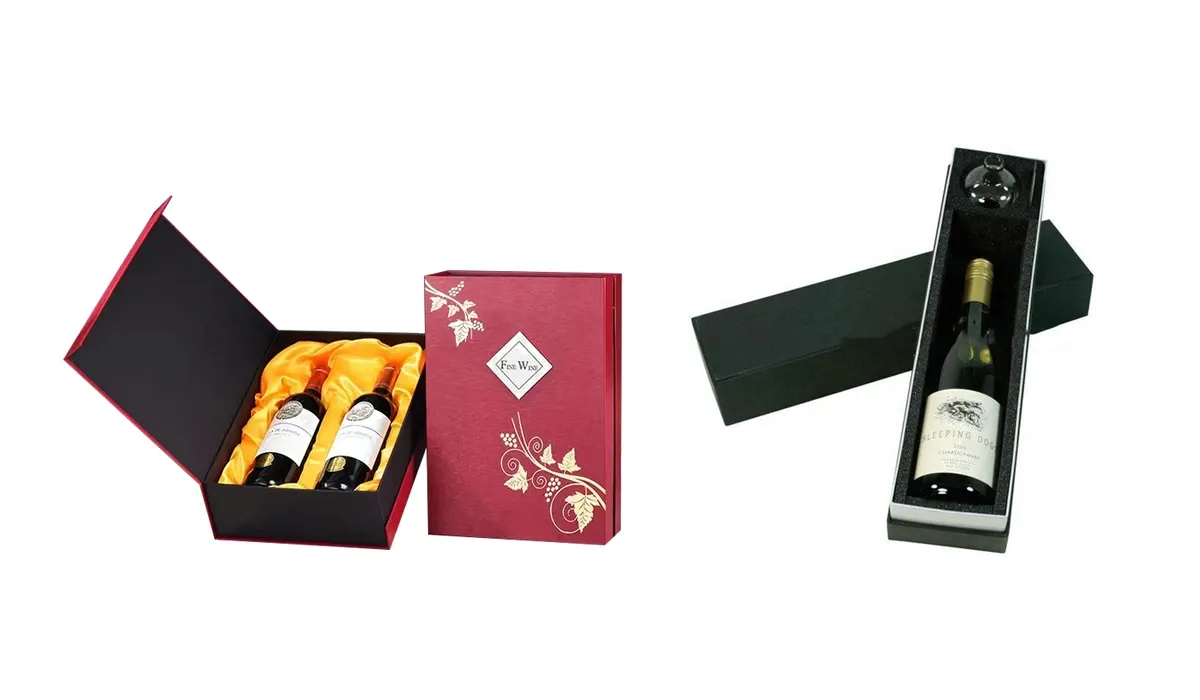
A wine gift box is judged on one thing: the bottle arrives unbroken and looks intentional when it is opened. A standard 750 ml wine bottle weighs 1.2 to 1.4 kg and is round, so it rolls on its side and its shoulders are the most exposed points in transit. This guide specifies the dimensions, board grade, insert, closure and quality checks that decide whether a wine gift box protects the glass and presents it well. It is written for buyers who already know they want a custom box and need the measurable parameters, not a tutorial.
1. Scope: when a wine gift box is the right package
A wine gift box is the right choice for single-bottle gifting, retail shelf presentation, corporate and promotional runs, and direct-to-customer delivery where the unboxing is part of the product. It is the wrong choice for full case logistics, palletised bulk shipping, or any shipment where twelve or more bottles travel together. Those need dividers and outer cartons, not a gift format. If the bottle must survive a parcel network rather than a hand-carry, spec the insert and closure for that environment from the start.
2. Specifications that decide fit
Internal dimensions are the first parameter. A 750 ml Bordeaux bottle is about 75 to 80 mm in diameter and 300 to 330 mm tall. A Burgundy or Champagne bottle is wider at the shoulder. A 375 ml half-bottle is shorter. A 1.5 L magnum is taller and heavier. Specify the internal height, width and depth with a tolerance of plus or minus 1 to 2 mm, and confirm the box against the actual bottle sample rather than the nominal volume.
Board grade sets the protection and the perceived weight. A rigid or foldable rigid wine box is built on 157 g face paper over 1200 g greyboard. A folding carton uses 300 to 500 g board. A rigid box ships assembled and cannot be flat-packed. A foldable rigid box collapses for freight and is assembled by the receiver. The box must hold the filled bottle plus the insert without the walls bowing, so state the loaded weight, typically 1.4 to 1.8 kg with insert and print, when you request a quote.
The insert is what stops the bottle from moving. Options measured against the bottle are EVA foam, moulded pulp, a cardboard divider, and moulded fibre. Foam absorbs shock but adds weight. Pulp and fibre are lighter and recyclable. A cardboard divider is the lowest cost and works for hand-carry only. Spec the insert pocket depth so the bottle shoulder is captured, not just the base.
Table A. Box format by bottle type
Bordeaux 750 ml: rigid or foldable rigid box, EVA or pulp insert, internal width 80 to 90 mm.
Burgundy and Champagne 750 ml: wider internal width 95 to 105 mm, foam or fibre insert.
Half-bottle 375 ml: smaller rigid box, pulp insert, internal height 230 to 250 mm.
Magnum 1.5 L: taller rigid box, foam insert, internal height 380 to 410 mm.
Gift set with bottle and two glasses: divider insert, wider footprint, rigid box.
3. Lead time
A digital sample is free and takes about five days, which is enough to confirm dimensions and print but not to judge a physical insert. Mass production runs 10 to 20 working days after artwork and sample approval. Custom inserts, foil stamping, embossing and magnetic closures each add days, so name those finishes up front if the deadline is fixed. Plan the approval step as part of the calendar, not an afterthought.
4. Cost drivers
The minimum order is from 100 pieces per size and design. The board grade is the largest material cost: 1200 g greyboard costs more than a 300 to 500 g folding carton. Insert complexity is the next driver. Foam and custom-moulded fibre cost more than a cardboard divider. Print is offset for production runs, which is economical above a few hundred pieces but has set-up cost below that. Finishing such as foil, embossing and a magnetic closure adds both material and labour. State the annual volume when you quote so the factory can set the board and insert to the right cost tier.
5. Failure conditions
A wine gift box fails on fit and movement, not on looks. The bottle rolls inside the box because the insert pocket is too shallow or absent. Two bottles or a bottle and a glass touch because the divider is missing or misaligned. The magnetic or ribbon closure pops open in a parcel sorter because it was specified for hand-carry only. The box crushes because the board grade was set for display, not transit. The board warps because the carton was stored in high humidity before fulfilment. Each of these is a specification gap, not a decoration gap.
6. Testing
Validate the box the way it will travel. A drop test from 600 to 800 mm onto each face shows whether the insert retains the bottle. A vibration test on a parcel-simulator shows whether the closure stays closed. A compression test shows whether the stacked cartons survive. A closure cycle test shows whether a magnetic or ribbon catch survives repeated opening. An insert-retention check confirms the bottle cannot be pulled free by gravity. Test against the worst case in your route, not the best.
7. Acceptance
At incoming inspection, check the internal dimensions against the approved sample within plus or minus 1 to 2 mm. Confirm the insert holds the bottle so it does not slide when the box is tilted 45 degrees. Confirm the closure closes square and stays closed without force. Check the print against the signed artwork for colour and position. Sample by an AQL plan rather than inspecting every unit, and quarantine a first-article box from each production batch for reference.
Table B. Incoming quality checks
Dimension tolerance: plus or minus 1 to 2 mm on internal height, width and depth.
Insert retention: bottle does not slide at 45 degree tilt.
Closure: closes square and holds without force.
Print: matches signed artwork for colour and position.
Board grade: matches specified grammage.
Packing: 100 pieces per carton, total weight not above 22 kg.
8. Common mistakes
The most frequent error is specifying internal height from the bottle height alone and forgetting the insert thickness, so the lid will not close. The second is ordering a gift box with no insert for a parcel network, then complaining about breakage. The third is choosing a rigid box for a route that needs flat-pack freight and paying double on shipping. The fourth is mixing board grades between the lid and base so the box warps. The fifth is treating the closure as decorative when the route needs it to stay shut.
9. What to send for a quote
Send the bottle dimensions and weight, the order quantity and annual volume, the insert type you prefer, the print and finishing, the target market and any compliance marks, and the required delivery date. A bottle sample or a dimensioned drawing removes the largest source of error. State whether the box travels by parcel or hand-carry so the insert and closure are specified for the real route.
Frequently Asked Questions
What board grade should a wine gift box use?
A rigid or foldable rigid box uses 157 g face paper over 1200 g greyboard. A folding carton uses 300 to 500 g board. Choose the rigid build when presentation and protection matter more than freight cost.
Can a wine gift box ship flat to save freight?
Only a foldable rigid box collapses for freight. A standard rigid box ships assembled. If freight is the constraint, spec the foldable rigid build from the start.
What insert stops a bottle from rolling?
EVA foam, moulded pulp, a cardboard divider or moulded fibre, specified with a pocket depth that captures the bottle shoulder. Foam and fibre suit parcel transit. A cardboard divider suits hand-carry.
How long does production take?
A free digital sample takes about five days. Mass production runs 10 to 20 working days after artwork and sample approval, longer with custom inserts, foil, embossing or magnetic closures.
What is the minimum order?
From 100 pieces per size and design. Below a few hundred pieces, offset set-up cost dominates, so confirm the volume tier before pricing.
How do I confirm the box will protect the bottle?
Use a drop test from 600 to 800 mm, a parcel-simulator vibration test, and a 45 degree tilt check that the bottle does not slide. Test against the worst case in your route.
Is the factory certified to FSC?
The factory is FSC-ready and can supply FSC-certified board on request. Confirm the chain-of-custody requirement when you quote so the material is reserved.
What print method is used?
Production runs use offset printing. Digital is used for samples and very short runs. Name foil, embossing or other finishing early because each adds days.
What should I pack the boxes in for shipping?
Pack 100 pieces per carton and keep the total carton weight at or below 22 kg to avoid carrier overweight fees. Confirm the carton size against the assembled or folded box footprint.
Conclusion
The bottle breaks on fit and movement, not on appearance, so spec the internal dimensions, board grade, insert and closure before you approve artwork. Send the bottle sample or a dimensioned drawing, name the route, and confirm the insert holds the bottle at a 45 degree tilt. Quote with quantity, volume and delivery date, and reserve FSC board if the market requires it.