Buying Guides
Low MOQ Custom Paper Bags: What Suppliers Offer (2026)
Low MOQ custom paper bags: why minimums exist, what a few hundred units costs, and how digital print removes the plate that sets the floor.
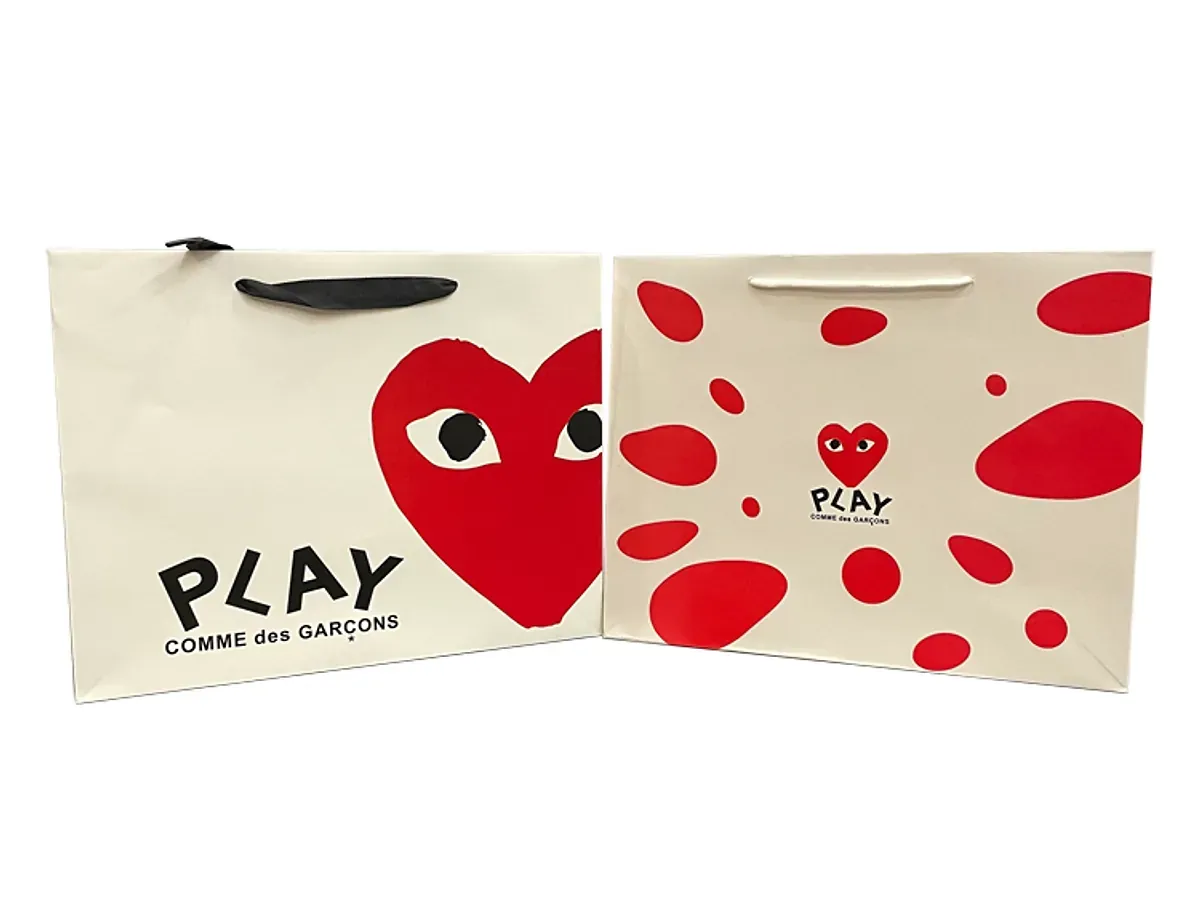
Nadia's ceramics studio needed 300 branded bags, not 3,000. Every quote came back with the same wall: minimum 5,000 pieces. She nearly gave up and stuck a sticker on plain kraft. Then one supplier asked a better question — which part of the bag has to be custom? That question cut her minimum to 500. Low MOQ custom paper bags exist because the constraint is not the paper — it is the printing plate and the bag die.
A low MOQ custom paper bag order is rarely a yes-or-no policy. It is a set of trade-offs around tooling, paper waste and press setup. At boxeschina, we run custom paper bags for brands in North America, the UK and Europe from 100 pcs, and this guide explains how the minimum is actually calculated — and which levers a factory can pull to bring it down.
Why Paper Bag Minimums Exist
A minimum order quantity is arithmetic, not attitude. A bag line runs printing, die-cutting, gluing and handle fitting. Each stage needs setup: plates mounted, ink mixed to your Pantone, a die installed, glue heated and stabilised. That preparation burns hours of machine time and several hundred sheets of make-ready paper before the first saleable bag appears.
Spread across 5,000 units the cost vanishes. Spread across 300 it dominates the invoice.
Cost block | What drives it | Effect on MOQ |
|---|---|---|
Plate or die tooling | Colors, bag size | One-off, pushes minimum up |
Make-ready waste | Registration and color matching | Fixed sheet loss per run |
Handle fitting | Rope, ribbon, or twisted paper | Labor-heavy at low volume |
Paper purchase | Mill roll or sheet lots | Suppliers buy in fixed lots |
What Low MOQ Custom Paper Bags Actually Look Like
Ask three suppliers and you will get three answers, because the honest number depends on how much of the job is already standard.
Bag specification | Common MOQ | Realistic low MOQ |
|---|---|---|
Stock size kraft, 1–2 color logo | 5,000 | 300–500 |
Custom size, full-color print | 5,000 | 1,000 |
Laminated art paper, ribbon handle | 3,000 | 500–1,000 |
Foil or embossed premium bag | 3,000 | 500 with tooling fee |
Stock size plus custom print is the cheapest door
When you accept a size the factory already has dies for, you delete the tooling block entirely. You are only paying for print setup. This single compromise is what moves most brands from 5,000 to 500.
Bespoke structures need amortisation
A shape nobody has cut before means a new die. Suppliers either bundle that cost into the unit price or bill it separately. Ask for it separately — it is a one-time charge you never pay again on reorders.
Key points
- Accepting a stock size is the fastest way to cut a minimum.
- Ask for tooling as a separate line, not baked into unit price.
- Fewer spot colors means less setup and a lower floor.
- Digital printing beats offset below roughly 1,000 bags.
- Suppliers with in-house handle fitting flex further on small runs.
What You Trade for a Small Run
Low minimums are real, but they are not free. Expect a higher unit price and a shorter finishing menu.
Factor | 500 bags | 5,000 bags |
|---|---|---|
Unit price | Highest tier | 40–60% lower |
Color accuracy | Digital approximation | Pantone match |
Finishes offered | Limited | Full range |
Lead time | Often faster | Standard |
Mini-story: A UK candle brand insisted on a bespoke square base at 400 units. The die cost alone was significant, which added a large per-bag premium. He switched to the factory's nearest stock size, kept his artwork, and paid far less all-in. The bags looked identical on the shelf. His reorder at 3,000 later used the same artwork with zero new setup.
How to Ask Without Losing Goodwill
Lead with the reorder, not the discount. Tell the supplier your 500-unit run is a market test and share the volume you expect within twelve months. Factories protect capacity for brands that grow.
Also ask whether they can piggyback your job onto a scheduled press run in the same paper and color family — that is often where a genuine low minimum quietly comes from. If the number still will not move, ask about staging deliveries against one production run.
Finally, do not confuse a low minimum with a low standard. Request a physical sample in your real paper and print before you release the balance. The same verification habits that protect a 10,000-unit order protect a 300-unit one, and they cost far less than a reprint.
How boxeschina Handles Small Bag Runs
We would rather quote you honestly at 100 than flatter you at 20 and deliver badly. What we commit to:
- MOQ 100 pcs on genuine custom work — your size, your print, your handle.
- Free customised samples in about 5 days, so you approve the physical bag before committing.
- Tooling quoted as a separate line, so you can see the one-off cost and the unit price apart.
- 28 years in production, 1,000+ projects across 80+ countries — we know which specs inflate a small run for no visible gain.
Factory-direct note: you work directly with the factory. We can arrange DDP shipping so freight and duty are handled end to end — scoped per project, not published as a rate card.
FAQ
What is a realistic low MOQ paper bag order? For a stock size with a one- or two-color logo, 300–500 bags is achievable with most factories. Custom sizes and full-color offset work usually start near 1,000. Below 300 you are generally paying sample rates rather than production rates.
Why do suppliers set minimums on custom paper bags? Setup cost drives it. Mounting plates, installing dies, mixing Pantone ink and running make-ready sheets consume machine hours before the first good bag appears. Those fixed costs must be spread across enough units to keep the unit price sensible for both sides.
Does a low MOQ paper bag cost more per unit? Yes, usually 40–60% more than a 5,000-unit run of the same specification. You are absorbing the full setup across fewer pieces. The gap narrows if you accept a stock size, limit spot colors and let the supplier print digitally instead of offset.
Can I get foil or embossing on a small paper bag run? Often yes, at 500 units or above, provided you pay the tooling separately. Foil dies and emboss plates are one-time charges you reuse on every reorder. Some factories decline these finishes below 500 because the setup time outweighs the order value.
How do I lower the minimum without changing suppliers? Accept a stock bag size, reduce your color count, and choose a standard handle. Then share a realistic twelve-month forecast and ask whether your job can join a scheduled press run. Combining those four moves regularly halves a quoted minimum.
What is a realistic low MOQ for custom paper bags? A few hundred units with digital print and a stock bag size. A bespoke size or a foil finish usually pushes the run higher.
Your Next Step
Write down which parts of your bag genuinely must be custom, then send that short list to three suppliers with your target quantity. You will usually find that size flexibility, not budget, is what unlocks a workable minimum.
Order a physical sample, approve it in writing, and treat the first small run as paid research for the volume order that follows. At boxeschina that starts at 100 pcs, with free samples in about 5 days.
Conclusion
A small bag run is a printing decision, not a paper decision.
The plate is the fixed cost, and digital print is what removes it. Once the plate is out of the way, a few hundred bags at a stock size is an ordinary order rather than a special favour.
At boxeschina small bag runs start at MOQ 100 pcs, with free samples in about 5 days.