Buying Guides
Jewelry Box Insert Guide: Velvet vs Foam Compared (2026)
Jewelry box insert options: velvet over foam, cut foam and molded pulp, judged on protection, perceived value and cost per unit.
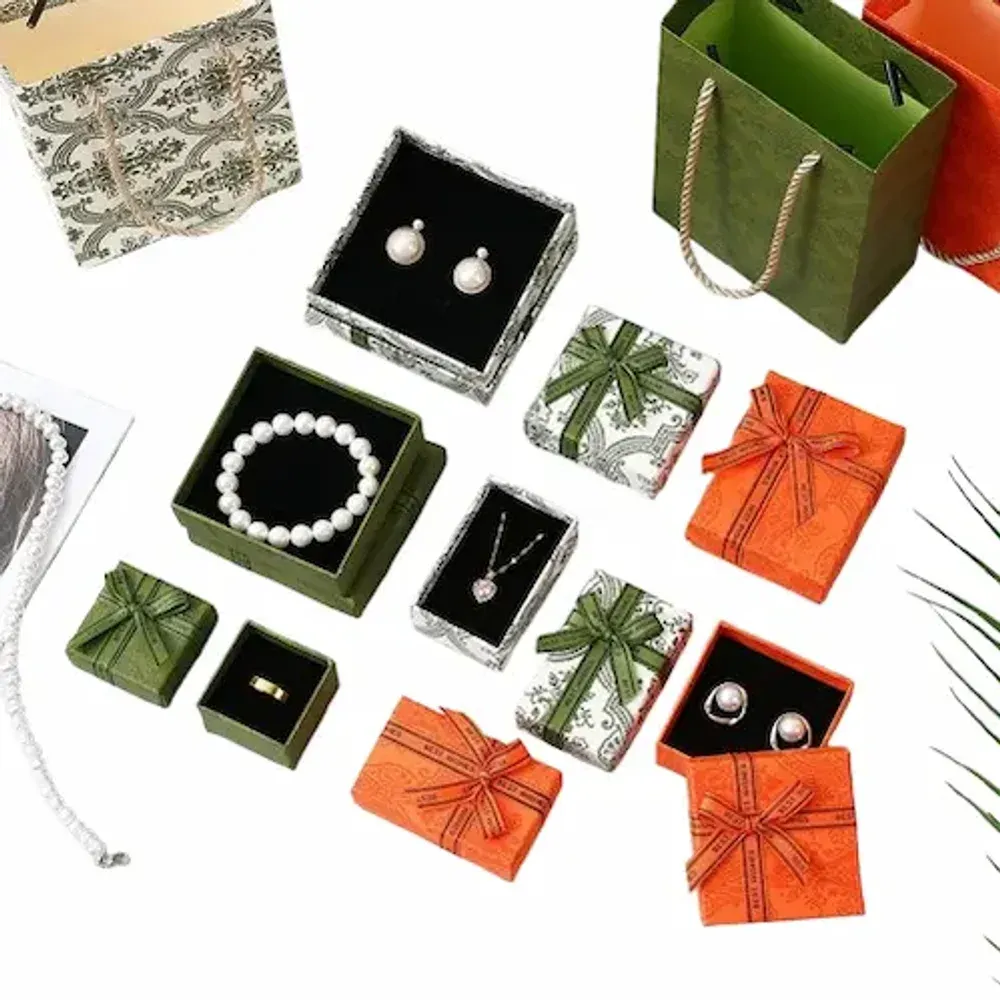
The wrong jewelry box insert cost Maya a return on almost every order she shipped. Her ring boxes photographed beautifully and came back constantly. The complaint was never the ring — it was tiny grey fibers clinging to the band. Her factory had used a cheap flocked velvet over unsealed foam, and the flock was shedding. Switching to a bonded microfiber over die-cut EVA cost four cents more per unit and ended the returns in one production run.
It is the part customers touch first and the part most brands specify last. At boxeschina, we spec inserts for jewelry brands in North America, the UK and Europe, and this guide gives you the real decision: velvet, foam, or a laminate of both — with the tolerance rules that separate a premium insert from a shedding one.
Key Takeaways
- Six constructions cover the market, from flocked paper over card at the low end up to microfiber over EVA at the high end.
- Almost every good insert is a laminate: EVA foam supplies the structure and tolerance, while velvet or microfiber supplies the surface a buyer actually touches.
- Specify cavity tolerance at ±0.5mm; at ±2mm the piece either falls out in transit or refuses to seat, and neither reads as premium.
- Flocked velvet sheds onto jewelry and drives returns, while woven or bonded velvet laminated to a core does not — so ask which construction is being quoted.
- Some PU foams and adhesives release sulfur that tarnishes silver in weeks, so demand a sulfur-free declaration and prefer EVA above any modest price point.
What an Insert Actually Has to Do
An insert has four jobs, and they pull in different directions.
It has to hold the piece so it does not move in transit. It has to present the piece at a flattering angle when the lid opens. It has to protect soft metals and stones from abrasion. And it has to survive repeated opening without crushing or shedding.
Foam is excellent at holding. Velvet is excellent at presenting. Most good inserts are a laminate of both — a structural core with a surface finish.
Key points
- Nearly all quality inserts are a core plus a surface layer.
- Velvet is a finish, not a structure.
- EVA foam holds tolerance far better than PU foam.
- Flocking sheds; bonded fabric does not.
- Insert tolerance should be ±0.5mm, not ±2mm.
Jewelry Box Insert Options Compared
Insert type | Feel | Protection | Durability | Typical MOQ |
|---|---|---|---|---|
Flocked paper over card | Low | Low | Low | 500 |
PU foam, plain | Low | Medium | Low | 500 |
EVA foam, die-cut | Medium | Very high | Very high | 1,000 |
Velvet over EVA | High | Very high | High | 1,000 |
Microfiber over EVA | Very high | Very high | Very high | 2,000 |
Moulded pulp, coated | Medium | High | Medium | 3,000 |
Velvet
Velvet delivers the luxury cue instantly: it absorbs light, hides small imperfections, and makes gold and silver look warmer. But velvet is a surface. Glued directly to thin card it dents, marks with fingerprints, and offers almost no shock protection. It performs only when laminated over a proper core.
Watch for two failure modes. Flocking — loose fibers sprayed onto adhesive — sheds onto jewelry. Woven or bonded velvet does not. Always ask which one you are being quoted, because a velvet ring box insert quoted at flocked pricing is not the same product at all.
Foam
EVA foam is the workhorse. It die-cuts to tight tolerance, holds its slot shape after hundreds of insertions, and does not crumble with age. PU foam is cheaper but yellows, compresses permanently, and can off-gas onto silver, causing tarnish. For anything above a modest price point, specify EVA.
Mini-story: A Toronto brand compared two samples for a bangle box. The velvet-over-card version felt richer on a desk and cost less. They chose it. Three months later, warehouse staff reported that stacked boxes arrived with the bangle slot flattened, so bangles rattled and scratched. The card core had no recovery. They moved to velvet over 5mm EVA, kept the identical fabric and color, and the problem disappeared — same look, different core, far fewer quality complaints.
Matching the Insert to the Piece
Different jewelry types fail in different ways, so the slot geometry matters more than the material name.
Piece | Best insert approach | Common mistake |
|---|---|---|
Ring | Split ridge, 3–4mm gap | Slot too wide, ring tips |
Necklace | Hook plus channel | Chain tangles in a flat tray |
Earrings | Punched holes with backer | Studs pull through thin foam |
Bangle | Raised cushion post | Flat slot lets it rattle |
Watch | Padded pillow, elastic | Pillow too small, strap creases |
For fine chains, a hook at the top and a recessed channel below prevents the tangle that generates most "arrived damaged" tickets.
Tolerance, Tarnish and Testing
Insert tolerance is the detail that quietly ruins good boxes. Ask for ±0.5mm on cavity dimensions. At ±2mm a ring either falls out or will not seat, and neither reads as premium.
Tarnish is the second hidden risk, and buyers asking which insert stops silver tarnishing are really asking about adhesives rather than fabric. Some foams and adhesives release sulfur compounds that darken silver within weeks in a closed box. Request a sulfur-free adhesive declaration and run a simple test: seal a polished silver sample in a finished box for thirty days and inspect it.
Finally, test the open, then test the journey: stack the packed boxes and run them through a transit test so you see slot collapse before your warehouse does. The lid-and-insert combination should present the piece without the customer needing to dig.
Which Should You Choose
- Under about $50, high volume: die-cut EVA with a printed coated top layer gives the best protection per cent.
- Between $50 and $300: velvet over EVA is the standard for good reason.
- Above that: microfiber over EVA with a tight cavity tolerance justifies its cost through fewer returns and better resale photographs.
Ask for all three quoted in your exact cavity size, and check the MOQ for each construction before you fall in love with the most expensive one. Volume changes the answer as much as the material does — the 2,000-piece minimum on microfiber is what usually rules it out for a first run, not the extra cost per unit.
At boxeschina we run inserts from MOQ 100 pcs, with free customised samples in about 5 days so you can press a real ring into a real cavity before you commit.
FAQ
Is velvet or foam better for a jewelry box insert? They solve different problems, so most quality inserts combine both. EVA foam provides the structure and shock protection, while velvet supplies the premium surface. Velvet glued directly to thin card looks good initially but flattens and offers almost no real protection.
Will a velvet insert shed fibers onto jewelry? Flocked velvet, where fibers are sprayed onto adhesive, does shed and commonly causes returns. Woven or bonded velvet laminated to a foam core does not. Ask your factory explicitly which construction is quoted, and test a sample against a polished ring.
Can foam inserts cause silver to tarnish? Yes. Some PU foams and adhesives release sulfur compounds that darken silver inside a closed box within weeks. Request a sulfur-free adhesive declaration, prefer EVA over PU, and seal a polished silver sample in a finished box for thirty days to verify.
What tolerance should a jewelry box insert cavity have? Specify ±0.5mm on cavity dimensions. At ±2mm the piece either falls out during transit or refuses to seat properly, and both outcomes undermine the premium impression.
What does a good jewelry box insert cost? Cost depends on construction and volume. As a rule, die-cut EVA is the value option, velvet over EVA sits mid-range, and microfiber over EVA is the premium choice — with a higher minimum for microfiber. Ask for a quote in your exact cavity size.
Your Next Step
Take your current box, remove the insert, and press your thumb into the cavity floor. If it stays dented, the core is card or PU foam and it will flatten in the warehouse.
Ask your factory for three samples in your exact cavity size: EVA plain, velvet over EVA, and microfiber over EVA. Put your real product in each, close the lid, and stack them under five kilograms overnight. Then open them in front of someone who has never seen your brand. Whichever earns the small pause of surprise is the one to order.
Conclusion
The insert decides whether the box protects the piece or merely holds it.
Velvet over foam gives the softest contact and the best perceived value; cut foam gives the tightest dimensional control; molded pulp is the recyclable middle path. Match the insert to the metal, the weight and the journey.
At boxeschina we cut inserts to your product rather than to the nearest stock cavity — MOQ 100 pcs, free samples in about 5 days.