Buying Guides
How to Choose a Candle Box: Avoid Wax-Melting Mistakes
Factory-direct guide to choosing candle boxes. Learn fit tolerance, materials, heat risks and how to avoid wax melt. Get wholesale price from a China maker.
<!-- META_EXCERPT: Factory-direct guide to choosing candle boxes. Learn fit tolerance, materials, heat risks and how to avoid wax melt. Get wholesale price from a China maker. -->
Choosing a candle box looks simple until the first shipment arrives with dented lids, scuffed labels, or wax smeared against the inner wall. The box is the structural system that protects a fragile, heat-sensitive product through overseas transit, handling, and display. This guide covers the real specifications that matter: candle diameter and height, fit tolerance, material, heat and transit behavior, inserts and closures, and the mistakes that melt wax.
Why the Right Candle Box Starts With the Candle Itself
The most expensive mistake is specifying the box before the candle is finalized. Lock the finished, lidded candle as your measurement reference, then design the box around that exact object.
Measure Diameter and Height First
Measure the widest point of the vessel, not the base, because a tapered glass is widest near the shoulder. Measure height with the lid on if the candle ships lidded, since that is the dimension the box must clear. A candle box manufacturer needs these two values before any structural design begins, and guessing them is the fastest route to a carton that fits nothing on your line.
Build in Fit Tolerance
Fit tolerance is the gap between the candle and the inner wall. Too tight and the candle jams, the label tears during packing, and the lid will not close. Too loose and the candle rattles, tips, and contacts the wall under shock. For a single candle in a folding carton, a clearance of about two to three millimeters per side is a safe start, adjusted for glass thickness and weight. State your packing method when you brief a supplier, because hand and machine packing need different play.
Material Choice: Kraft, Folding Carton, Rigid and Mailer
Material choice decides cost, protection, and shelf presence together, and the four common options serve different price points and shipping paths. Matching the material to the journey matters more than matching it to the mood board.
Kraft and Folding Cartons
Folding cartons use coated or uncoated board in the 300 to 500 gram range, keeping them light, printable, and inexpensive at volume. These cartons suit candles that ship inside a master carton or sit on a shelf where the glass is the hero, and because they fold flat they save freight and warehouse space when you import wholesale candle boxes by the thousands.
Rigid Boxes
A rigid box is built from 157 gram face paper over 1200 gram greyboard, giving a fixed, non-collapsing structure that feels premium and protects against side impact. The trade-off is weight and volume, since rigid boxes ship assembled rather than flat, so freight per unit is higher, but when the candle carries high retail value that cost is usually justified by fewer damages.
Mailer Boxes for Shipping
A mailer box is a self-locking shipping box with integrated closure, built to ship the candle directly to the customer without a master carton. Mailers need enough board weight and wall stiffness to survive parcel sortation, and they still benefit from an inner insert that stops the glass sliding, removing one packing step and one corrugated layer from fulfillment.
Heat and Transit: The Conditions That Melt Wax
Wax melts, and a box does not stop heat, it only delays and channels it. The failures behind the phrase mistakes that melt wax are rarely about looks; they are about heat and movement reaching a product that should stay solid. Designing around transit temperature and shock separates a box that protects from one that merely contains.
Candle-to-Wall Contact
The most direct melt path is the candle touching the inner wall under load. When a candle sits loose in an oversized box, every bump pushes the glass against the board, and if that board has baked in a hot trailer the contact point warms first. The fix is an insert or tray that holds the candle centered so it never touches the wall in motion.
Heat Buildup in Sealed Cartons
Sealed cartons in a container or van are small insulated chambers. Custom candle boxes should be specified with this in mind: avoid full black exterior print on candles crossing hot routes, request ventilation where the carrier allows it, and keep master cartons off container walls during loading, because heat buildup is a logistics problem as much as a packaging one.
Dented Lids and Crushed Corners
Even without melting, a weak box fails by denting, and a dented lid reads as damaged at retail. Packing at 100 pieces per carton with carton weight at or below 22 kilograms protects both the boxes and handlers through the supply chain.
Inserts, Trays and Closure
An insert does the quiet work: it holds the candle, separates it from the lid, and absorbs shock that would crack glass or smear wax. Closure decides whether the box stays shut through sorting and shelving without tape or extra wrap.
Trays and Inserts
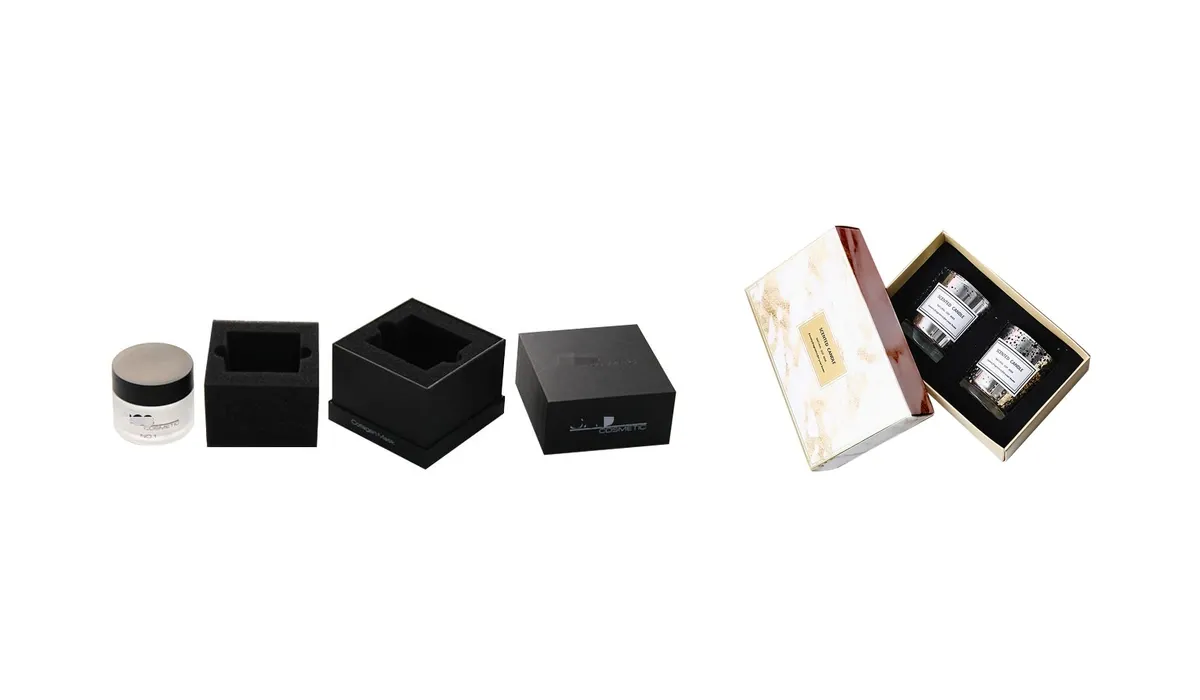
Foam, molded pulp, and EVA are common insert materials with different heat behavior, but for most candles a simple card tray with a die-cut hold stops movement and keeps the unit light. Tell your candle box manufacturer the candle weight and expected drop height rather than leaving the insert to a default choice.
Closure Types
Magnetic closures, tuck flaps, and ribbon ties are the usual options, and the right one depends on whether the box is opened in a shop or posted home. A tuck-flap folding carton stays closed through transit and costs least, while ribbon ties read as luxury but slow packing and can snag automated lines. Specify closure against packing speed and unboxing goal, not the prettiest sample, because a slow closure adds real labor cost across a wholesale candle boxes order.
Mistakes That Melt Wax
The phrase mistakes that melt wax describes a short list of repeated, avoidable errors across first-time candle programs.
Ordering by Guess Instead of Spec
The first mistake is ordering to a round number rather than the measured candle. A buyer sees a nine centimeter candle and orders a ninety millimeter box, forgetting lid and label thickness. Always order against the finished, lidded, labeled candle with stated tolerance, and confirm the spec in writing before tooling begins.
Ignoring Transit Temperature
The second mistake is designing for the showroom and shipping through summer. A box perfect in a cold warehouse can fail on a hot dock, so ask your supplier about board and insert behavior at temperature and adjust route and packing. Requesting FSC board on request is easy when a market requires a paper trail, and the factory is FSC-ready, but do not assume certification is in place unless you have reserved and paid for it.
Skipping a Sample
The third mistake is skipping the sample and trusting the drawing. A free digital sample is normally ready in about five days and shows structure, fit, and print before mass production, catching errors a flat proof never reveals. The cost of one sample is a fraction of one rejected container.
Lead Time, MOQ and What to Send for a Quote
Factory-direct buying rewards buyers who bring a complete spec, because a complete spec moves straight into sampling instead of looping through questions.
MOQ and Sampling
Our minimum order is 100 pieces per size and per design, letting smaller brands test a candle box without a warehouse of one variant. A free digital sample is normally ready in about five days, and once artwork and sample are approved, mass production runs ten to twenty working days. Bring finished files to the first conversation, because changes after approval reset the clock.
Mass Production and Payment
Mass production is ten to twenty working days after artwork and sample approval, and we pack at 100 pieces per carton with carton weight at or below 22 kilograms for safe handling. Quality is checked to AQL standards, and standard terms are thirty percent deposit with seventy percent before shipment. As a Dongguan factory since 1998 with a 5,000 square meter plant, around 100 staff, and annual sales above ten million US dollars, we supply over fifty brands across eighty-plus countries with more than one thousand packaging cases completed.
What to Send Us
To get an accurate factory price, send candle diameter and height with lid on, glass weight, preferred material and print, insert style if any, target quantity per size, and destination route so we can flag heat and transit risks. Send the same spec to each supplier you compare, then Request a Wholesale Quote from us to Get Factory Price on your candle program.
Frequently Asked Questions
How do I measure a candle for its box?
Measure the widest point of the vessel and the full height with the lid on, because those are the dimensions the box must clear. Record both in millimeters and note lid style and label thickness. Send these numbers to your candle box manufacturer so the structure is designed around the finished product rather than an early prototype that will not match production.
What fit tolerance should a candle box have?
A folding carton usually works with about two to three millimeters of clearance per side, adjusted for glass weight and packing method. Rigid boxes with inserts can run tighter because the insert carries the load. State whether you pack by hand or machine, since that changes how much play the candle needs to seat cleanly without rattling or jamming during fill.
Which material is best for wholesale candle boxes?
Folding cartons in 300 to 500 gram board are economical for retail sleeves, rigid boxes with 157 gram face paper over 1200 gram greyboard suit premium gifting, and mailers ship direct to customers. Match the material to the journey and the price point rather than the look, because protection and freight cost matter more than appearance at volume.
Can candle boxes really cause wax to melt?
Yes, indirectly. A loose candle rubbing the inner wall in a hot trailer warms at the contact point and can smear even when the center stays firm. Sealed cartons also build heat in summer transit. Inserts that center the candle, careful route planning, and avoiding full black print on hot routes all reduce the risk of melted or damaged wax.
What is the minimum order for custom candle boxes?
The minimum is 100 pieces per size and per design, which lets brands test variants without large commitments. Because the minimum applies per size and per artwork, a program with three candle sizes counts as three separate minimums. Send your full size list so the quote reflects the true production plan and tooling needed.
How long does sampling and production take?
A free digital sample is normally ready in about five days, and mass production runs ten to twenty working days after artwork and sample approval. These windows assume final artwork and signed-off samples; changes after approval reset the schedule. Plan launches around the sample plus production clock rather than the production clock alone.
Conclusion
Choosing a candle box is a specification job, not a decoration job. Measure the finished lidded candle, set a real fit tolerance, pick the material for the journey, and use an insert that keeps the glass off the wall through heat and shock. Avoid the mistakes that melt wax by sampling before mass production and planning for transit temperature. As a Dongguan factory-direct maker since 1998, we support orders from 100 pieces per size with a free digital sample in about five days and mass production in ten to twenty working days. Send us your specs and Request a Wholesale Quote to Get Factory Price on your next program.