Buying Guides
Folding vs Rigid Gift Box: Which for Retail Shelf
Folding gift box vs rigid gift box: a factory-direct buyer guide comparing cost, shipping volume, board grade and shelf use and gifting for overseas brands.
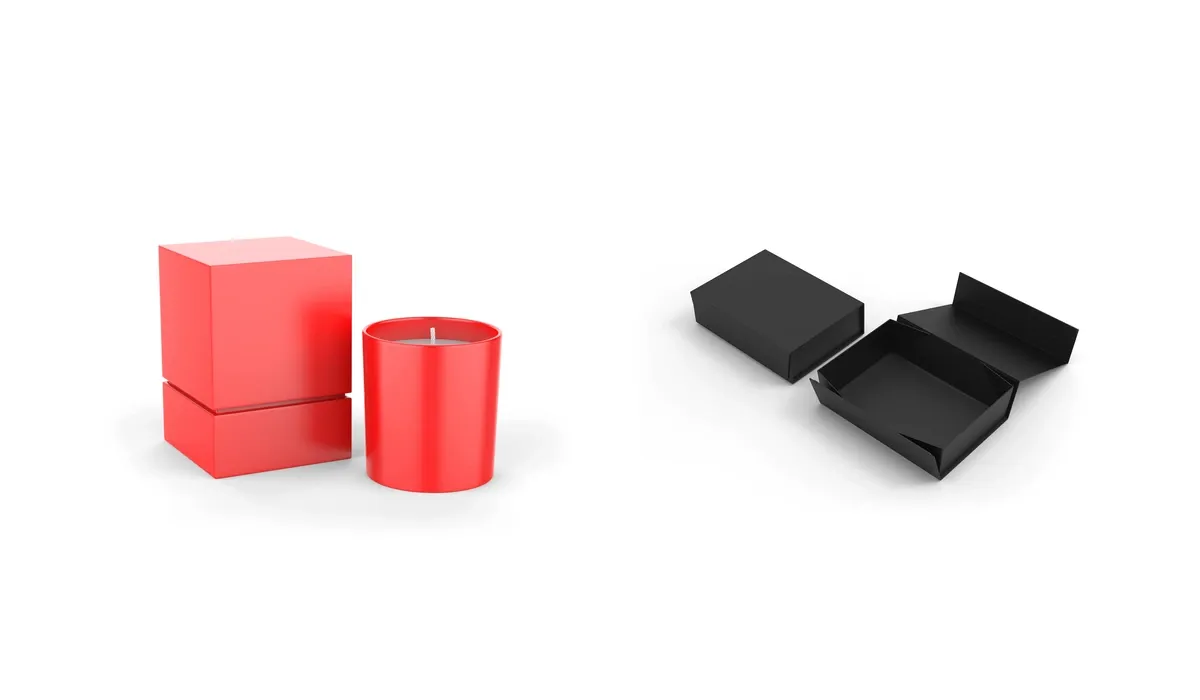
Folding gift box vs rigid gift box: a factory-direct buyer guide comparing cost, shipping volume, board grade and shelf use and gifting for overseas brands.
Choosing between a folding gift box and a rigid gift box is one of the first decisions an overseas brand or wholesaler makes when sourcing custom packaging from a China factory. The two formats look similar on a shelf, but they differ sharply in board grade, assembly labour, shipping volume, unit cost, and the kind of unboxing experience they deliver. The wrong choice quietly drains margin through freight and labour, while the right one lifts perceived value at the point of sale. This guide gives you a buyer's decision framework so you can specify the correct structure before seeking pricing rather than after a costly sampling round.
What Each Box Actually Is
A folding gift box, often called a folding carton or collapsible carton, ships flat and is creased so it pops into shape by hand in seconds. It is produced from a single sheet of paperboard, typically 300 to 500 g board, printed and die cut in one pass. A rigid gift box, by contrast, is delivered pre-assembled and keeps its shape permanently because it is built from wrapped greyboard. A standard rigid or foldable rigid box uses 157 g face paper over 1200 g greyboard, a construction that feels dense and premium in the hand. The foldable rigid variant adds a hinge or magnet so it can collapse partially for shipping yet still reads as rigid on the shelf. The core distinction is therefore structural: one is a folded sheet, the other is a wrapped board shell.
Board Grade and How It Drives Perceived Value
Board grade is the single biggest driver of how a box feels to a customer. The 157 g face paper over 1200 g greyboard used in rigid boxes gives a wall thickness and weight that signals luxury, which is why cosmetics, watches, and premium confectionery lean rigid. The 300 to 500 g board of a folding carton is lighter and more flexible, which suits everyday retail goods where the packaging is secondary to the product inside. When your brand positioning is premium gifting, the rigid board reads as worth the money; when you are shipping volume consumables, the thinner folding board keeps the pack honest and cost-efficient. Match the board to the price point you are defending, not to a personal preference for sturdiness.
Assembly Labour and the Hidden Cost of Time
Assembly is where many first-time importers underestimate total cost. A folding gift box ships flat and your local team or fulfilment partner erects it in under five seconds with no tools, so labour cost at the packing line is near zero. A rigid gift box arrives assembled and occupies its full volume from factory to shelf, but it also removes assembly labour entirely at your end. The foldable rigid box splits the difference: it ships flatter than a full rigid box yet still avoids the per-unit erection step. The hidden cost question is therefore where your labour is cheapest. If you assemble in a high-wage market, paying the factory to deliver rigid assembled may save more than the board premium costs.
Shipping Volume and Freight Reality
Shipping volume is usually the deciding factor for wholesalers ordering by the container. A folding carton lies flat, so a thousand units may fit in a fraction of a carton compared with the same count of assembled rigid boxes. This collapses your cubic volume and often your ocean freight bill by a wide margin. A rigid box, already three-dimensional, ships at its full size no matter how far it travels, so you pay to move air. The foldable rigid box recovers part of that saving by collapsing, but never as much as a true folding carton. For brands shipping direct to many regional warehouses, the folding format's volume efficiency is frequently the difference between a profitable SKU and a loss-maker once freight is counted.
Unit Cost and Where the Money Goes
Unit cost follows structure. Folding cartons are the most economical because they are one printed, creased sheet with low material mass and fast machine running. Rigid boxes cost more because they consume far more board by weight and require a separate wrapping and assembly process, which is why they can run several times the price of a folding carton at equal print quality. The foldable rigid box sits between them, adding hinge or magnet hardware and a more complex make-up. When you Request a Wholesale Quote, always ask for both structures at your target volume so the comparison is real rather than assumed. Remember that the cheaper folding format can become the expensive choice once you add freight and assembly for a distant market.
Closure Types and the Unboxing Moment
Closure shapes the unboxing moment and the integrity of the pack in transit. Folding cartons commonly use tuck flaps, auto-lock bottoms, or simple ribbon ties, which are secure enough for most retail goods but can loosen under rough handling. Rigid boxes use magnets, hidden clasps, or lift-off lids that snap shut with a satisfying weight and stay closed through courier abuse. The foldable rigid box often pairs a magnet with its hinge to keep the premium close while allowing some collapse for shipping. If your product is fragile, high value, or gifted, the rigid closure protects both the item and the brand impression; if the pack is opened once and discarded, a tuck carton is sufficient.
Use Cases: When Folding Wins
A folding gift box beats rigid in several clear situations. First, when you ship in high volume to multiple warehouses, the flat pack slashes freight and storage cube. Second, when the product is everyday or mid-price and the packaging is not the hero, the lighter board keeps total cost down. Third, when you need rapid design changes or seasonal variants, the single-sheet carton is faster and cheaper to revise. Fourth, when shelf space is tight at retail, flat cartons arrive compact and assemble on demand without clogging back rooms. For subscription lines, promo bundles, and private-label consumables, the folding format is almost always the rational wholesale default.
Use Cases: When Rigid Wins
A rigid gift box wins when presentation carries the brand. First, luxury and gift categories benefit from the dense, weighted hand-feel that only 157 g face paper over 1200 g greyboard delivers. Second, when the box is kept and reused, such as keepsake or apparel packaging, rigidity justifies the premium. Third, fragile or high-value items gain protection from the wrapped shell and robust magnetic or clasp closure. Fourth, when you assemble in an expensive market, buying assembled rigid from the factory removes local labour. For flagship gifting, launch editions, and premium corporate sets, rigid construction defends the price the customer pays.
Failure Conditions to Avoid
Each format fails in predictable ways if mis-specified. A folding carton fails when the board is too light for the product weight, causing bulge or tear at the crease during transit; it also fails when a tuck closure meets a rough courier, arriving open. A rigid box fails on freight economics at scale and on storage cube in small premises, and its fixed shape wastes space when empty stock sits idle. A foldable rigid box fails when the hinge or magnet is under-specified and weakens after a few opens, or when buyers expect full rigid savings on freight and do not get them. Specifying the right board weight, closure rating, and collapse method up front prevents these field failures.
Testing and Acceptance Before Mass Run
Testing protects both sides before a mass run commits capital. At our Dongguan factory, established in 1998 and operating a 5,000 m² plant with around 100 staff, we run a free digital sample in about 5 days so you can validate print and structure on screen before any board is cut. After digital approval we recommend a physical prototype for closure cycling and drop checks. Mass production runs 10 to 20 working days after artwork and sample approval, and every lot is checked under AQL inspection so defective rates stay controlled. Buyers should define their own acceptance criteria, including closure open-close counts and compression, and confirm them in the approved sample so the mass run is measured against a fixed reference.
Common Mistakes Buyers Make
The most common mistake is choosing by looks alone and ignoring freight cube, which turns a cheap folding carton into an expensive landed product. Another is over-specifying rigid for a disposable pack and paying for board the customer recycles unopened. A third is omitting closure testing, so a magnet rated for the wrong weight fails in the field. A fourth is forgetting assembly labour in the destination country, where rigid delivered-assembled can be the cheaper total. A fifth is assuming one MOQ fits all sizes; our minimum is 100 pieces per size and design, so each variant you add is its own run. Avoiding these five errors keeps your packaging budget where it belongs.
What to Send for an Accurate Quote
To get a factory price that reflects reality, send a clear brief rather than a vague request. State the product dimensions and weight, the target board grade or let us propose one, the closure type you prefer, and the required quantity per size. Tell us the destination market so we can pack 100 pieces per carton with total carton weight at or below 22 kg for safe handling. Mention if you need FSC-certified board, since our plant is FSC-ready and can supply certified board on request though we do not claim certification unless reserved for your order. Share your artwork or brand guidelines, and we will return a free digital sample in about 5 days. With this brief, Get Factory Price becomes a real number you can plan against.
Working With a Gift Box Manufacturer
Selecting the right gift box manufacturer is as important as the box type. A direct-from-factory partner removes trading-company margins and lets you negotiate board, closure, and run length openly. Our Dongguan operation serves 80 plus countries, 50 plus brands, and over 1,000 completed cases, with annual revenue above US$10 million, giving the capacity and experience to handle both folding and rigid programmes. We work on a 30 percent deposit and 70 percent before shipment payment term, which keeps your upfront risk contained while we commit plant time. Ask our team for current capacity before you lock a launch date, because lead times shift with seasonal demand and we would rather tell you the truth than miss your window.
Frequently Asked Questions
What is the main difference between a folding gift box and a rigid gift box?
The main difference is structure and shipping state. A folding gift box ships flat as a creased 300 to 500 g board sheet and pops up by hand, while a rigid gift box is delivered pre-assembled from 157 g face paper over 1200 g greyboard. Rigid feels denser and more premium, folding is lighter and cheaper to freight. Choose rigid for presentation, folding for volume efficiency and lower landed cost.
Which box is cheaper for wholesale orders?
The folding gift box is usually cheaper per unit because it uses less board and runs through one print-and-die process. A rigid gift box costs more due to heavier board and separate wrapping and assembly. The foldable rigid box sits in between. However, once you add freight and destination assembly, a folding carton can still win overall even when its unit price looks similar to rigid at the factory gate.
How much does shipping volume differ between the two?
A folding carton ships flat, so thousands of units occupy a small fraction of the cube that the same count of assembled rigid boxes needs. Rigid boxes travel at full three-dimensional size, so you pay freight on air the whole way. The foldable rigid box recovers some space by collapsing but never matches a true folding carton. For container loads to many warehouses, folding format volume savings are usually decisive.
What board grade should I specify for a rigid box?
A standard rigid or foldable rigid box uses 157 g face paper over 1200 g greyboard, which gives the dense, weighted hand-feel associated with premium gifting. For a folding carton, specify 300 to 500 g board depending on product weight and required stiffness. Always match board to the product mass so the crease or wall does not bulge or fail in transit, and confirm the grade on the approved sample.
How long does sampling and production take?
A free digital sample takes about 5 days, letting you check print and structure before any board is cut. After you approve artwork and the sample, mass production runs 10 to 20 working days. Every lot is checked under AQL inspection. Because lead times move with seasonal demand, ask our team for current capacity before you fix a launch date so the schedule is realistic rather than hoped for.
What is the minimum order quantity for custom boxes?
Our minimum is 100 pieces per size and design, so each size or artwork variant you add is treated as its own production run. This lets smaller brands test a structure before committing to a full programme. Plan your variants carefully because adding sizes multiplies both the MOQ and the setup work, and keep each design distinct enough to justify its own run.
Can you supply FSC-certified board?
Our Dongguan factory is FSC-ready and can supply FSC-certified board on request for both folding and rigid boxes. We do not claim to be certified on a generic basis; certification is reserved for your specific order so the chain-of-custody matches your requirement. Tell us early if you need FSC board so we can allocate certified stock and include it in the quote and production plan.
How should boxes be packed for safe freight?
We pack 100 pieces per carton with total carton weight at or below 22 kg, which keeps cartons within safe manual-handling limits and reduces damage risk. For rigid boxes the assembled volume sets carton size; for folding cartons the flat pack lets us optimise cube. Confirm your destination handling constraints, and we will size cartons so they move through your warehouses without exceeding weight or size limits.
Conclusion
The choice between a folding gift box and a rigid gift box is rarely about which looks better and almost always about total landed cost, shelf impact, and the unboxing moment you want customers to remember. Folding cartons win on freight volume, assembly speed, and unit price for everyday and volume retail. Rigid boxes win on premium hand-feel, protective closure, and brand-defending presentation for gifting and luxury lines. Send us your product dimensions, board preference, closure type, and quantity, and we will return a free digital sample in about 5 days so you can decide with facts. Request a Wholesale Quote and Get Factory Price on the structure that fits your programme.