Buying Guides
Foldable Rigid Boxes: Flat-Pack Luxury That Saves Freight
A foldable rigid box ships flat and assembles by the receiver, cutting freight and storage while keeping the premium unboxing. Spec board grade, magnet, dimensions and lead time before you order.
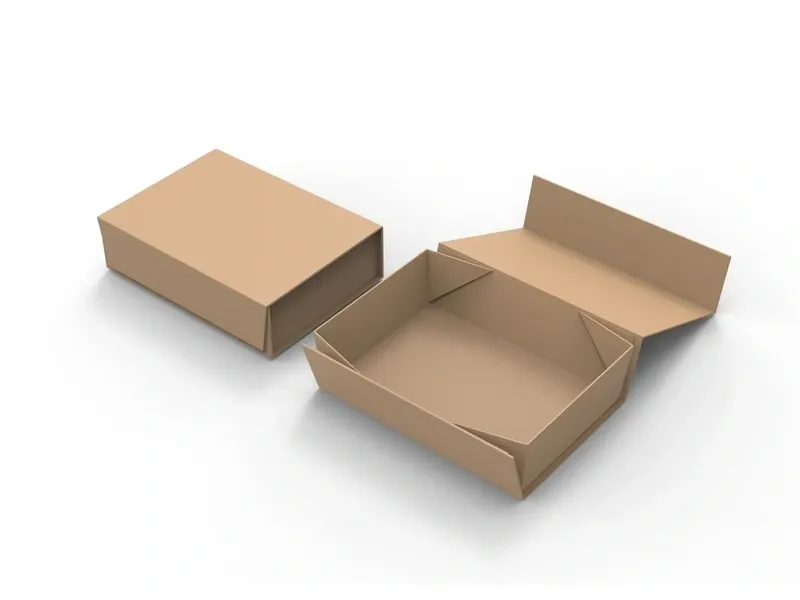
Foldable Rigid Boxes: Flat-Pack Luxury That Saves Freight. A foldable rigid box ships flat and assembles by the receiver, cutting freight and storage while keeping the premium unboxing. Spec board grade, magnet, dimensions and lead time before you order.
A foldable rigid box gives you the premium look and stiff walls of a rigid box but collapses flat for shipping, then is assembled by the receiver or your packing team. A standard rigid box ships assembled and can fill three to four times the carton volume of a foldable version, so the foldable build is the choice when freight cost or warehouse space is the constraint. This guide specifies the board grade, magnet, dimensions, lead time and quality checks that decide whether a foldable rigid box protects the product and presents it well. It is written for buyers who already know they want a custom box and need the measurable parameters, not a tutorial.
1. Scope: when a foldable rigid box is the right package
A foldable rigid box is the right choice for subscription and replenishment runs, gift and retail presentation where the box travels by parcel or sits in paid storage, and direct-to-customer delivery where the unboxing is part of the product. It is the wrong choice when the box must arrive fully assembled and shelf-ready with zero receiver effort, or when the unit cost must be the absolute lowest and a folding carton already meets the spec. If the route is hand-carry only and freight is not a factor, a standard assembled rigid box is simpler. Name the shipping mode up front because it decides the fold mechanism and the closure.
2. Specifications that decide fit
Internal dimensions are the first parameter. Measure the product plus any insert and state internal height, width and depth with a tolerance of plus or minus 1 to 2 mm, then confirm against a physical sample rather than the nominal size. Board grade sets protection and freight: a foldable rigid box is built on 157 g face paper over 1200 g greyboard for the walls, with a thinner connecting spine so it folds. A folding carton uses 300 to 500 g board and is lighter but less stiff. Wall stiffness is what keeps the box from bowing under the loaded weight, typically 0.4 to 1.2 kg with insert and print for a single small product. State the loaded weight when you request a quote.
The fold mechanism is the defining feature. A crash-lock or snap-bottom foldable rigid box pops into shape without glue at the base. A magnet-closure foldable rigid box adds a magnetic flap that must survive parcel handling. A ribbon or belly-band version closes with a wrap rather than a rigid lid. The closure type is the part most likely to fail in transit, so specify it for the real route, not the showroom.
3. Lead time
A digital sample is free and takes about five days, which is enough to confirm dimensions, fold action and print but not to judge a physical magnet cycle. Mass production runs 10 to 20 working days after artwork and sample approval. Foil stamping, embossing, soft-touch lamination and magnetic closures each add days, so name those finishes before the calendar is fixed. Plan the approval step as part of the schedule, not an afterthought, because a late artwork change resets the clock.
4. Cost drivers
The minimum order is from 100 pieces per size and design. Board grade is the largest material cost: 1200 g greyboard costs more than a 300 to 500 g folding carton, and a foldable rigid build uses more greyboard than a folding carton of the same footprint. Magnet and ribbon closures are the next driver after board. Foil, embossing and soft-touch lamination add both material and labour. Printing uses offset for production runs, which is economical above a few hundred pieces but carries set-up cost below that. State the annual volume so the factory can set the board and closure to the right cost tier.
5. Failure conditions
A foldable rigid box fails on fold action and closure, not on looks. The crash-lock base pops open because the board was too light for the loaded weight. The magnetic flap comes undone in a parcel sorter because it was specified for hand-carry only. The box creases permanently along the fold line because the board grade was set for display, not repeated folding. The walls bow because the greyboard was thinner than the product weight required. The print cracks along the spine because the lamination was wrong for the fold radius. Each of these is a specification gap, not a decoration gap.
6. Testing
Validate the box the way it will travel. A fold-cycle test shows whether the spine survives assembly and disassembly without a permanent crease. A drop test from 600 to 800 mm onto each face shows whether the base and closure retain the product. A closure-cycle test shows whether a magnetic or ribbon catch survives repeated opening. A compression test shows whether stacked cartons survive. A print-flex test confirms the spine ink does not crack at the fold radius. Test against the worst case in your route, not the best.
7. Acceptance
At incoming inspection, check the internal dimensions against the approved sample within plus or minus 1 to 2 mm. Confirm the base locks square without force and the closure closes and holds without assistance. Confirm the fold line is clean with no permanent crease after one open-close cycle. Check the print against the signed artwork for colour and position. Sample by an AQL plan rather than inspecting every unit, and quarantine a first-article box from each production batch for reference.
8. Common mistakes
The most frequent error is choosing an assembled rigid box for a route that needs flat-pack freight and paying double on shipping. The second is specifying a magnetic closure for a parcel network when a crash-lock base would have been cheaper and more robust. The third is setting the greyboard too thin to save cost and watching the walls bow. The fourth is forgetting that the foldable build still needs the receiver to assemble, then shipping without assembly instructions. The fifth is mixing board grades between the lid and base so the box warps along the seam.
9. What to send for a quote
Send the product dimensions and weight, the order quantity and annual volume, the fold style and closure type you prefer, the print and finishing, the target market and any compliance marks, and the required delivery date. A product sample or a dimensioned drawing removes the largest source of error. State whether the box travels by parcel or hand-carry so the fold mechanism and closure are specified for the real route.
Frequently Asked Questions
What board grade does a foldable rigid box use?
A foldable rigid box uses 157 g face paper over 1200 g greyboard for the walls, with a thinner connecting spine so it folds flat. A folding carton uses 300 to 500 g board. Choose the rigid build when presentation and protection matter more than the lightest possible carton.
Does a foldable rigid box really save freight?
Yes. A standard rigid box ships assembled and can take three to four times the carton volume of a foldable version, so the foldable build lowers both freight and warehouse space on parcel and replenishment routes.
What closure works best for parcel shipping?
A crash-lock or snap-bottom base with a magnetic flap is robust, but specify the magnet for parcel handling rather than hand-carry. A ribbon or belly-band closure is cheaper but less secure in a sorter.
How long does production take?
A free digital sample takes about five days. Mass production runs 10 to 20 working days after artwork and sample approval, longer with foil, embossing, soft-touch lamination or magnetic closures.
What is the minimum order?
From 100 pieces per size and design. Below a few hundred pieces, offset set-up cost dominates, so confirm the volume tier before pricing.
How do I confirm the box will survive folding?
Use a fold-cycle test for permanent crease, a drop test from 600 to 800 mm, and a closure-cycle test for the magnet or ribbon. Test against the worst case in your route.
Is the factory certified to FSC?
The factory is FSC-ready and can supply FSC-certified board on request. Confirm the chain-of-custody requirement when you quote so the material is reserved.
What print method is used?
Production runs use offset printing. Digital is used for samples and very short runs. Name foil, embossing or soft-touch lamination early because each adds days.
What should I pack the boxes in for shipping?
Pack 100 pieces per carton and keep the total carton weight at or below 22 kg to avoid carrier overweight fees. Confirm the carton size against the folded box footprint.
Conclusion
A foldable rigid box earns its place only when freight or storage is the constraint, so set the greyboard, fold style and closure for the real parcel route before you approve artwork. Send the product sample or a dimensioned drawing, name the closure, and confirm the base locks square and the magnet survives a closure cycle. Quote with quantity, volume and delivery date, and reserve FSC board if the market requires it.