Buying Guides
Customised Jewellery Box: UK Market & Finish
A factory guide to customised jewellery boxes for the UK market: UK spelling, earring cradles, luxury finish, MOQ from 100 pieces, sampling in days, and bulk lead time from Dongguan since 1998.
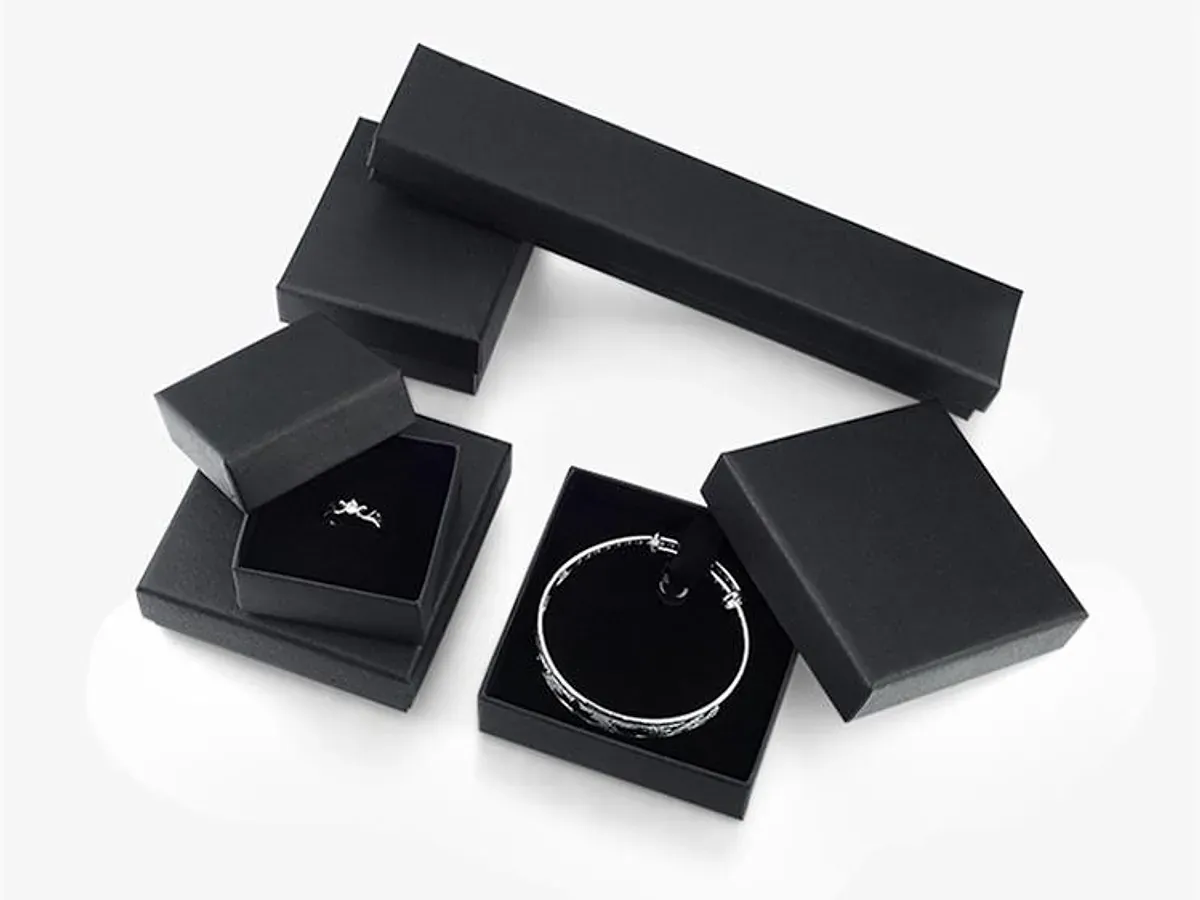
Jewellery boxes are a core packaging decision for brands that ship UK ring brands, UK pendant brands, UK earring brands, UK watch brands. Sourcing them from a manufacturer rather than a trader gives control over the material, the dimensions, and the finish, and that control is what turns a box from a cost into part of the product experience. Customised jewellery boxes use UK spelling and lean toward understated premium, because the box is for a British or Commonwealth brand and the spelling should match the shelf it serves. This guide covers the practical side of buying customised jewellery box from a China factory: the materials and grammage that set quality, how custom dimensions are specified, and the order rhythm that keeps a brand in stock through a peak. The intent is to let a buyer brief a supplier with enough detail that the first order is a confident test rather than an expensive guess.
The hard facts that frame every order are stable: the minimum order starts from one hundred pieces, sampling takes only a few days, and bulk production runs ten to twenty working days. Rigid boxes use 157 gram face paper over 1200 gram greyboard; folding cartons use 300 to 500 gram paperboard. Boxes are packed one hundred pieces per carton kept at or under twenty two kilograms. FSC ready paper is available with chain of custody documents on request, and Manufacturing is based in Dongguan, China, with operations established since 1998. Hold those facts in mind as you read, because they are the constants behind the choices that follow, and they are what let you plan a landed timeline instead of hoping one appears. The rest of this guide breaks each constant into a choice you can make with the factory rather than a number you merely accept.
What Jewellery Boxes Are For
Jewellery boxes are purpose built packaging for brands that sell UK ring brands, UK pendant brands, UK earring brands, UK watch brands. The box is not generic; it is shaped, inserted, and finished around the product so the item is protected and presented in one unit. Customised jewellery boxes use UK spelling and lean toward understated premium, because the box is for a British or Commonwealth brand and the spelling should match the shelf it serves. For a small brand, specifying the box around the product rather than buying stock is what lifts the unpacking from functional to branded, and it is the step that justifies a premium position, because the customer experiences the brand before they experience the product.
The application drives the spec: a fragile item wants a cradle, a set wants compartments, and a gift item wants a closure that feels considered. Understanding which application leads your order is the first brief, and it shapes the material, the dimensions, and the finish. A manufacturer that asks about the item, the market, and the shipment before quoting is one who will deliver a box that fits, not just one that prints, and that questioning is the signal you are in good hands.
The product first mindset also de risks the order. When the box is specified around the item, the proof is a test of fit as much as a test of look, so the mistakes that a generic box hides, a rattle, a tilt, a closure that will not meet, are caught on a sample rather than discovered by a customer. That is the practical dividend of purpose built packaging: the box proves itself before the bulk run, not after.
Material and Grammage for the Product
For jewellery boxes, the material standard is 157 gram face paper over 1200 gram greyboard for rigid presentation and 300 to 500 gram paperboard for folding volume. These grades give the weight and the print surface the product deserves while staying in the paper and paperboard lane that keeps cost and compliance sane. Kraft serves a natural story and works for brands with a craft identity, and it pairs well with a simple print rather than a heavy coverage that fights the texture.
Specify the grammage explicitly so runs match, and ask for a physical swatch before sampling. The material is the largest cost line, so confirming the board grade protects the margin on every unit. A supplier should walk you through the grade choices and explain where each binds on cost versus durability, rather than defaulting to the most expensive option, because at volume a small grade change is a large money change.
Keep the approved swatch and grade on file so the tenth container matches the first, which is the consistency a retailer or a repeat customer notices. A supplier who treats the grade as a fixed spec, not a negotiable variable, is one who will keep your programme consistent as it scales. The grade is the quiet foundation under every finish you add on top of it.
Inserts, Windows, and Product Security
The insert or the window is where a jewellery boxes earns its keep. A die cut paper cradle holds the product without shift; a window lets the customer see it without opening; a compartment keeps a set arranged. Send the actual product so the cavity is cut to the real dimensions, not a drawing, because a cradle two millimetres off lets the item tilt and tilt reads as cheap, which is the difference between a premium unboxing and a disappointing one.
A well cut insert also reduces loose void fill, which trims weight and mess. The insert is the part that touches the product, so it deserves as much attention in the proof as the outer print. For a window, confirm the film or the die cut opening against the product position so the view lands where the customer expects, not where the dieline happened to place it, because a window that misses the product sells nothing.
The insert also protects the product in transit. A cradle that holds the item tight survives the courier network where a loose item would rattle and mark; a compartment that separates a set keeps the pieces from abrading each other. Specifying the insert around the product is therefore both a presentation decision and a damage prevention decision, and the proof is where you confirm both at once before the bulk run bakes them in.
Printing, Foil, and Shelf Identity
Jewellery boxes carry identity mostly through print and finish. Confirm the Pantone or CMYK target before sampling and insist on a physical proof so the foil and paper are seen together. A single foil line or a debossed logo is enough; a busy box with several processes looks cheaper and is harder to hold consistent across a large run, which is the trap a first time brand falls into when trying to look premium.
If you sell in several markets, keep the design language consistent so the range looks like one brand across the shelf. The proof is where identity is confirmed, so never skip it to save a few days. A manufacturer with experienced seasonal finishing will flag finish choices that are risky at volume, saving you from a specification that looks good in a sample and fails in a container, which is exactly when the finish problem becomes a returns problem.
Identity also lives in restraint. A clean box with one strong foil usually outperforms a busy box with several, and it is cheaper to produce consistently across a large run. The finish count is a quality lever as much as a design lever, so choose it with the production line in mind, not just the mood board. The box that survives the container unchanged is the box that builds the brand.
MOQ, Sampling, and Bulk Lead Time
The minimum order for jewellery boxes starts from one hundred pieces, which lets a brand test a design without a large commitment. Sampling takes only a few days once the product and the dieline are confirmed, and validates the insert and the print against a proof, which is the moment a misfit cradle or a misregistered foil is caught for the cost of a sample rather than a container.
After approval, bulk production runs ten to twenty working days. The safe rhythm is sample, then bulk, then top up: a small first order validated by a proof, followed by a replenishment once real sales signal arrives. The factory holds the setup between splits so the second run is faster, and that rhythm keeps a brand in stock through a peak without betting everything on a single slot, which is when the application sells hardest.
Because the insert is product specific, the proof is especially valuable here: it tests fit, not just look. Spend the few days on the sample and the bulk price you negotiated stays a saving rather than a loss to returns. The proof is the cheapest insurance in the whole order, and for purpose built packaging it is the step that turns a design into a product you can ship with confidence.
Cartons, Freight, and Timing
Boxes are packed one hundred pieces per carton kept at or under twenty two kilograms, which keeps handling standard and container packing efficient. For jewellery boxes confirm the count per carton in writing so the freight quote matches, because the box size usually binds before the weight cap does. Ocean freight from Dongguan takes several weeks depending on the port and season, so plan the first order ahead of the selling window, because the application season waits for no one.
Air freight is an emergency lever, not a plan, because it erodes margin at box volume. Rigid boxes ship assembled and take more room; folding cartons ship flat and save space until pack out. Because the setup persists, a reorder the following season is faster and cheaper, which makes a one hundred piece test this year a foundation for next, and the product specific dieline is the asset you reuse every time.
Freight planning for purpose built packaging is about the carton, not just the box. A few millimetres of box size can change how many cartons fit per container, and at volume that difference is real money on every shipment. Ask the supplier for a carton size that packs tightly without exceeding the weight cap, because that optimisation is free and compounds across all your reorders for this product.
Quality Checks and Common Mistakes
A jewellery boxes fails when the insert tears or the product arrives shifted. Before bulk, place the real product in the sample insert and shake the closed box to confirm nothing moves. Pull a random carton from the run rather than a hand picked sample so you see production quality, not a showcase piece, because at volume a one percent defect is a hundred unhappy customers and a wall of reviews.
The common mistakes are quoting on size alone, skipping the proof, and one oversized late order instead of a tested first run plus a top up. Open a shipped carton on arrival, not just at the factory gate, because transit reveals insert issues the static check missed. A supplier who welcomes these checks is one you can build a programme with, and one who resists the shake test is one to avoid for a product customers receive directly.
Because purpose built packaging ships to individual customers, a defect is visible to the end buyer in a way a pallet of cartons never is, so quality discipline is reputation discipline. The random carton, the shake test, and the arrival inspection are the three habits that keep a programme clean, and they are non negotiable at the volume a brand runs. Skipping them is gambling the brand on every parcel.
FSC Ready Paper and Compliance
FSC ready paper is available with chain of custody documents on request, which matters for brands with a sustainability claim or a retailer requirement. Confirm before sampling so the correct stock is ordered and documents travel with the shipment. Manufacturing is based in Dongguan, China, with operations established since 1998, supporting stable paper supply and experienced finishing, which is the stability you want behind a peak order for a product with a season.
Keep the certificate on file for audits and state the claim honestly when certified. The uplift is modest at volume and worth it for the audit trail, especially when a single audit can unlock a large recurring order. Compliance is a maintained document trail, not a one time checkbox, and product packaging is exactly where buyers ask for it first, so the document trail is the quiet half of the brand promise.
Tie the chain of custody to the purchase order so the audit connects the box in your warehouse to the certified stock at the mill. A supplier who does this routinely understands that compliance is a supply chain property, not a piece of paper, and that understanding keeps your large recurring orders clearing customs without drama. For a product with a season, that reliability is what lets you ship into the peak with confidence.
UK Market and the Earring Cradle
This guide uses UK spelling, jewellery rather than jewelry, because the box is for a British or Commonwealth brand, and the spelling should match the market on the product page and the print. The product itself is the same range of ring, pendant, earring, bracelet, and watch boxes built around the item rather than a generic assortment. Matching the spelling signals the box was specified for the shelf it serves, not imported and relabelled after the fact.
Earring boxes solve one problem above all: keeping the pair together and visible, with two aligned holes or a twin slot insert so each earring sits in place. Because earrings are small and easy to lose, insert security matters more than the outer finish. Send the actual items so the cavities are cut to the real dimensions, and pull a random carton from the bulk run to see production quality rather than a hand picked sample.
UK retail jewellery expects a finish that feels considered, so rigid 157 gram face paper over 1200 gram greyboard gives the weight a premium piece deserves, while folding 300 to 500 gram paperboard suits high volume everyday pieces. A single foil or a debossed logo outperforms a busy box, and that restraint holds consistent across a large run when the finish count is kept modest.
Common Mistakes With Purpose Built Packaging
The mistakes that cost brands on jewellery boxes are mostly about the fit rather than the look. The first is estimating the cavity from a drawing instead of sending the real product, which produces a cradle two millimetres off that lets the item tilt and tilt reads as cheap. The second is skipping the shake test, because a box that passes a static check can still let the product shift in transit and arrive marked. The third is a busy finish that misregisters across a large run, because a cluttered box looks cheaper and is harder to hold consistent than a clean one.
The fourth mistake is ignoring the journey, specifying the box for the shelf and forgetting it also ships, which produces a closure that pops in the courier network or a board that greases through. The fifth is treating the insert as an afterthought when it is the part that touches the product and earns the proof attention. Each of these is closed by sending the real product, doing the shake test, and confirming the print on the actual board before bulk.
The sixth mistake is one giant late order instead of a tested first run plus a top up, because the peak compresses production and freight and the late order is the one that misses the season entirely. A brand that samples in a few days, bulks in ten to twenty working days from a Dongguan factory since 1998, and keeps the dieline on file avoids all six and turns purpose built packaging into a confident programme rather than a sequence of small failures.
Briefing the Factory for the First Order
The first jewellery boxes order should start with the real product, the target market, and the shelf or ship context. Send those to the factory so the dieline and the insert are cut to the product rather than estimated from a drawing. The one hundred piece minimum lets you test the fit and the print before committing the season, which is the whole point of purpose built packaging.
Agree the proof schedule and the carton size in writing, and put the actual product in the sample insert for the shake test. Sampling takes only a few days and bulk runs ten to twenty working days, so the calendar is predictable once the dieline is set. The factory in Dongguan has operated since 1998, which is the stability you want behind a peak order for a product with a season.
Keep the approved dieline, swatch, proof, and certificate on file so reorders are faster and cheaper and never restart the design conversation. That archive is the compounding asset of the programme, turning a one hundred piece test into a confident, lower cost supply of boxes built around your product. Send the product, get the proof, plan the rhythm, and the packaging becomes the part of the brand customers remember.
FAQ
What is the minimum order for jewellery boxes?
The minimum order quantity starts from one hundred pieces, which lets a UK brand test a style without a large commitment.
Why the UK spelling?
The box is for a British or Commonwealth brand, so the spelling should match the market on the product page and the print.
What materials are used?
Rigid boxes use 157 gram face paper over 1200 gram greyboard; folding cartons use 300 to 500 gram paperboard.
How long does sampling take?
Sampling takes only a few days once the product and the dieline are confirmed. The proof validates the cradle and the print.
What is the bulk lead time?
After sample approval, bulk production runs ten to twenty working days. A small first order plus a top up protects stock.
Do you offer FSC certified paper?
FSC ready paper is available with chain of custody documents on request. Confirm before sampling so the correct stock is ordered.
How are boxes packed?
Boxes are packed one hundred pieces per carton kept at or under twenty two kilograms. Confirm the carton size in writing.
Where is the factory located?
Manufacturing is based in Dongguan, China, with operations established since 1998, supporting stable paper supply and finishing.
Can the earring pair be kept together?
Yes. Two aligned holes or a twin slot insert keep the pair together and visible on opening.
Conclusion
Jewellery boxes succeed when the specification matches the product, the material signals the right price tier, and the order rhythm keeps you in stock. Choose rigid 157 gram face paper over 1200 gram greyboard for hero pieces and folding 300 to 500 gram paperboard for volume, send your real items so the cavities and dielines are cut to fit, and use one strong foil for identity. Sample in only a few days, bulk in ten to twenty working days from a Dongguan factory with one hundred pieces since 1998, and keep the setup on file for a faster reorder. Send your product types and your target market, and we will return a dieline, a proof, and a landed timeline you can plan against, so the first order is a confident step into a programme rather than a guess.