Buying Guides
Custom Valentine's Day Boxes: Foil & Small Batches
Custom valentines day boxes from our Dongguan factory: MOQ from 100 pcs per design, rose gold foil stamping and 10-20 day mass production for wholesale buyers.
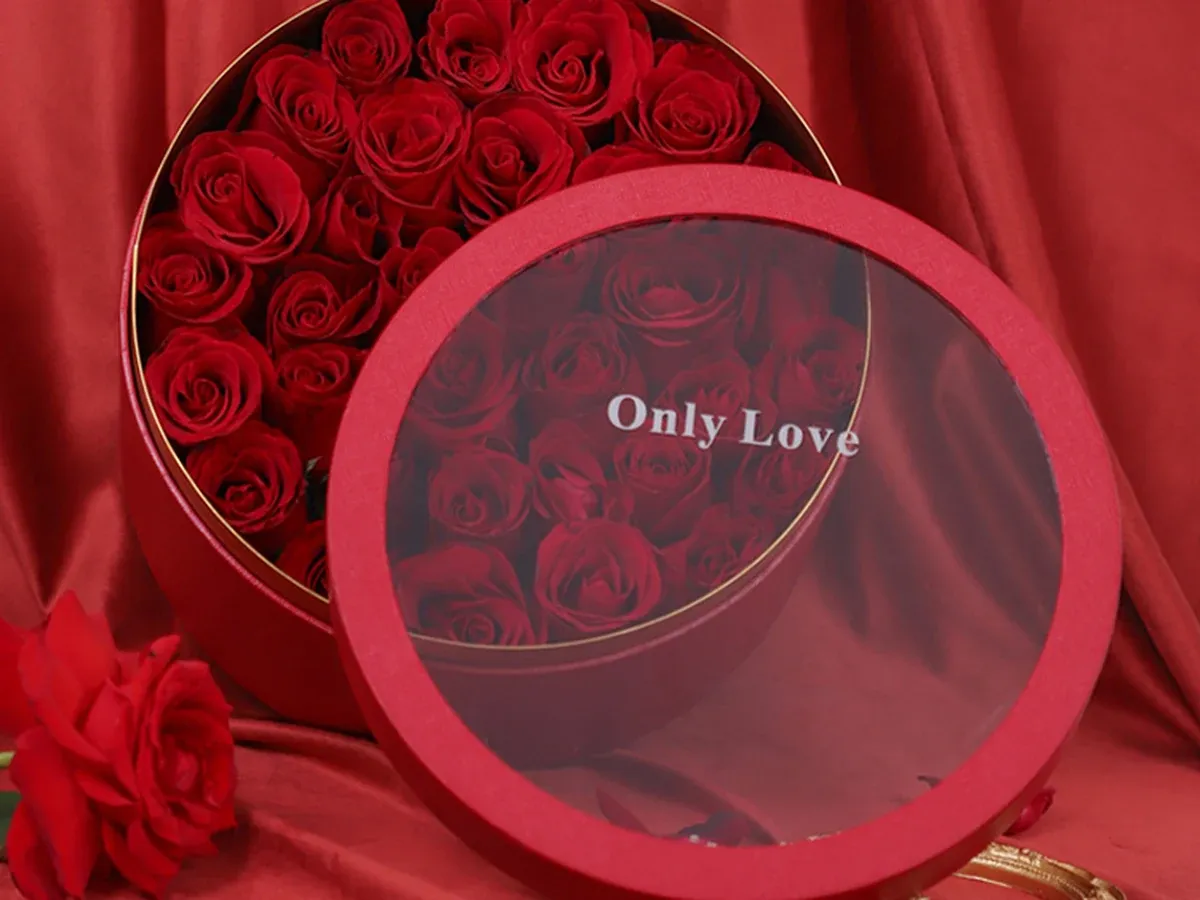
Valentine's Day compresses a whole quarter of gift buying into roughly three weeks, which makes the packaging decision unusually unforgiving. A jewelry brand, a chocolatier, a florist or a D2C gift seller that misses the window cannot simply roll the campaign into March; whatever is unsold sits in a warehouse until next February. Experienced buyers therefore treat custom valentines day boxes as a specification exercise first and a design exercise second. Structure, paper stock, finish, insert and packing all need to be locked down in November or early December so the production calendar can realistically deliver finished boxes before the rush begins.
This guide is written for the person who signs off on specs, not for a consumer browsing gift ideas. It explains how small batch gift boxes from 100 pieces per size or design make a seasonal drop low-risk, which structures suit delicate romantic gifts such as custom heart boxes for jewelry or chocolate, how foil stamping and soft-touch finishes create the detail that photographs well, and how to map artwork deadlines backward from February 14 so mass production finishes with days to spare.
Why Small Batches Make Sense for Valentine's Day
Seasonal packaging carries a risk that everyday packaging does not: any unit left after February 14 becomes dead stock. High minimum orders force a buyer to bet the entire forecast on one design and one color, and a miss means discounting in March or paying for storage for a year. A factory-direct MOQ from 100 pcs per size or design changes that math. A florist can commission 100 rigid boxes in burgundy and 100 in blush, then read real sell-through before committing to a second run. A D2C gift seller can test rose gold foil against plain debossing across two small runs and let customers decide. A chocolatier can produce a modest heart-shaped run for boutiques while covering larger retail orders separately.
One practical note on structures: while folding cartons and two-piece boxes can be ordered from 100 pcs, magnetic closure rigid boxes typically run 500+ per order because of the tooling and hand assembly involved. Buyers should factor that threshold into structure selection early, since it is easier to design within it than to discover it after sampling.
Box Structures That Suit the Season
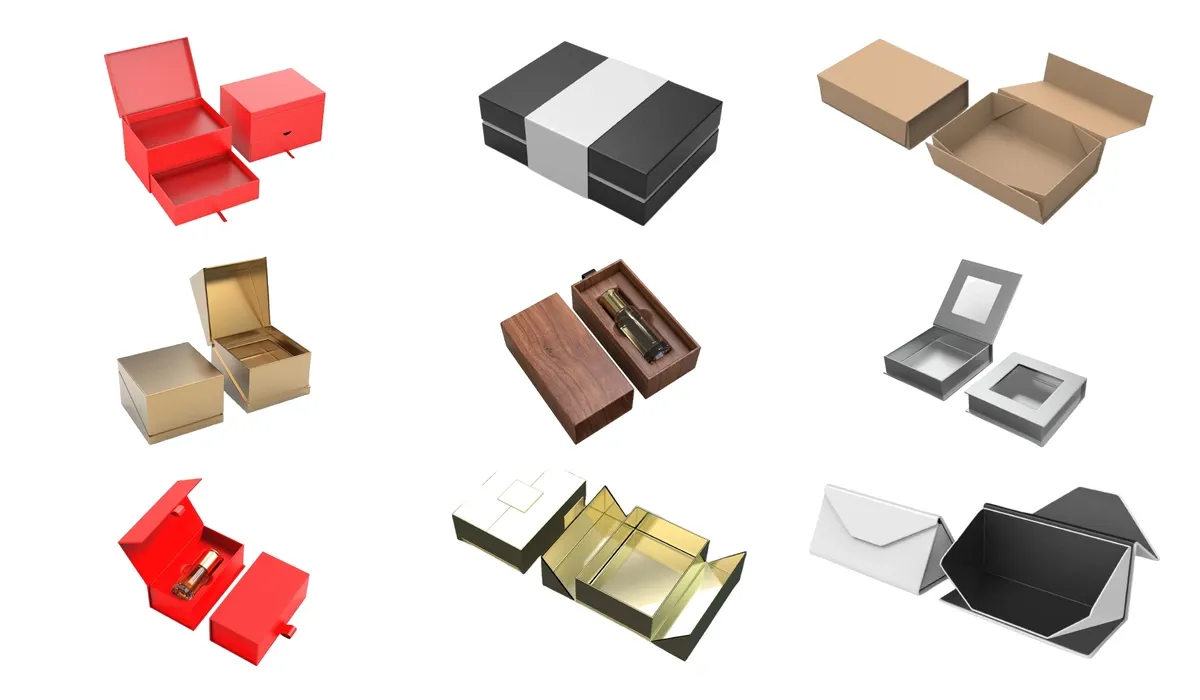
Three structures dominate Valentine's programs. The rigid hinged lid with magnetic closure is the premium choice for jewelry and luxury chocolate: it opens with weight and resistance, closes with a satisfying click, and holds its shape through shipping. It is built from 157 g face paper wrapped over 1200 g greyboard, a combination dense enough to carry deep embossing and heavy foil coverage without warping.
The two-piece lid-and-base set remains the workhorse for chocolatiers and florists. It stacks efficiently, presents a generous flat lid for full-bleed artwork, and lifts off to reveal an insert, which suits layered chocolate assortments and floral arrangements alike.
The folding carton with a heart-shaped window is the volume option for retail shelves and lighter gift sets. Made from 300-500 g board, it ships flat, costs less per unit, and uses the die-cut window to show the product itself, whether truffles, a candle or a small keepsake, framed by the printed heart. Many buyers combine structures across a range: a magnetic rigid box for the hero SKU and folding cartons for the accessories around it.
Foil, Lamination and Finishes for Romantic Detail
Finish selection is where a Valentine's box earns its emotional response. Foil stamping in rose gold, gold and copper dominates the season because these tones read as warm metallics under both boutique lighting and smartphone flash. Rose gold suits blush and cream papers, gold anchors burgundy and deep red, and copper pairs naturally with kraft. Foil works best as an accent, a heart motif, a logotype or a border, rather than as full coverage, which drives cost up without adding much perceived value.
Soft-touch lamination gives the surface a velvet feel that customers instinctively stroke, and it photographs with a low-glare matte richness that flat print cannot match. Spot UV adds a glossy raised pattern against that matte base, a contrast that works well for script lettering, dot fields or a second heart outline. Embossing pushes the artwork physically out of the surface, which is why it is the standard partner for foil on rigid boxes: the raised heart catches light the same way jewelry does. Used together, foil plus embossing plus soft-touch creates a box that feels expensive at a price a factory can hold in a small run.
Inserts That Protect the Gift Inside
The insert decides whether the gift arrives as intended, and for Valentine's contents it matters more than in any other season. For jewelry, die-cut EVA foam with a soft facing holds rings, pendants and earrings in precise slots, while a paper platform above can carry a printed message card. For chocolate, molded pulp trays are the default choice: they are food-safe, rigid enough to stop pieces migrating, and increasingly preferred by buyers who want a plastic-free story on the pack. Divided paper platforms suit assorted boxes where every cavity must present a single flavor neatly.
For florists the problem is different, because the box must cradle stems and sometimes a small water source without crushing petals. Folded paper cribs and platforms tuned to the bouquet's geometry do this well, and the dieline needs to be tested with a real arrangement at sampling stage. Whatever the content, insert prototypes are produced alongside the box sample, which is where small-batch buyers catch fit problems before mass production rather than after it.
Color and Paper Stock Beyond Cliché Red
Red still sells in February, but the buyers winning shelf attention are working a wider palette. Blush pink paired with rose gold foil has become the boutique signature of recent seasons. Burgundy, deep wine and oxblood deliver the romance of red with far more sophistication, especially under gold foil and embossing. Cream and ivory papers give a gallery-like neutrality that makes product photography pop, and cream kraft has grown fast among brands that want a natural, handmade feel without abandoning the season.
Paper choice interacts with every finish decision. Coated art papers hold fine foil detail and crisp spot UV best. Uncoated and kraft stocks feel tactile and sustainable but soften fine lines, so artwork aimed at them should use bolder motifs. Where sustainability matters to the brand story, FSC-ready certified board is supplied on request and reserved per order, so buyers should raise it during specification and have the certified material allocated to their production run rather than assumed.
Artwork, Dielines and the Countdown to February 14
The reliable way to hit Valentine's is to plan the calendar backward from the selling date, not forward from the design brief. Work from February 14 and move back: retail shelves and online fulfillment want stock in hand by early February, and international shipping adds weeks or days depending on mode, so finished boxes should leave the factory in January for most markets.
Against that deadline the factory timeline is fixed and predictable. Artwork files and a dieline are agreed first, a free digital sample is produced in about 5 days, and once the buyer approves both artwork and sample, mass production takes 10-20 working days depending on structure, finishes and quantity. Add sampling revisions and quote time, and the practical cutoff for locked artwork lands around mid-November for complex rigid programs and early December for straightforward folding cartons. Buyers who treat sample approval as a formality are the ones who miss the window. The sample stage exists to catch dieline errors, foil registration and insert fit while they are still cheap to fix, so give it the attention it is designed for.
Quantity, Volume and Pricing Logic
Pricing for valentine gift box wholesale moves in tiers, and understanding the logic helps buyers spend where it counts. Unit cost falls in steps as quantity rises: the same design ordered at 100 pcs costs more per piece than at 500 or 1,000, because setup, tooling and press time are amortized across the run. The efficient strategy most brands use is a small first batch from 100 pcs to validate demand, followed by a single larger reorder priced in a better tier, rather than splitting a large order into several small ones that each pay setup costs again.
Two structural costs deserve attention. Magnetic rigid boxes carry a higher entry point and typically run 500+ per design, as noted above. Finish combinations also move price: foil plus embossing plus soft-touch is the premium stack, while a single foil over soft-touch lamination delivers most of the perceived value for less. Quotes are returned within about 24 hours, so comparing structures and finish levels costs little time, and payment runs on 30/70 terms, meaning a 30% deposit schedules production and the 70% balance settles before shipment.
Packing and Quality Inspection Standards
Seasonal programs fail on logistics as often as on design, so packing deserves its own line in the specification. Finished boxes are packed 100 pcs per master carton, and carton weight is kept at or below 22 kg so a single worker can lift and stack safely. Buyers with retail distribution can request inner carton splits so mixed SKUs arrive sorted by store.
Quality is controlled through AQL inspection standards applied before shipment, covering print registration, foil adhesion, lamination bubbles, insert fit and closure function on every batch. This is the advantage of buying direct from a factory that has operated in Dongguan since 1998: a 5,000 m² workshop with around 100 staff, exports above US$10 million, and more than 1,000 cases delivered for 50+ brands across 80+ countries. The same line that runs established brands' holiday programs runs a 100-piece Valentine's trial, which is exactly why small batch gift boxes are viable from a supplier of this scale.
Spec Mistakes That Cost Valentine's Buyers Time
Mistake 1 — choosing foil detail the paper cannot hold. Fine script and hairline motifs in rose gold can break up or register poorly on textured and uncoated kraft, so artwork should be reviewed against the chosen stock at sampling, not after.
Mistake 2 — specifying a magnetic rigid box for a 100-piece drop. The 500+ threshold for magnetic gift boxes is real, and buyers who need 100 pieces should move to a two-piece rigid or a premium folding carton instead of redesigning late.
Mistake 3 — locking artwork before the insert is tested. A beautiful lid with a tray that lets chocolates migrate ruins the unboxing, so the insert must be sampled with the actual product inside.
Mistake 4 — ignoring master carton weight. A densely finished rigid box packed 100 per carton can push past the 22 kg handling limit and force repacking, so confirm the packing configuration during specification.
Mistake 5 — approving the sample casually. Approval triggers the production clock of 10-20 working days, so a rushed yes on a flawed dieline costs more than another sampling round.
Frequently Asked Questions
What is the minimum order quantity for custom valentines day boxes?
The MOQ is from 100 pcs per size or design, which lets brands test a seasonal look without overcommitting. Magnetic closure rigid gift boxes are the exception, typically running 500+ per design because of tooling and hand assembly. Folding cartons and two-piece boxes both work well at the 100-piece level for seasonal drops.
How long does production take before Valentine's Day?
Expect a free digital sample in about 5 days once artwork is agreed. After you approve both artwork and sample, mass production runs 10-20 working days depending on structure, finishes and quantity. Planning backward from February 14, most buyers lock artwork by mid-November to early December to protect their shipping window.
Can I order custom heart boxes in more than one color or size?
Yes. Because the MOQ applies per size or design, you can run 100 boxes in burgundy and 100 in blush, or split sizes for different products, as separate line items. Many jewelry and chocolate brands test two romantic colorways in one season this way, then reorder the winner in a higher volume tier at better pricing.
Which finishes work best for a romantic Valentine's design?
Rose gold, gold and copper foil stamping remain the season's signatures, and they pair best with soft-touch lamination for a velvet matte surface. Spot UV adds glossy contrast patterns, while embossing raises the heart motif physically out of the board. Foil plus embossing on rigid boxes is the premium combination for jewelry packaging.
What insert options protect chocolate and jewelry in transit?
Jewelry uses die-cut EVA foam with precise slots, often under a printed paper platform that carries a message card. Chocolate relies on molded pulp trays that are food-safe and stop pieces from migrating. Floral boxes use folded paper cribs shaped to the bouquet. All inserts are prototyped together with the box sample before production begins.
Can the packaging use sustainable or certified paper?
Yes. FSC-ready certified board is supplied on request and reserved per order, so raise it at specification stage and the certified material is allocated to your production run. Cream kraft and other uncoated stocks also support a natural brand story, though artwork should use bolder motifs because fine foil lines soften on kraft surfaces.
How are the boxes packed for shipping to my warehouse?
Finished boxes are packed 100 pcs per master carton, with carton weight kept at or below 22 kg for safe single-person handling. Buyers distributing to retail can request inner carton splits so mixed SKUs arrive sorted. Every batch passes AQL inspection covering print registration, foil adhesion, lamination and closure function before shipment.
What are the payment terms for a wholesale order?
Payment runs on 30/70 terms: a 30% deposit confirms the production schedule and the 70% balance is settled before shipment. Quotes are returned within about 24 hours of specification, so comparing structures and finish tiers costs little time. This structure keeps cash exposure low for small batch seasonal buyers testing a new design.
Conclusion
Small batches, romantic finishes and a backward-planned calendar separate a Valentine's drop that sells out from one that becomes March clearance. Lock the structure early, reserve certified board if the brand story needs it, and approve the sample while there is still time to act on what it reveals. Which of your SKUs deserves the magnetic rigid treatment, and which belongs in a 100-piece folding carton test? Request a Wholesale Quote with your artwork and specifications, Get Factory Price on your first small-batch run, and use the free digital sample in about 5 days to secure a production schedule that lands before February 14.