Buying Guides
Custom Mailers: Printed Self Locking Shipping Boxes
Custom Mailers: Printed self locking shipping boxes built to survive the courier network and arrive branded, closed, and photo ready.
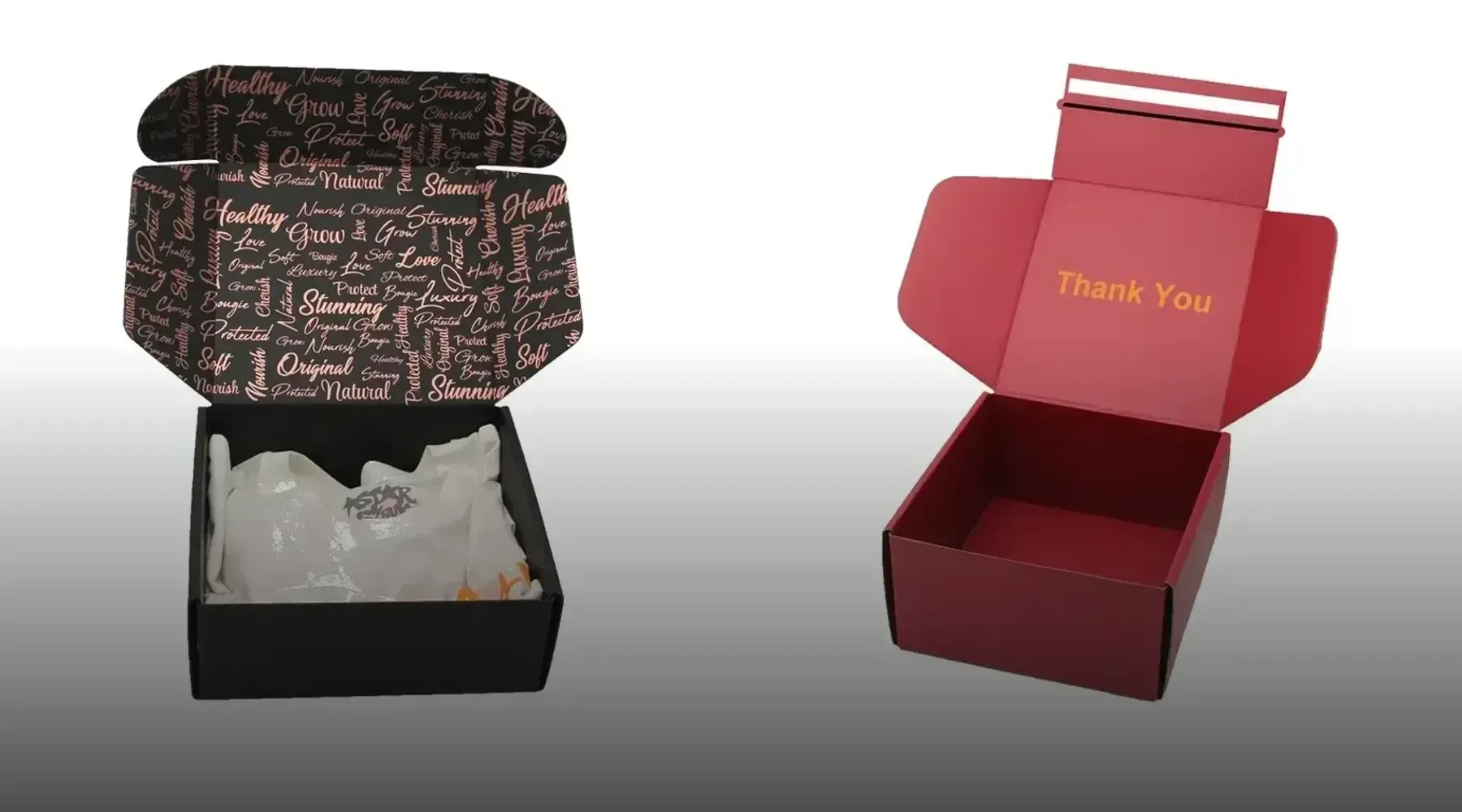
Custom mailers are a core packaging decision for brands in subscription boxes, direct to consumer brands, sample dispatches, small parcel shipping. Sourcing them from a manufacturer rather than a trader gives control over the material, the dimensions, and the finish, and that control is what turns a box from a cost into part of the product experience. Custom mailers are the plural workhorse of direct to consumer fulfilment, and the right spec turns the outside print into brand presence through the last mile. This guide covers the practical side of buying custom mailers from a China factory: the materials and grammage that set quality, how custom dimensions are specified, and the order rhythm that keeps a brand in stock through a peak. The intent is to let a buyer brief a supplier with enough detail that the first order is a confident test rather than an expensive guess.
The hard facts that frame every order are stable: the minimum order starts from one hundred pieces, sampling takes only a few days, and bulk production runs ten to twenty working days. Rigid boxes use 157 gram face paper over 1200 gram greyboard; folding cartons use 300 to 500 gram paperboard. Boxes are packed one hundred pieces per carton kept at or under twenty two kilograms. FSC ready paper is available with chain of custody documents on request, and Manufacturing is based in Dongguan, China, with operations established since 1998. Hold those facts in mind as you read, because they are the constants behind the choices that follow, and they are what let you plan a landed timeline instead of hoping one appears. The rest of this guide breaks each constant into a choice you can make with the factory rather than a number you merely accept.
What a Custom Mailers Is
A custom mailers is a shipping box engineered to be its own mailer, with a self locking structure that needs no tape for closure. For brands in subscription boxes, direct to consumer brands, sample dispatches, small parcel shipping, the mailer replaces the box plus the void fill plus the tape with a single printed unit, which trims pack out time and freight cube. Custom mailers are the plural workhorse of direct to consumer fulfilment, and the right spec turns the outside print into brand presence through the last mile. The mailer is where the unboxing starts, so the outside print does brand work before the customer opens the invoice.
The self lock works through scored flaps that interlock when folded, so the carton arrives flat, is erected in one motion, and closes by tuck rather than adhesive. That simplicity is why mailers suit subscription and direct to consumer programmes where pack out happens at volume. A good mailer holds its shape in the courier network and opens cleanly in the living room, which is the moment the brand is judged, so the structure is as much a brand asset as the print.
The mailer also removes a failure mode. A taped box that splits at the seam spills its contents; a self locking mailer that is erected correctly stays shut through the sortation system. That reliability is why operations teams favour mailers for high volume dispatch, because the pack out step is one motion instead of three and the closure is part of the board instead of added after. The mailer is operations engineering dressed as packaging.
Self Locking Structure and Strength
The strength of a custom mailers comes from the board grade and the lock design, not from tape. Folding cartons in 300 to 500 gram paperboard give the rigidity needed for most mailers, and a roll end or a tuck front lock keeps the flap from popping under stack pressure. For heavier items, a double wall or a rigid wrap raises the threshold without leaving the paper lane.
Specify the internal size to the product plus a small tolerance so the item sits without rattle and the lock meets square. A mailer that is too deep needs void fill, which defeats the purpose, so the dieline should be cut to the real footprint. Send the actual product when briefing the factory so the lock and the depth are engineered to it rather than to a guess, because a loose lock is the failure a mailer is judged on.
The score line is the unsung hero of the mailer. A clean score folds crisply and repeatedly, which matters when pack out is done by many hands at speed, while a ragged score cracks the face or resists the fold. Ask the manufacturer how they hold the score tolerance, because the mailer that folds wrong in the warehouse costs more in labour than it saved in board. The score is where mailer quality is won or lost.
Shipping and Courier Fit
A custom mailers is designed for the courier network, so the dimensions should sit inside the carrier's standard bands to avoid surcharges. Because mailers ship flat and are erected at pack out, they save warehouse cube until the moment of use, which matters for a brand with limited storage. The printed exterior also carries the brand through the last mile, where most customers form their impression, so the courier fit and the brand fit are the same specification.
Confirm the carton packing with the factory: boxes are packed one hundred pieces per carton kept at or under twenty two kilograms, which keeps handling standard and container packing efficient. For cross border direct to consumer, plan ocean freight from Dongguan well ahead of the selling window, because the courier leg is fast but the ocean leg is not. A mailer programme lives or dies on the landed timing, so treat the freight plan as part of the box spec, not an afterthought that someone else owns.
Courier bands change, so review them with the supplier each season rather than assuming last year's dimensions still avoid the surcharge. A few millimetres of box size can move you from standard to oversize, and at mailer volume that difference is real money on every parcel. The supplier who tracks the bands for you is protecting your margin on the last mile, which is the margin that matters most to a direct to consumer brand.
Material and Print
Mailers use 300 to 500 gram paperboard for the right balance of rigidity and flat ship weight. Kraft mailers lean natural and sustainable; coated white board gives a cleaner print surface for full colour branding. Either stays within the paper and paperboard lane that keeps cost and compliance sane, and both print well with a single strong brand colour rather than a busy design, which also holds consistent across a large run.
Confirm the Pantone or CMYK target before sampling and insist on a physical proof so the outside print is seen on the actual board. A single foil or a debossed logo is enough for identity; a cluttered mailer looks cheaper because the eye reads the effort as noise. Keep the finish count modest so the mailer is produced consistently across a large run, because a misregister on one in twenty is a return waiting to happen, and at mailer volume returns are a programme problem, not a sample problem.
The print surface interacts with the courier journey. A coated board scuffs less in the sortation system than a raw kraft face, so the choice depends on whether the mailer ships inside a secondary bag or rides alone. Talk through the journey with the manufacturer, because the finish that photographs best on the shelf is not always the finish that survives the conveyor. The right answer is specific to your shipment, not to a catalogue swatch.
MOQ, Sampling, and Bulk Lead Time
The minimum order for custom mailers starts from one hundred pieces, which lets a brand test a mailer design without a large commitment. Sampling takes only a few days once the product and the dieline are confirmed, and it validates the lock and the print against a physical proof.
After approval, bulk production runs ten to twenty working days. The safe rhythm is sample, then bulk, then top up: a small first run validated by a proof, followed by a replenishment once real sales signal arrives. The factory holds the setup between splits so the second run is faster, and that rhythm keeps a direct to consumer brand in stock through a peak without betting everything on one slot, which is exactly when courier capacity is tightest.
The reorder advantage is pronounced for mailers because the dieline is simple and the setup is small, so a top up can be turned around quickly when a spike hits. Keep the approved dieline on file and the supplier knows your dimensions by heart, and the second run becomes a phone call rather than a project. That responsiveness is the operational edge a mailer programme gives a brand that ships every day.
Cartons and Freight
Boxes are packed one hundred pieces per carton kept at or under twenty two kilograms, which keeps handling standard and container packing efficient. For mailers the flat ship size means many cartons fit per container, but confirm the carton size in writing so the freight quote matches. Ocean freight from Dongguan takes several weeks, so plan the first order ahead of the selling window, because a mailer out of stock is a sale lost today, not deferred.
Air freight is an emergency lever, not a plan, because it erodes margin at box volume. Rigid wrapped mailers ship assembled and take more room; folding mailers ship flat and save space until pack out. Because the dieline persists, a reorder the following season is faster and cheaper, which makes a one hundred piece test this year a foundation for next, and the simplicity of the mailer dieline makes that reorder especially fast.
Freight planning for mailers is mostly about the flat pack. Because they ship flat, a container holds far more mailers than assembled boxes, so the per unit freight is low, but only if the carton size is optimised for the container. Ask the supplier for a carton size that packs tightly without exceeding the weight cap, because that optimisation is free money on every shipment and compounds across all your reorders.
Quality and Common Mistakes
A custom mailers fails when the lock pops or the board creases in transit. Before bulk, erect a sample, load the real product, and drop test it from a low height to confirm the lock holds and the item is protected. Pull a random carton from the bulk run rather than a hand picked sample so you see production quality, not a showcase piece, because at mailer volume a one percent defect is a hundred angry customers.
The common mistakes are a mailer cut too deep that needs void fill, a lock design too weak for stack pressure, and skipping the proof to save a few days. Open a shipped carton on arrival, not just at the factory gate, because transit reveals lock issues a static check misses. A supplier who welcomes these checks is one you can build a programme with, and one who resists the drop test is one to avoid for a high volume dispatch.
Because mailers ship to individual customers, a defect is visible to the end buyer in a way a pallet of cartons never is, so quality discipline is reputation discipline. The random carton, the drop test, and the arrival inspection are the three habits that keep a mailer programme clean, and they are non negotiable at the volume a direct to consumer brand runs. Skipping them is gambling the brand on every parcel.
FSC Ready Paper and Reorder
FSC ready paper is available with chain of custody documents on request, which matters for brands with a sustainability claim. Confirm before sampling so the correct stock is ordered and documents travel with the shipment. Manufacturing is based in Dongguan, China, with operations established since 1998, supporting stable paper supply and experienced finishing.
Because the dieline and print setup persist, a reorder is faster and cheaper, which makes the one hundred piece test a foundation. Keep the approved proof and dieline on file so the second order does not restart the design conversation. A mailer programme improves each season rather than repeating from zero, and the setup on file is what makes that compounding possible, so the archive is the asset that grows with your shipments.
Tie the FSC documentation to the purchase order so the audit connects the mailer in your warehouse to the certified stock at the mill. A supplier who does this routinely understands that sustainability claims must be traceable, not asserted, and that traceability is what keeps your brand honest when a customer or a regulator asks. The document trail is the quiet half of the eco story.
Print as the Last Mile Brand
Custom mailers carry the brand through the courier network, so the outside print does work before the customer opens the invoice. A single strong brand colour or a debossed logo is enough; a cluttered mailer looks cheaper and is harder to hold consistent across a large run. Confirm the Pantone or CMYK target on a physical proof on the actual board, because the screen preview lies about the paper.
Because mailers are produced in volume, finish restraint protects both the look and the margin. Keep the design language consistent across sizes so the range reads as one brand on the doorstep. A manufacturer with experienced seasonal finishing will flag finish choices that are risky at volume, saving you from a specification that fails in a container, which at mailer volume is a programme problem, not a sample problem.
The print also interacts with the courier journey. A coated board scuffs less in the sortation system than a raw kraft face, so the choice depends on whether the mailer ships inside a secondary bag or rides alone. Talk through the journey with the manufacturer, because the finish that photographs best on the shelf is not always the finish that survives the conveyor, and the right answer is specific to your shipment.
Briefing a Mailer for the First Run
The first custom mailers run should start with the real product, the courier bands you ship in, and the brand colour you want on the outside. Send those to the factory so the dieline is cut to the product and the dimensions sit inside the surcharge bands. The one hundred piece minimum lets you test the lock and the print before committing the season.
Agree the proof schedule and the carton size in writing, and confirm the lock with a drop test on a loaded sample. Sampling takes only a few days and bulk runs ten to twenty working days, so the calendar is predictable once the dieline is set. The factory in Dongguan has operated since 1998, which is the stability you want behind a peak order.
Keep the approved dieline, swatch, proof, and certificate on file so reorders are faster and cheaper and never restart the design conversation. That archive is the compounding asset of the mailer programme, turning a one hundred piece test into a confident, lower cost dispatch system. Send the product, get the proof, plan the rhythm, and the mailer becomes the box your operations team trusts.
FAQ
What is the minimum order for custom mailers?
The minimum order quantity starts from one hundred pieces, which lets a brand test a mailer programme without a large commitment.
Do mailers need tape?
No. Custom mailers use a self locking structure that closes by tuck, replacing box, void fill, and tape with one unit.
What board grade is used?
Folding cartons use 300 to 500 gram paperboard for rigidity and flat ship weight.
How long does sampling take?
Sampling takes only a few days once the product and the dieline are confirmed. The proof validates the lock and the print.
What is the bulk lead time?
After sample approval, bulk production runs ten to twenty working days. A small first order plus a top up protects stock.
Do you offer FSC certified paper?
FSC ready paper is available with chain of custody documents on request. Confirm before sampling so the correct stock is ordered.
How are mailers packed?
Boxes are packed one hundred pieces per carton kept at or under twenty two kilograms. Mailers ship flat until pack out.
Where is the factory located?
Manufacturing is based in Dongguan, China, with operations established since 1998, supporting stable paper supply and finishing.
Can print be consistent across sizes?
Yes. Keep the design language consistent across sizes so the range reads as one brand on the doorstep.
Conclusion
Custom mailers succeed when the specification matches the product, the material signals the right price tier, and the order rhythm keeps you in stock. Choose rigid 157 gram face paper over 1200 gram greyboard for hero pieces and folding 300 to 500 gram paperboard for volume, send your real items so the cavities and dielines are cut to fit, and use one strong foil for identity. Sample in only a few days, bulk in ten to twenty working days from a Dongguan factory with one hundred pieces since 1998, and keep the setup on file for a faster reorder. Send your product types and your target market, and we will return a dieline, a proof, and a landed timeline you can plan against, so the first order is a confident step into a programme rather than a guess.