Buying Guides
Custom Collapsible Rigid Boxes: Premium Look That Ships Flat
Custom collapsible rigid boxes: 1200 g greyboard with magnetic or ribbon closure, ships flat to cut freight by 60 percent or more, MOQ from 100 pcs, FSC-ready board.
<!-- META_EXCERPT: Custom collapsible rigid boxes: 1200 g greyboard with magnetic or ribbon closure, ships flat to cut freight by 60 percent or more, MOQ from 100 pcs, FSC-ready board. -->
Opening
A collapsible rigid box solves the one problem that stops most brands from using wrapped greyboard at scale: freight. A standard rigid box ships assembled, which means a master carton is mostly air. A collapsible version uses the same 1200 g greyboard and the same printed wrap, but folds flat — so the same master carton holds three to five times more units. This guide covers how the fold works, what the closure options cost, and where the structure earns its keep.
How the Fold Works
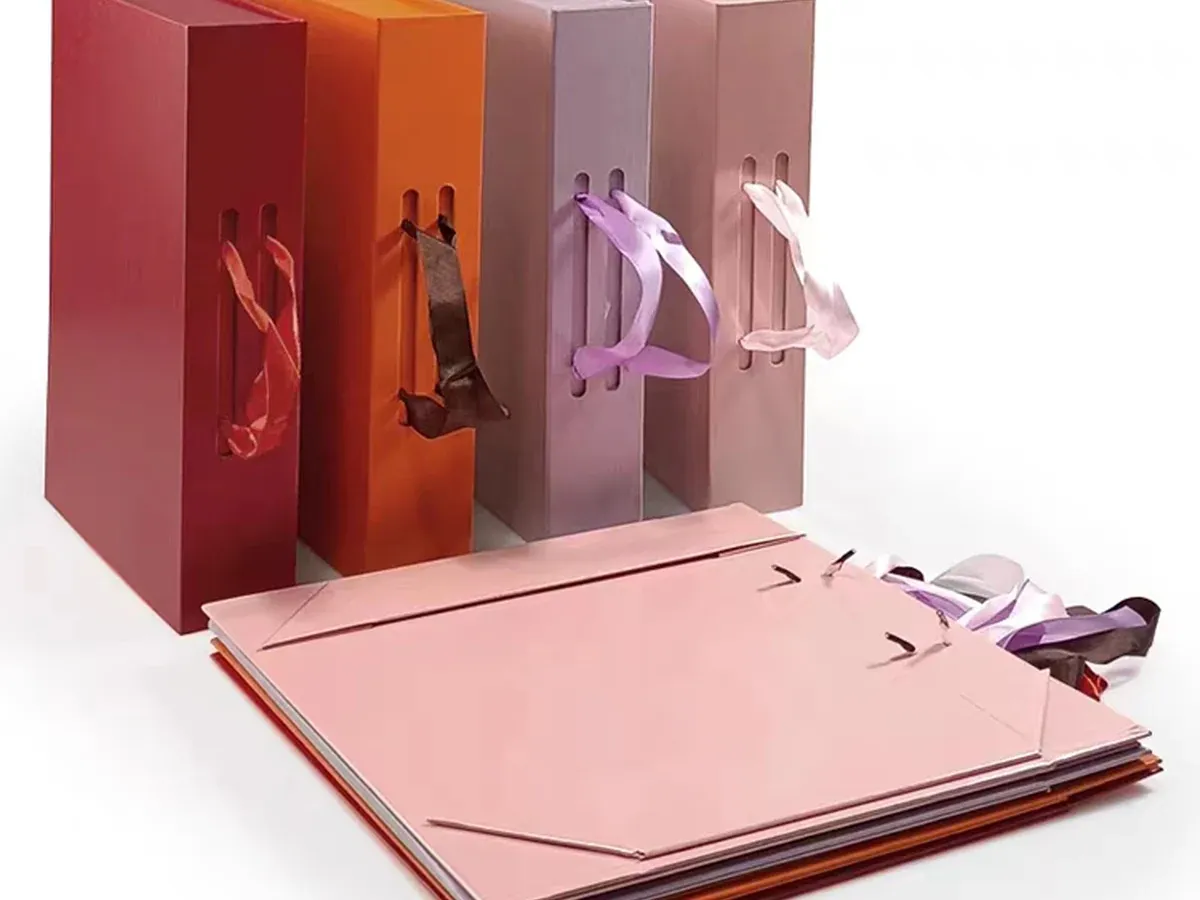
A collapsible rigid box is a single piece of 1200 g greyboard scored and folded so the walls collapse inward and the box flattens to roughly one-tenth of its assembled height. The wrap paper — 157 g art paper, printed before mounting — covers the flat blank, so the print registration survives the folding. At the packing bench, the walls swing up and lock into place.
The engineering decision is the crease line. Each fold is a score in the greyboard, and the score weakens the wall slightly compared to a continuous sheet. For most products this is invisible; for heavy goods the wall gauge may need to go from 1200 g to 1500 g to compensate. State the product weight when you brief the factory so the board gauge is quoted against the actual load.
Closure Options and What Each Costs
Three closures dominate collapsible builds. Magnetic closures set into the greyboard walls during assembly give the weighted click customers associate with premium packaging, and the box re-closes for storage — the strongest choice for gift sets and retail shelf display. Ribbon pulls anchored through the base hold the walls closed with a tie, which photographs well for social content and costs less than magnets. Velcro dots are the lightest option and suit subscription boxes where the customer opens and closes the box weekly.
Each closure is quoted as a separate line because it adds a setup pass and a material cost. Magnets require a custom die and hand placement; ribbon needs a hole punch and knot; velcro needs adhesive backing cut to size. Confirm the closure before the quote locks, because it changes both the MOQ and the per-unit price.
Where Collapsible Earns Its Keep
The structure earns its premium in three scenarios. First, any programme where the box ships individually to the end customer: the flat-pack format cuts dimensional weight, and the savings compound at every parcel tier. Second, brands with limited warehouse space: a master carton of flat-packed boxes occupies a fraction of the assembled volume, which matters when storage is priced per pallet. Third, seasonal programmes with a single annual order: the flat-pack format lets you order a full year of boxes in one production run and store them without renting a second warehouse.
The trade-off is assembly labour at your side. Every box must be folded and closed at the packing bench, which adds seconds per unit. For orders below 500 pieces this is trivial; for volumes above 5,000, the assembly time becomes a real cost line and the assembled-box structure may work out cheaper overall.
Print and Finish on a Folded Surface
The wrap paper is printed before the greyboard is mounted and scored, so the print quality matches a standard rigid box. CMYK or Pantone across the full surface, matte or gloss lamination, hot foil, emboss and spot UV are all available. One detail to plan: the score lines cross the printed surface, and heavy ink coverage on a score can crack during folding. Matte lamination over the score reduces cracking; uncoated wrap shows it most. If your artwork has a solid colour block crossing a fold line, tell the factory so the print direction can be adjusted.
Inserts and Interior Options
The interior of a collapsible box can carry the same insert options as a standard rigid build: EVA foam, moulded pulp, flocked platforms or satin-lined trays, cut to the assembled internal dimensions. Because the walls fold, the insert must sit below the fold line — an insert that pushes against a crease prevents the box from collapsing. Confirm the insert height relative to the base fold during sampling.
A flat interior is the base price; a printed interior is a second pass. For subscription programmes where the customer sees the box monthly, a printed interior pattern is a cost-effective brand touch that does not change the outside artwork.
MOQ, Sampling and Production
MOQ starts from 100 pieces per size and design for standard collapsible builds with matte lamination and magnetic or ribbon closure. Adding spot UV, a custom foil die or a multi-colour interior can raise the minimum because each finish adds a setup pass. A free digital sample in about 5 days shows the fold lines, the print and the closure before any mass spend. After approval, mass production runs about 10 to 20 working days. Payment is 30 percent deposit and 70 percent balance before shipment. Boxes pack flat, 100 per master carton, with carton weight kept at or below 22 kg.
A Worked Example: Freight Savings on a 200 mm Square Box
<p>A standard assembled rigid box at 200 x 200 x 80 mm occupies 3.2 litres per unit. A master carton of 100 assembled boxes needs 320 litres plus void fill, which is roughly one full pallet layer. The same 100 boxes flat-packed occupy about 40 litres — one-eighth of the volume. On a sea freight route priced per cubic metre, the flat-pack version cuts the freight line by 60 percent or more.</p><p>The savings compound for e-commerce programmes where each box ships individually to the end customer. A flat-packed collapsible box fits a standard courier satchel; an assembled rigid box requires a purpose-cut outer carton or a premium parcel tier. The freight saving per unit is what makes the collapsible structure pay for its higher material and assembly cost.</p>
Common Mistakes and How to Avoid Them
<p>The most common mistake is ordering collapsible boxes without confirming the assembly time at the packing bench. Every box must be folded and closed by hand, which adds seconds per unit. For orders below 500 pieces this is trivial; above 5,000 the labour cost becomes a real line and the assembled structure may work out cheaper overall. Run the assembly time past your fulfilment team before committing to a large collapsible order.</p><p>The second mistake is specifying a solid colour block that crosses a fold line. Heavy ink coverage on a score can crack during the first fold, and the crack is visible on the printed surface. Matte lamination over the score reduces cracking; uncoated wrap shows it most. Tell the factory if your artwork crosses a fold line so the print direction can be adjusted before the wrap is printed.</p>
Frequently Asked Questions
How much freight does a collapsible box save?
A flat-packed collapsible box occupies roughly one-fifth to one-tenth of the master carton volume of an assembled rigid box, which cuts per-unit freight by 60 percent or more on long routes. The exact saving depends on the box dimensions and the shipping tier.
What closure options are available?
A flat-packed collapsible box occupies roughly one-fifth to one-tenth of the assembled volume, which cuts per-unit freight by 60 percent or more on long routes. The exact saving depends on the box dimensions, the shipping tier and the route, but the volume reduction is consistent across sizes.
What board weight do you use?
Magnetic closures set into the greyboard walls, ribbon pulls anchored through the base, and velcro dots. Magnets are the strongest and most premium; ribbon is the most photographable; velcro suits repeat-open subscription boxes. Each closure is quoted as a separate line because it adds a setup pass and a material cost.
Does the print crack at the fold lines?
Standard collapsible builds use 1200 g greyboard with 157 g art paper wrap. Heavy products may need 1500 g board to compensate for the score lines. The factory confirms the gauge against your product weight at quotation.
Can I get a printed interior?
Heavy ink coverage across a score can crack during folding. Matte lamination over the score reduces cracking. Tell the factory if your artwork has solid colour blocks crossing fold lines so the print direction can be adjusted before the wrap is printed.
What is the MOQ and lead time?
Yes, interior printing is a separate pass and a separate cost line. A single-colour pattern or a full-colour print is available. Confirm at quotation because it changes the wrap paper order and adds a setup pass.
Conclusion
Collapsible rigid boxes solve the freight problem that keeps most brands from using wrapped greyboard at scale, without giving up the premium look. The structure folds flat for shipping, assembles in seconds at the bench, and takes the same print and finish as a standard rigid build. Match the closure to the programme and confirm the board gauge against the product weight. Our factory in Dongguan since 1998 has delivered more than 1,000 cases for 50+ brands across 80+ countries, verified to AQL inspection standards on a 5,000 m² floor. Request a Wholesale Quote with your dimensions and quantities, or Get Factory Price from our Dongguan team.